Best Supplements for Gut Health and Inflammation: Compared (2026)
Gut Health and Inflammation Supplements: Our Picks
No supplement has strong evidence for lowering gut inflammation in healthy people. The research that exists is mostly small, short, or done in people with diagnosed conditions such as ulcerative colitis, Crohn’s disease or IBS, who were also under a doctor’s care. With that caveat, here is how the main supplement types sort out when you rank them by human evidence rather than popularity.
- Best starting point for most people: food first. A Mediterranean-style diet with fiber-rich foods and fermented foods has supportive human data and few downsides. Our gut health diet plan shows what that looks like day to day.
- Best everyday supplement: psyllium or another soluble fiber. One 12-month trial in ulcerative colitis and population data linking fiber with lower inflammation markers.
- Best-studied add-on for ulcerative colitis, with a doctor’s oversight: curcumin. Several small randomized trials alongside standard medicine.
- Most promising for post-infection IBS with diarrhea: L-glutamine. One well-designed trial, not yet repeated.
- Early evidence only: zinc carnosine and butyrate. Small studies with interesting but limited results.
- Weaker than their reputation for gut inflammation: fish oil, general probiotics and collagen.
Ultimate Gut is published by Ultimate Health Solutions, which sells a yogurt maker, probiotic capsules and an inulin fiber supplement. None of the products reviewed here are ours, and these brands don’t pay us.
Supplements reach the market without FDA review. The FDA is not authorized to approve dietary supplements for safety and effectiveness before they are sold. If you have IBD or another diagnosed condition, add nothing without talking to your doctor, and never stop prescribed medicine on your own.
Comparison table
Evidence strength reflects human studies on gut-related inflammation or disease activity, not lab or animal work. The scale is explained in How We Compared below.
| Supplement | What it was studied for in humans | Evidence strength | Cautions and interactions |
|---|---|---|---|
| Omega-3 fish oil | Keeping Crohn’s disease in remission (6 trials, 1,039 people) | Low: probably ineffective for this use | More diarrhea and upper GI symptoms in trials; high doses may raise bleeding risk with warfarin (NIH ODS) |
| Curcumin (turmeric) | Add-on to mesalamine in mild to moderate ulcerative colitis | Low to moderate: small randomized trials, one meta-analysis | Liver injury reported (NCCIH); avoid with gallstones or bile duct obstruction (NHS Wales); may raise bleeding risk with blood thinners (MSK) |
| Psyllium and other fibers | Keeping ulcerative colitis in remission; fiber intake and C-reactive protein (CRP) | Low to moderate: one open-label trial plus observational data | Take with at least 8 oz of liquid; space from digoxin, aspirin and nitrofurantoin (MedlinePlus); add slowly |
| Probiotics | Crohn’s disease, ulcerative colitis, IBS, pouchitis | Low for most gut conditions (AGA); strain-specific | Higher risk in people who are seriously ill or immunocompromised (NCCIH) |
| L-glutamine | Post-infection IBS with diarrhea and increased gut permeability; active Crohn’s disease | Low: one strong trial in IBS; no benefit shown in Crohn’s | Adverse events poorly documented in Crohn’s trials; ask your doctor |
| Zinc carnosine | Gut permeability during NSAID use in healthy volunteers | Very low: one 10-person trial | Counts toward the 40 mg daily zinc limit; long-term excess lowers copper (NIH ODS) |
| Butyrate | Add-on for IBS symptoms | Very low: one trial, mixed results | Few human trials; the trial we found ran only 12 weeks |
| Collagen | Digestive symptoms in healthy women | Very low: one uncontrolled study, no inflammation markers | We found no controlled trials on gut inflammation |
How each supplement stacks up
Omega-3 fish oil
Fish oil is often sold as anti-inflammatory, but the gut-specific data are disappointing. A Cochrane review of 6 trials with 1,039 people with Crohn’s disease found a borderline benefit for preventing relapse that disappeared when only the two large, low-bias trials were counted (37% vs 42% relapsed at 12 months). The authors concluded omega-3s are probably ineffective for keeping Crohn’s in remission, and people taking them had more diarrhea and upper digestive symptoms.
Side effects are usually mild, such as heartburn, nausea and loose stools, but high doses may cause bleeding problems when combined with warfarin or other anticoagulants.
Curcumin and turmeric
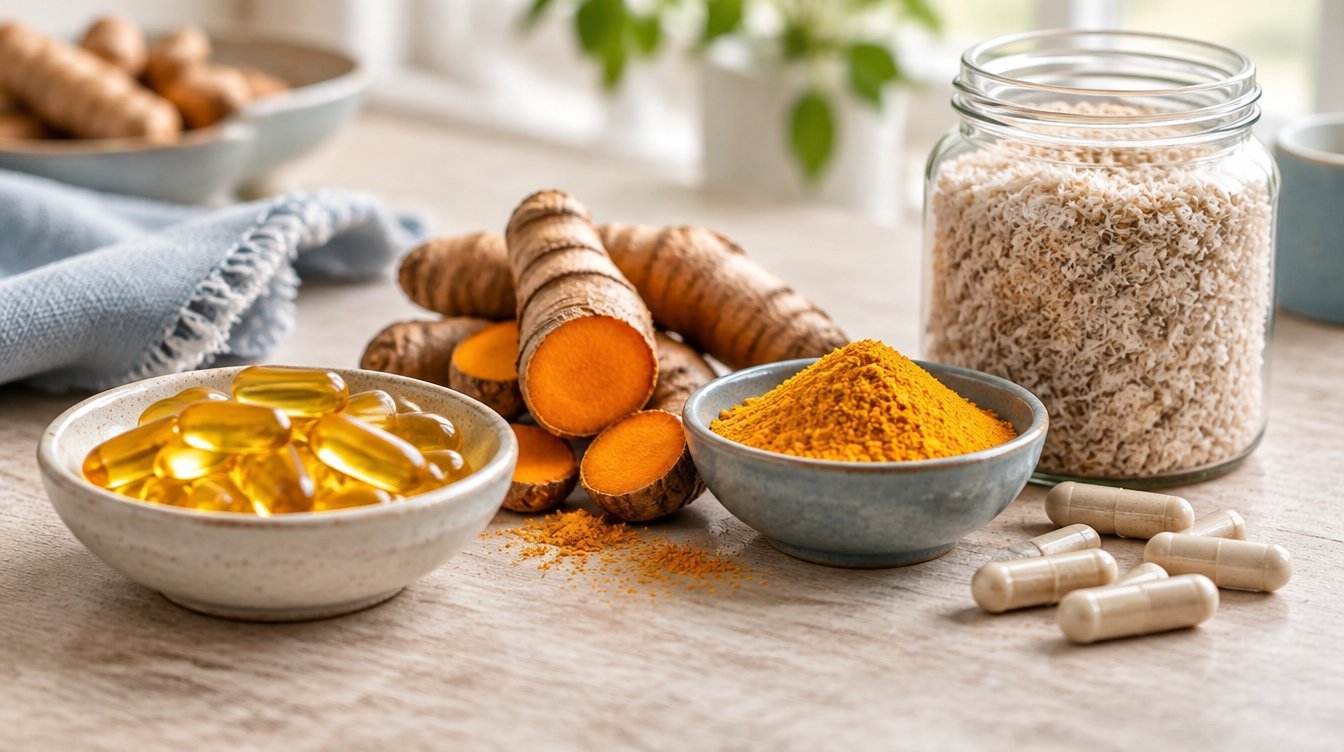
Curcumin has the most interesting gut data of any herbal supplement here, all of it in ulcerative colitis. In a randomized, double-blind trial of 50 people whose mild to moderate colitis had not responded to maximum mesalamine, 3 g of curcumin a day for one month led to clinical remission in 54% of patients, compared with none on placebo. A 2022 meta-analysis of 6 trials (385 people) found curcumin added to standard therapy improved clinical remission, but not endoscopic remission, which is what doctors see on a scope.
These were short trials in people already on prescription medicine, so they do not show that curcumin works alone. Safety needs attention. NCCIH notes liver damage has been reported, especially with highly absorbable formulas, and some products add piperine from black pepper to raise absorption. NHS Wales advises avoiding turmeric with bile duct obstruction, gallstones or other biliary disease and stopping it at least two weeks before planned surgery. Memorial Sloan Kettering lists a possible increased bleeding risk with warfarin and other blood thinners. NCCIH says turmeric supplements may be unsafe in pregnancy.
Psyllium and other fibers
Gut bacteria ferment some fibers, including psyllium seeds, into butyrate, a short-chain fatty acid made in the colon. In an open-label trial of 102 people with ulcerative colitis in remission, 10 g of Plantago ovata (psyllium) seeds twice a day kept people in remission about as well as mesalamine over 12 months: treatment failed in 40% on psyllium, 35% on mesalamine and 30% on both. Fecal butyrate levels rose on psyllium. It was one older trial without blinding, so treat it as encouraging rather than settled.
For general inflammation, a CDC analysis of 3,920 U.S. adults found those who ate the most fiber were less likely to have elevated CRP, a blood marker of inflammation. That is a snapshot in time and cannot show fiber caused the difference. When you use psyllium, drink at least 8 ounces of liquid with it, keep it 3 hours apart from digoxin, aspirin and nitrofurantoin, and build up slowly to limit gas and bloating. Our fiber supplement guide compares the main types.
Probiotics
Probiotics are widely used, but the American Gastroenterological Association found insufficient evidence to recommend them for Crohn’s disease, ulcerative colitis or IBS. It does suggest certain probiotics be considered for pouchitis, a complication after colitis surgery, and for preventing C. difficile infection. Benefits are strain-specific, so a general claim about inflammation on a label tells you little. See our probiotic comparison for the strains with the most research. NCCIH warns that people with severe illness or weakened immune systems face a higher risk of harm.
L-glutamine
Glutamine is an amino acid that plays a role in keeping the gut lining intact. In a randomized, double-blind trial published in Gut, adults who developed IBS with diarrhea after a gut infection, and who had increased gut permeability on testing, took 5 g of glutamine three times a day or a placebo for 8 weeks. Among 106 people who finished, 79.6% on glutamine improved by the trial’s main measure, compared with 5.8% on placebo, and gut permeability returned to normal in the glutamine group. The authors called for larger trials to confirm it.
Results in Crohn’s disease are not encouraging. A Cochrane review found only two small trials (42 people) and no clear benefit for inducing remission or improving gut permeability, with low-quality evidence and poorly documented side effects.
Zinc carnosine
Zinc carnosine is a supplement studied for protecting the small-bowel lining. In a crossover trial of 10 healthy volunteers, a prescription anti-inflammatory painkiller raised small-bowel permeability about threefold on placebo, but not when people also took 37.5 mg of zinc carnosine twice a day. Ten people for one week is a very early signal, and the study was partly funded by the ingredient’s supplier. Because it contains zinc, count it toward the 40 mg daily upper limit; long-term excess zinc can lower copper and immunity, and zinc interacts with some antibiotics.
Butyrate
Butyrate supplements aim to deliver directly what fiber fermentation produces. In a trial of 66 people with IBS already on standard treatment, microencapsulated sodium butyrate for 12 weeks reduced pain during bowel movements and improved urgency compared with placebo, but did not significantly reduce abdominal pain or gas. We found little data on gut inflammation markers in people. Our guide to tributyrin supplements covers a related form.
Collagen
Collagen is often marketed for gut lining repair, but the human evidence is thin. The main study we found was a single-arm, open-label study in which 36 women started and 14 finished 8 weeks of 20 g collagen peptides a day; 13 of the 14 reported less bloating. There was no control group, most participants dropped out, it did not measure inflammation, and the collagen supplier funded it. We found no controlled trials of collagen on gut inflammation markers.
Food first: Mediterranean-style eating and fermented foods
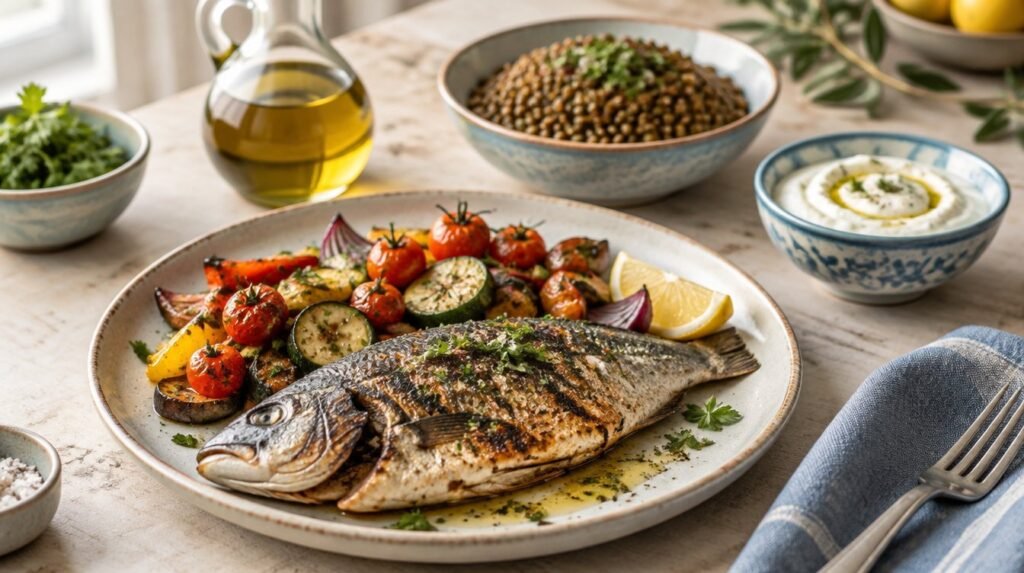
In the DINE-CD trial, 191 adults with mild to moderate Crohn’s disease followed either a Mediterranean diet or the more restrictive specific carbohydrate diet for 12 weeks. Symptom remission at week 6 was similar (43.5% on the Mediterranean diet vs 46.5% on the specific carbohydrate diet), so the more restrictive diet was no better than the simpler Mediterranean pattern. Drops in CRP were uncommon with either diet.
In a 17-week randomized study of 36 adults, a diet high in fermented foods increased microbiome diversity and lowered several inflammatory markers, while a high-fiber diet did not change the main immune measure. The Dietary Guidelines for Americans, 2025-2030 also name fermented foods and high-fiber foods as supporting a diverse microbiome.
Practical ways in: see our guides to fermented foods for gut health and making yogurt at home, which lets you skip added sugar.
How We Compared
- Human studies only. We set aside cell and animal research and looked for trials that measured gut inflammation, disease activity or gut barrier markers in people.
- Study design and size. Systematic reviews and randomized, placebo-controlled trials counted most. Single small, open-label or uncontrolled studies counted least.
- Who was studied. Results in people with IBD or IBS who were also on medicine do not automatically apply to healthy adults, and we say so.
- Dose. We noted the amount used in each study so you can compare it with a label.
- Safety. Side effects and interactions come from NIH, MedlinePlus, NHS and major cancer-center references.
- Ratings. Moderate means consistent results from more than one good trial or a review. Low means a few small trials or mixed results. Very low means one small or uncontrolled study.
We compared supplement types rather than brands because we found no branded product in this category with its own published trial on gut inflammation. A label can tell you the form and amount, such as curcumin with piperine or the milligrams of zinc carnosine. It cannot tell you whether that amount matches the research, whether the product contains what it says, or whether it suits your health history.
When to see a doctor
Gut inflammation is diagnosed with tests, not guessed from symptoms. NIDDK advises seeing a doctor right away if constipation comes with blood in the stool, constant belly pain, fever, vomiting or weight loss without trying. For diarrhea, it lists diarrhea lasting more than 2 days, high fever, or six or more loose stools a day as reasons to call. If you have Crohn’s disease or ulcerative colitis, discuss any supplement with your care team first. This article is general information, not medical advice.
Related topics
- Gut Health Supplements: a wider look at supplement types for digestion.
- Fiber Supplement: psyllium, inulin and other fibers compared.
- Tributyrin Supplement: what the research says about this butyrate form.
- Fermented Foods for Gut Health: food sources of live cultures.
- Gut Health Diet Plan: a food-first way to start.
Sources
- Information for Consumers on Using Dietary Supplements (U.S. Food and Drug Administration)
- Omega-3 Fatty Acids: Fact Sheet for Consumers (NIH Office of Dietary Supplements)
- Lev-Tzion R, et al. Omega 3 fatty acids (fish oil) for maintenance of remission in Crohn’s disease (Cochrane Database of Systematic Reviews, 2014)
- Turmeric: Usefulness and Safety (National Center for Complementary and Integrative Health)
- Turmeric: potential adverse effects (Welsh Medicines Advice Service, NHS Wales, 2024)
- Turmeric (Memorial Sloan Kettering Cancer Center, About Herbs)
- Lang A, et al. Curcumin in Combination With Mesalamine Induces Remission in Patients With Mild-to-Moderate Ulcerative Colitis in a Randomized Controlled Trial (Clinical Gastroenterology and Hepatology, 2015)
- Yin J, et al. Efficacy and safety of adjuvant curcumin therapy in ulcerative colitis: A systematic review and meta-analysis (Journal of Ethnopharmacology, 2022)
- Fernández-Bañares F, et al. Randomized clinical trial of Plantago ovata seeds (dietary fiber) as compared with mesalamine in maintaining remission in ulcerative colitis (American Journal of Gastroenterology, 1999)
- Ajani UA, et al. Dietary fiber and C-reactive protein: findings from national health and nutrition examination survey data (Journal of Nutrition, 2004)
- Psyllium (MedlinePlus Drug Information, National Library of Medicine)
- Dietary fiber: Essential for a healthy diet (Mayo Clinic)
- AGA does not recommend the use of probiotics for most digestive conditions (American Gastroenterological Association)
- Probiotics: Usefulness and Safety (National Center for Complementary and Integrative Health)
- Zhou Q, et al. Randomised placebo-controlled trial of dietary glutamine supplements for postinfectious irritable bowel syndrome (Gut, 2019)
- Akobeng AK, et al. Glutamine for induction of remission in Crohn’s disease (Cochrane Database of Systematic Reviews, 2016)
- Mahmood A, et al. Zinc carnosine, a health food supplement that stabilises small bowel integrity and stimulates gut repair processes (Gut, 2007)
- Zinc: Fact Sheet for Consumers (NIH Office of Dietary Supplements)
- Banasiewicz T, et al. Microencapsulated sodium butyrate reduces the frequency of abdominal pain in patients with irritable bowel syndrome (Colorectal Disease, 2013)
- Abrahams M, et al. Effect of a Daily Collagen Peptide Supplement on Digestive Symptoms in Healthy Women: 2-Phase Mixed Methods Study (JMIR Formative Research, 2022)
- Lewis JD, et al. A Randomized Trial Comparing the Specific Carbohydrate Diet to a Mediterranean Diet in Adults With Crohn’s Disease (Gastroenterology, 2021)
- Wastyk HC, et al. Gut-microbiota-targeted diets modulate human immune status (Cell, 2021)
- Dietary Guidelines for Americans, 2025-2030 (U.S. Department of Agriculture and U.S. Department of Health and Human Services)
- Symptoms and Causes of Diarrhea (NIDDK)
- Symptoms and Causes of Constipation (NIDDK)
This article is for general information and is not medical advice. Talk to your doctor or a registered dietitian before changing your diet, supplements or medication, especially if you have a health condition.