Skyr Recipe You Can Make at Home
Skyr at a glance
Skyr is a traditional Icelandic dairy food: thick, smooth, mildly sour and high in protein. A 2022 study from the University of Copenhagen describes it as technically a fresh cheese, traditionally set with rennet, though most modern dairies use only starter cultures (Srimahaeak 2022). Unlike most yogurt, it is made from skim milk, and the whey is removed after fermentation, which gives commercial skyr about 10 to 15% protein.
At home you can get very close by culturing skim milk like yogurt, then straining it longer than you would for Greek yogurt.
- Yield: about 2 to 2½ cups of skyr, plus 5 to 6 cups of whey.
- Active time: about 30 minutes.
- Total time: about 18 to 26 hours, mostly hands-off (incubating, chilling and straining).
- Equipment: heavy pot, food thermometer, a way to hold 108 to 115°F, fine-mesh strainer or cheesecloth, and a bowl.
Ingredients
- ½ gallon (8 cups) fat-free (skim) milk
- ½ cup nonfat dry milk powder (optional, for a thicker set)
- ¼ cup plain skyr or plain yogurt with live and active cultures, as your starter
The starter amount follows the University of Illinois Extension ratio of 2 tablespoons of yogurt per quart of milk. The same guide suggests stirring ¼ cup of nonfat milk powder into each quart of cold nonfat milk for thicker yogurt. If you use a store-bought starter, check that it is fresh and before its date. More on choosing one is in our guide to yogurt starter.
Method
- Wash your hands and equipment. Whisk the milk powder, if using, into the cold milk until no lumps remain.
- Heat the milk slowly in a heavy pot to 180 to 185°F, stirring often so it doesn’t scorch. Turn off the heat once it reaches that range.
- Cool the milk to 108 to 115°F. A sink of cold water speeds this up; stir and check the thermometer often.
- Ladle about 1 cup of the warm milk into a small bowl, whisk in the starter until smooth, then stir it back into the pot.
- Pour into a clean covered container and incubate at 108 to 115°F for 6 to 10 hours, without stirring, until it is set like soft yogurt. See how to incubate yogurt for oven, cooler and appliance options.
- Refrigerate the set yogurt for at least 2 hours.
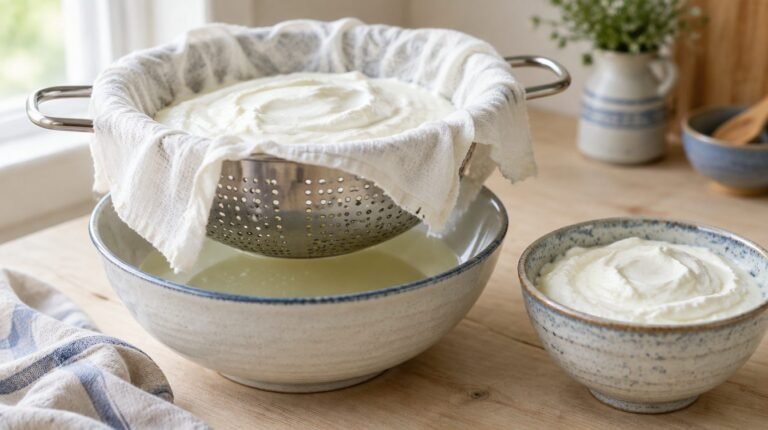
- Set a fine-mesh strainer or a double layer of cheesecloth over a deep bowl. Spoon in the cold yogurt, cover, and let it drain in the fridge for 6 to 12 hours, until roughly a quarter to a third of the original volume remains.
- Scrape the thick curd into a bowl and whisk or stir hard for a minute until smooth and glossy. Add a spoonful of whey back if it is stiffer than you like.
The heating, cooling and incubation temperatures come from the Illinois Extension guide, which also gives draining times of 2 to 4 hours for Greek-style yogurt and 8 to 24 hours for yogurt cheese. Skyr sits between those two, so start checking at about 6 hours. For more on why temperature matters, see our guide to yogurt temperature.
Straining to skyr thickness
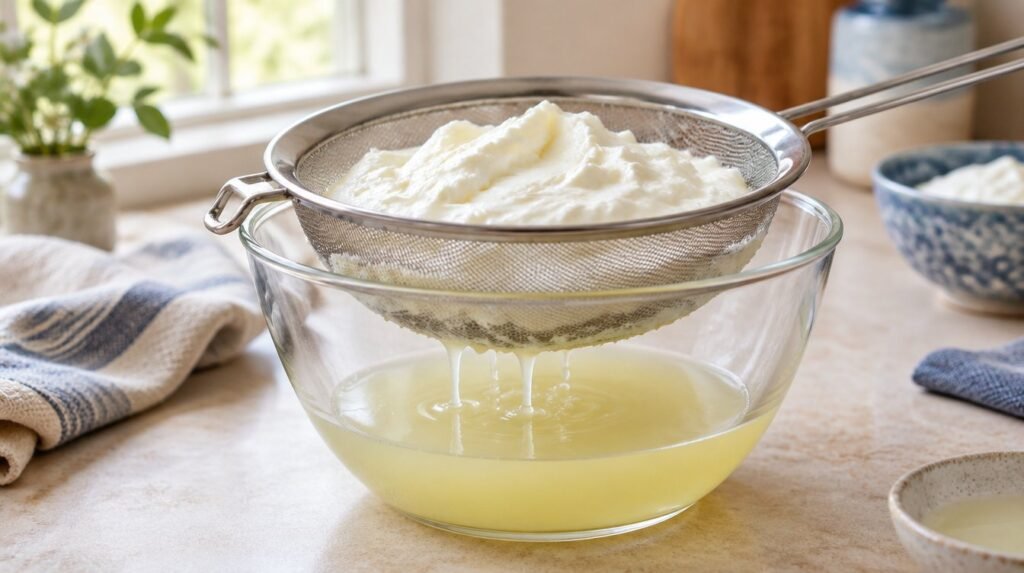
Straining does most of the work. Skim milk has only about 3.4 grams of protein per 100 grams, according to USDA FoodData Central. Removing whey concentrates the curd, which is how a thin, low-fat milk becomes a spoon-standing skyr.
A fine-mesh strainer is easier to clean than cheesecloth and holds a full batch. Keep the bowl covered and in the fridge the whole time. If the skyr turns dry and crumbly, stir whey back in a tablespoon at a time. Save the whey for smoothies, baking or soaking grains; our list of recipes using whey from yogurt has ideas.
Variations
- Creamier skyr: use 1% or 2% milk. It won’t be traditional, but it is smoother and less sharp.
- With rennet: for a more old-style set, add a small amount of rennet with the starter, following the rennet maker’s directions for the amount.
- Vanilla and honey: stir in ½ teaspoon vanilla and honey to taste just before serving.
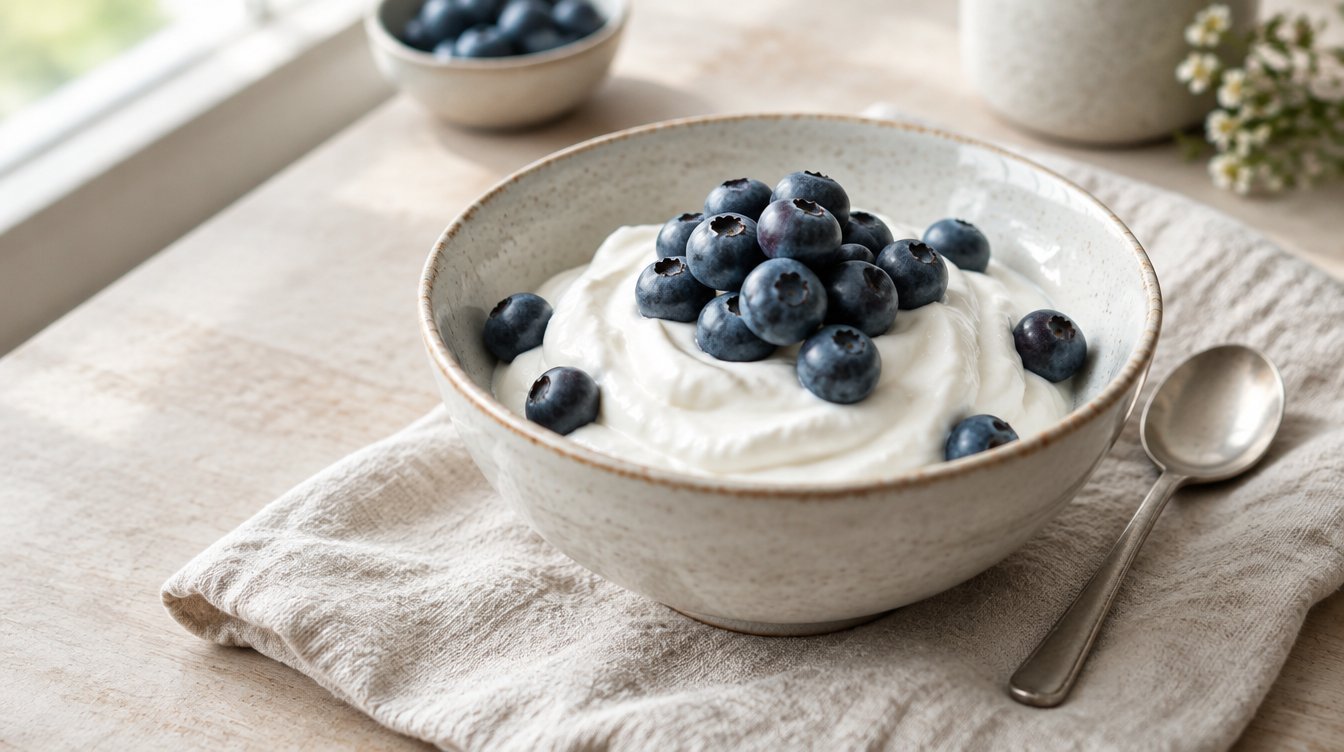
- Berry skyr: fold in mashed blueberries or raspberries, or serve with fresh berries and a splash of milk or cream.
- Savory: season with salt, lemon zest, dill and garlic and use it as a dip or spread.
- Next batch: save ¼ cup of plain skyr before you flavor it to culture your next batch.
If you are curious about the live cultures, our article on whether skyr is good for gut health looks at the evidence.
Storage
Keep skyr covered in the fridge at 40°F or below. The Illinois Extension guide advises eating homemade yogurt within 14 days, and UConn Extension gives 1 to 2 weeks for yogurt. Don’t leave it out for more than 2 hours, in line with USDA guidance for perishable food. Throw it out if you see mold or it smells yeasty or like alcohol. The 2022 study found that some yeasts can grow in skyr during cold storage and produce off-flavors, and one species turned milk sugar into alcohol and gas.
If you plan to use some as your next starter, Illinois Extension suggests doing so within 5 to 7 days, while the cultures are most active. Our guide on how long homemade yogurt lasts covers signs of spoilage in more detail.
Related topics
- Is Skyr Good for Gut Health?: what the research says about its cultures and protein.
- How to Make Greek Yogurt: the shorter-strain cousin of skyr.
- How to Incubate Yogurt: ways to hold 108 to 115°F at home.
- Yogurt Starter: choosing and keeping a starter.
- Recipes Using Whey from Yogurt: uses for the whey you strain off.
Sources
- Srimahaeak T, et al. Spoilage potential of contaminating yeast species Kluyveromyces marxianus, Pichia kudriavzevii and Torulaspora delbrueckii during cold storage of skyr (Foods, 2022)
- Making Yogurt at Home (University of Illinois Extension)
- Milk, fat free (skim) (USDA FoodData Central, FNDDS)
- Ensure Freshness and Dairy Safety with These Simple Storage Tips (UConn Extension, 2022)
- Leftovers and Food Safety (USDA Food Safety and Inspection Service)