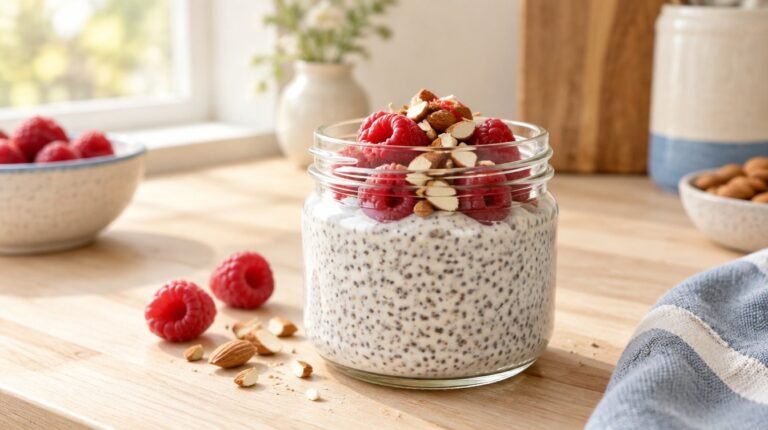
Whole Milk Yogurt Recipes You Can Make at Home
What can you make with whole milk yogurt?
Whole milk yogurt works in almost any yogurt recipe, and its extra fat makes the results creamier. You can eat it plain, strain it into thick Greek-style yogurt or a spreadable yogurt cheese, blend it into a drinkable fruit yogurt, or turn it into sauces, dips, marinades, smoothies and bowls. All of them start from one homemade base.
Below you’ll find that base, six simple recipes built on it, and what the nutrition numbers look like. The temperatures and draining times come from the University of Illinois Extension guide to making yogurt at home.
Why whole milk makes a difference
Fat carries flavor and gives body, so whole milk yogurt tastes rounder and less sharp than nonfat. It also sets thicker on its own. The Illinois guide lists nonfat milk made without added milk powder as a cause of thin yogurt, and suggests stirring powder into nonfat milk to compensate. With whole milk you rarely need it.
Here is how plain yogurts compare per cup, using USDA FoodData Central averages for store-bought yogurt. Homemade versions will differ a little depending on your milk and how long you strain.
| Plain yogurt (1 cup) | Calories | Protein | Fat | Saturated fat | Carbs | Calcium |
|---|---|---|---|---|---|---|
| Whole milk | 191 | 9.4 g | 11.0 g | 5.7 g | 13.6 g | 311 mg |
| Low fat milk | 154 | 12.9 g | 3.8 g | 2.5 g | 17.2 g | 448 mg |
| Nonfat milk | 123 | 10.4 g | 0.2 g | 0.3 g | 19.8 g | 409 mg |
| Greek, whole milk | 230 | 21.5 g | 10.8 g | 5.9 g | 11.6 g | 272 mg |
Whole milk yogurt has fewer carbs per cup than the lower-fat versions in this data, while straining roughly doubles the protein. Federal advice has also shifted. The Dietary Guidelines for Americans, 2025–2030 say to include full-fat dairy with no added sugars, while keeping saturated fat to no more than 10% of daily calories. On a 2,000-calorie day, that works out to about 22 grams, so a cup of whole milk yogurt uses roughly a quarter of it.
Yogurt with live cultures is also a fermented food. In a 17-week trial in 36 healthy adults, a diet high in fermented foods increased gut microbiome diversity and lowered several inflammatory markers (Wastyk 2021). It was a small study, but it is one reason to keep plain yogurt in regular rotation. For more, see fermented foods for gut health.
Start with a homemade base
- Heat 1 quart of whole milk slowly to 180 to 185°F, stirring so it doesn’t scorch.
- Cool it to 108 to 115°F.
- Whisk 2 tablespoons of plain yogurt with live cultures into 1 cup of the warm milk, then stir that back into the pot.
- Cover and incubate at 108 to 115°F for 6 to 10 hours, undisturbed, until set.
- Refrigerate at 40°F or below once it has gelled.
That gives about 4 cups of plain yogurt. A yogurt maker or another steady heat source makes the incubation step easier; our guide to making yogurt at home covers each step and the options in detail.
Six whole milk yogurt recipes

1. Thick Greek-style yogurt
Line a strainer with a double layer of cheesecloth, set it over a bowl, add cold yogurt, cover and drain in the fridge for 2 to 4 hours, the time Illinois Extension gives for Greek-style yogurt. Whole milk yogurt drains to a rich, dense texture. More detail is in how to make Greek yogurt.
2. Spreadable yogurt cheese
Drain the yogurt longer, 8 to 24 hours in the fridge, until it is thick enough to spread. Stir in a pinch of salt, spread it on a plate, and finish with olive oil, za’atar or chopped herbs. Serve it with vegetables or warm flatbread.
3. Drinkable berry yogurt
Illinois Extension’s drinkable yogurt is incubated only about 3 hours, until lightly gelled, then chilled. Blend 1 cup of fresh or thawed mixed berries until smooth and stir them into 1 quart of the chilled yogurt. Whole milk gives it a milkshake-like body. Stir before pouring, since it can separate.
4. Cucumber and garlic sauce
Grate half a cucumber, salt it lightly, wait 10 minutes and squeeze out the water. Mix it with 1 cup of Greek-style yogurt, 1 small minced garlic clove, a squeeze of lemon and a spoon of chopped dill. It goes with grilled meat, fish, falafel or raw vegetables. Our Greek yogurt sauce article has more versions.
5. Yogurt marinade
Whisk 1 cup of plain yogurt with 2 tablespoons of lemon juice, 2 minced garlic cloves, 1 teaspoon each of cumin and paprika, and salt. Coat chicken pieces and marinate them in the fridge, then cook through. Thick whole milk yogurt clings well to the meat. See Greek yogurt marinated chicken for timing and temperatures.
6. Breakfast bowl
Spoon 1 cup of plain whole milk yogurt into a bowl and top it with fruit, nuts or seeds, and a drizzle of honey if you like it sweeter. Plain yogurt you flavor yourself has no added sugar unless you add it. For more combinations, see our yogurt bowl ideas.
Tips for better results
- Use fresh starter. Illinois Extension suggests using a homemade batch as starter within 5 to 7 days, and store-bought yogurt before its date.
- Keep the temperature steady. Too hot or too cold during incubation is a common cause of yogurt that won’t firm up.
- Don’t stir while it sets. Moving the container breaks the forming curd.
- Chill promptly. Yogurt left out too long after incubation can separate and keeps getting more sour.
- Store it cold. Keep yogurt at 40°F or below and eat it within 14 days, per the Illinois guide. Don’t leave dishes made with it out for more than 2 hours, per USDA.
Frequently asked questions
Can I make Greek yogurt from whole milk?
Yes. Make plain yogurt with whole milk, chill it, then drain it in the fridge for 2 to 4 hours (Illinois Extension).
Is whole milk yogurt healthy?
Plain whole milk yogurt can fit a healthy diet; the 2025–2030 guidelines say to include full-fat dairy with no added sugars and keep saturated fat under 10% of calories (Dietary Guidelines).
Why did my whole milk yogurt come out thin?
The usual causes are a starter without live cultures, incubation that was too hot or too cold, or milk that was too cool when it went in to incubate. Fix the temperature first, then try a fresh starter.
How long does homemade whole milk yogurt keep?
Keep it at 40°F or below and eat it within 14 days, as Illinois Extension advises. Throw it out if you see mold or it smells off.
Related topics
- How to Make Yogurt at Home: the full step-by-step method.
- How to Make Greek Yogurt: straining whole milk yogurt thick.
- Best Milk for Gut Health: how different milks compare.
- Plain Yogurt Recipes You Can Make at Home: more ideas for a plain base.
- How Long Does Homemade Yogurt Last?: storage and spoilage signs.
Sources
- Making Yogurt at Home (University of Illinois Extension)
- Yogurt, whole milk, plain (USDA FoodData Central, FNDDS)
- Yogurt, low fat milk, plain (USDA FoodData Central, FNDDS)
- Yogurt, nonfat milk, plain (USDA FoodData Central, FNDDS)
- Yogurt, Greek, whole milk, plain (USDA FoodData Central, FNDDS)
- Dietary Guidelines for Americans, 2025–2030 (U.S. Department of Health and Human Services and U.S. Department of Agriculture)
- Wastyk HC, et al. Gut-microbiota-targeted diets modulate human immune status (Cell, 2021)
- Leftovers and Food Safety (USDA Food Safety and Inspection Service)