Greek Yogurt Cookie Dough: What You Need to Know
What Greek yogurt cookie dough is
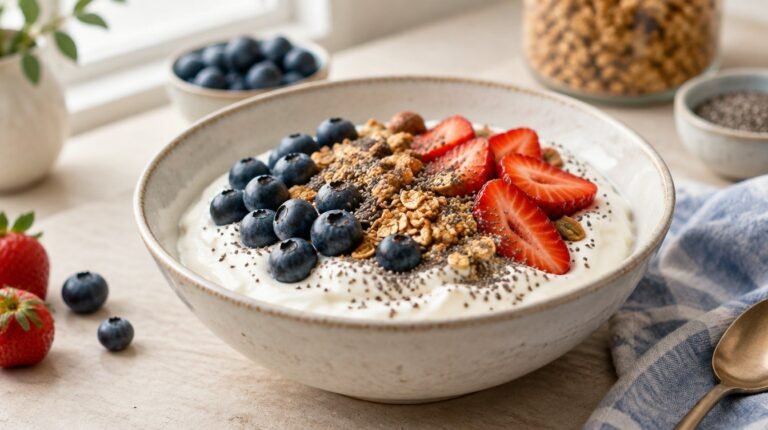
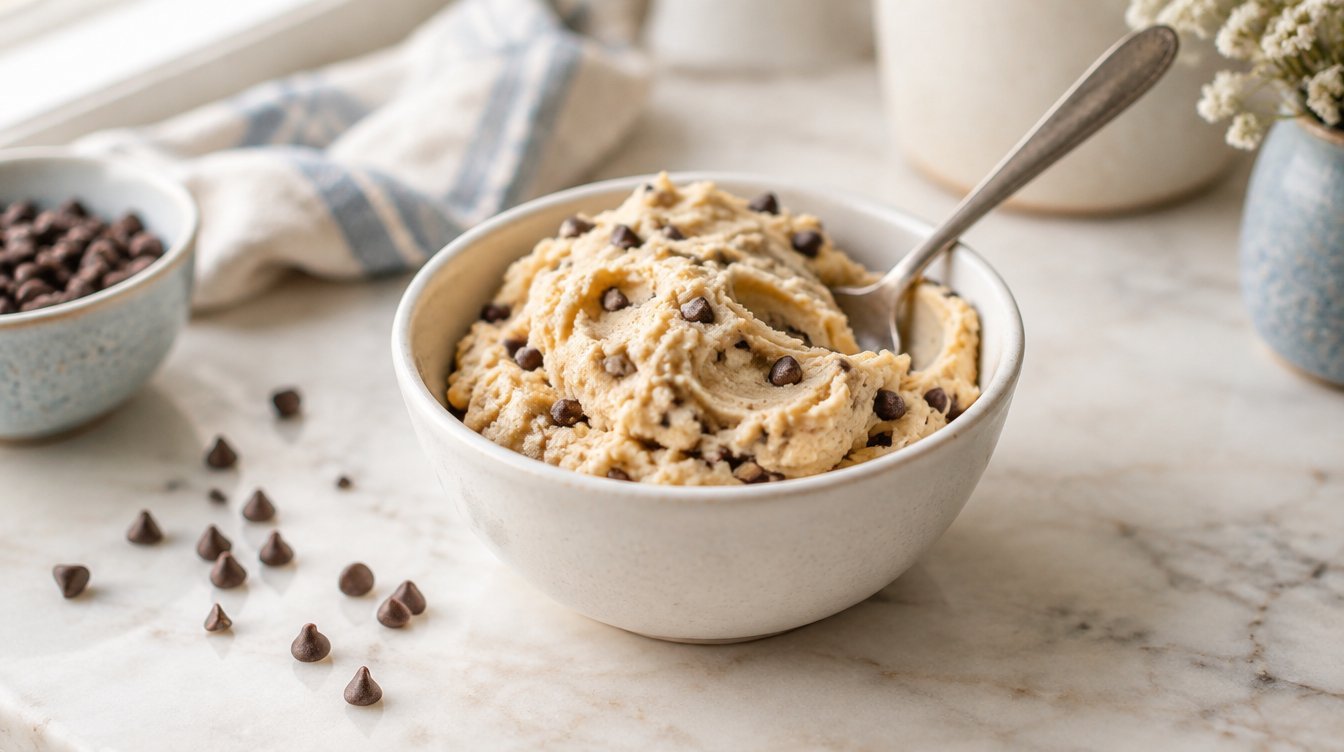
Greek yogurt cookie dough is a spoonable, no-bake dessert that uses thick plain Greek yogurt in place of most of the butter and eggs in regular cookie dough. A typical bowl combines Greek yogurt with flour that is safe to eat raw, a nut butter, a little sweetener, vanilla, salt and chocolate chips. The yogurt adds protein and tang and makes the dough soft and creamy rather than greasy.
It is popular as a high-protein snack, and it can also be baked into soft cookies. The two versions behave very differently for food safety and for live cultures, so it helps to know which one you are making.
Is it safe to eat raw?
Only if the flour is safe to eat raw. The FDA points out that flour is a raw food and can carry Salmonella or harmful E. coli, because milling grain into flour does not kill bacteria. Its advice is plain: never eat or taste raw flour, dough or batter.
This is not a theoretical risk. A 2016 U.S. outbreak of Shiga toxin-producing E. coli traced to one flour producer sickened 56 people in 24 states, and illness was strongly linked with tasting unbaked homemade dough or batter. An FDA survey from 2019 found that most U.S. adults are largely unaware raw flour is risky to eat.
Three rules keep a no-bake bowl sensible:
- Do not heat-treat flour yourself. Many recipes say to microwave or toast flour, but the FDA says do not try to heat treat flour at home, because home methods may not kill all bacteria.
- Use flour sold as ready to eat. If you plan to eat the dough raw, choose a flour whose package says it is heat-treated or safe to eat uncooked, and follow its directions. If you cannot find one, bake the dough instead.
- Leave out raw eggs. Greek yogurt already supplies the moisture, so the no-bake version needs no egg at all. The FDA notes raw eggs may contain harmful bacteria too.
Wash your hands, bowls and spoons with soap and warm water after handling raw flour, since the FDA notes it spreads easily onto other foods.
Why it matters for gut health
The gut-health interest comes from the yogurt. Plain Greek yogurt that carries the “live and active cultures” wording must have at least 10 million live bacteria per gram at manufacture under the federal yogurt standard. Stirring it into a cold, no-bake dough keeps those cultures alive, though the other ingredients dilute them. Our page on Greek yogurt with probiotics explains what those cultures can and cannot do.
Baking changes that. The same federal standard notes that yogurt heat-treated after culturing loses its live cultures, and an oven heats dough far beyond that point. Baked Greek yogurt cookies still gain protein and moisture from the yogurt, but treat them as a treat, not a source of live microbes. Our guide on baking with Greek yogurt covers how yogurt behaves in the oven.
Sugar is the other side of the ledger. The Dietary Guidelines for Americans, 2025-2030 say no amount of added sugar is recommended and suggest keeping one meal to no more than 10 grams. Chocolate chips and syrup add up quickly, so a small scoop of dough with fruit beats a large bowl of sweet dough for everyday eating.
Which Greek yogurt to use
Use plain, unsweetened Greek yogurt so you control the sugar. The fat level changes the texture more than the protein. Values below are per 100 grams (about 1/3 cup) from USDA FoodData Central.
| Yogurt | Calories | Protein | Fat | Best for |
|---|---|---|---|---|
| Greek, plain, nonfat | 59 | 10.2 g | 0.4 g | Highest protein for the calories; dough is tangier and slightly firmer |
| Greek, plain, whole milk | 97 | 9.0 g | 5.0 g | Creamiest, most “buttery” dough |
| Regular plain, whole milk | 61 | 3.5 g | 3.3 g | Too thin on its own; strain it first |
Regular yogurt makes runny dough because it holds far more liquid. If that is what you have, strain it in a fine-mesh strainer in the fridge for a few hours until it is as thick as Greek yogurt. Our guide on how to make Greek yogurt gives straining times.
How to make a basic bowl
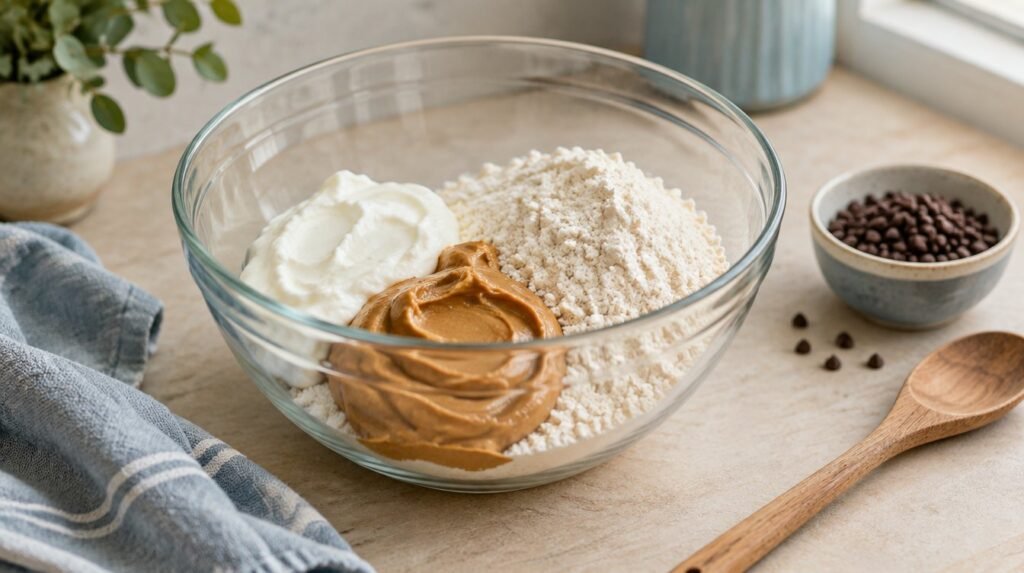
This makes two small servings. Treat the amounts as a starting ratio and adjust to taste.
- 1/2 cup plain Greek yogurt
- 1/2 cup flour labeled heat-treated or ready to eat
- 2 tablespoons smooth peanut, almond or cashew butter
- 1 tablespoon maple syrup, or less to taste
- 1/2 teaspoon vanilla extract and a pinch of salt
- 2 tablespoons mini chocolate chips
- Stir the yogurt, nut butter, maple syrup, vanilla and salt in a bowl until smooth.
- Add the flour a spoonful at a time and stir until the mixture looks like soft cookie dough. Add a little more flour if it is sticky, or a spoonful of yogurt if it is crumbly.
- Fold in the chocolate chips.
- Chill for 20 to 30 minutes. The flour absorbs moisture and the dough firms up and tastes less floury.
For a higher-protein version, swap a few tablespoons of the flour for protein powder, as in our Greek yogurt and protein powder guide. Powder absorbs a lot of liquid, so add it slowly.
Making it as baked cookies
If you would rather use ordinary flour, bake the dough instead of eating it raw. A baked version needs a recipe written for the oven, which adds leavening and usually an egg, and the cookies should be baked until set all the way through. Yogurt cookies come out soft and cake-like rather than crisp. Baking is the step the FDA relies on: it says cooking is the only way to be sure foods made with flour and raw eggs are safe.
Common problems and fixes
| Problem | Likely cause | Fix |
|---|---|---|
| Runny or wet dough | Yogurt too thin, or too much syrup | Use strained or Greek yogurt and cut the syrup; chill longer |
| Dry and crumbly | Too much flour or protein powder | Stir in yogurt 1 tablespoon at a time |
| Too tangy | Nonfat Greek yogurt is very tart | Use whole-milk Greek yogurt, more nut butter, or a little more vanilla |
| Tastes like raw flour | Dough not rested | Chill 30 minutes so the flour hydrates |
| Gets watery in the fridge | Yogurt releases whey over time | Stir it back in, and make smaller batches |
How to store it
Keep the dough covered in the refrigerator, which the FDA says should be at 40°F. Because it is mostly yogurt, treat it like any opened dairy food: keep it cold, use a clean spoon, and finish it before the yogurt’s own use-by date. Do not leave it out at room temperature for long, and toss it if it smells off or shows mold.
Related topics
- Greek Yogurt Dessert: more sweet ideas built on plain Greek yogurt.
- High Protein Greek Yogurt Recipes You Can Make at Home: other snacks with a protein focus.
- Greek Yogurt and Peanut Butter Powder: a lighter nut-butter swap for the dough.
- Greek Yogurt Protein: how much protein different styles carry.
- Homemade Greek Yogurt: make your own thick base.
Sources
- Handling Flour Safely: What You Need to Know (U.S. Food and Drug Administration)
- Crowe SJ, et al. Shiga Toxin-Producing E. coli Infections Associated with Flour (New England Journal of Medicine, 2017)
- Verrill L, et al. Consumption of Raw Flour in the United States: Results from the 2019 U.S. Food and Drug Administration Food Safety and Nutrition Survey (Journal of Food Protection, 2022)
- 21 CFR 131.200 Yogurt (Electronic Code of Federal Regulations)
- Dietary Guidelines for Americans, 2025-2030 (U.S. Departments of Agriculture and Health and Human Services)
- Yogurt, Greek, plain, nonfat (FDC ID 170894) (USDA FoodData Central)
- Yogurt, Greek, plain, whole milk (FDC ID 171304) (USDA FoodData Central)
- Yogurt, plain, whole milk (FDC ID 171284) (USDA FoodData Central)