Stomach Feels Empty After Eating: What You Need to Know
Why your stomach can feel empty after a meal
Feeling empty or hungry soon after eating is common, and most of the time it comes down to what was in the meal, how fast you ate it, or how you slept the night before. Less often, a gnawing “empty” feeling is really stomach pain, or constant hunger is a sign of a medical problem such as diabetes or an overactive thyroid. This article covers both, and it is general information, not medical advice.
How your body decides you are full
Fullness is not one signal but several. When food stretches the stomach and intestines, nerves in the gut wall respond, and cells lining the stomach and small intestine release hormones that tell the brain you are hungry or full. The NIDDK explains that this mix of nerves and hormones also controls how fast food moves through you. We cover that movement in more depth in our guide to motility.
One of the best known hunger hormones is ghrelin. Cleveland Clinic describes ghrelin as a hormone made mainly by the stomach that signals the brain when the stomach is empty. Levels rise between meals and fall once the stomach is full. Anything that keeps ghrelin high, or makes a meal leave the stomach quickly, can leave you feeling empty sooner.
Common everyday causes
Meals that are fast to eat and fast to digest
Refined, highly processed foods tend to be soft, easy to eat quickly and low in fiber. In a 2019 NIH inpatient study, 20 adults ate an ultra-processed diet for two weeks and an unprocessed diet for two weeks, eating as much as they liked. On the ultra-processed diet they ate about 500 more calories a day, even though the meals offered were matched for calories, sugar, fat, fiber and protein. It was a small study, but it suggests these foods do a weaker job of filling people up.
Too little protein or fiber
Protein seems to help with fullness. A 2015 review in the American Journal of Clinical Nutrition found that higher-protein meals produced a modest increase in fullness and in satiety hormones, though they did not reliably reduce how much people ate at the next meal. Fiber adds bulk and slows things down, which is why foods covered in our guide to foods that slow digestion often keep you going longer.
Eating quickly
Fullness signals take time to reach the brain. In a randomized study of 30 healthy women, eating the same meal slowly led to about 67 fewer calories eaten, and the women felt more satisfied at the end of the meal than when they ate quickly. It was one small study in young women, so treat it as a useful hint rather than a rule.
Short sleep
Poor sleep can push hunger up the next day. In a small crossover study of 12 healthy young men, two nights of restricted sleep lowered the fullness hormone leptin by 18 percent, raised ghrelin by 28 percent, and increased reported hunger. The authors noted the study was small and limited to young men.
Simply not eating enough
A light lunch, a skipped breakfast or a calorie-cutting diet can all leave you hungry soon after a meal. Cleveland Clinic notes that people who greatly limit calories tend to have high ghrelin levels. If you are hungry after every meal, the meals may just be too small for how active you are.
When the “empty” feeling is something else
Sometimes people describe stomach pain as feeling empty or hollow. The NIDDK says peptic ulcer pain may be dull or burning, may come when the stomach is empty or at night, and may ease for a short time after eating. The NHS adds that ulcer pain is usually in the upper tummy and often worse at night. Gastritis and indigestion can also cause upper belly discomfort.
Constant hunger can also have a medical cause:
- Diabetes: the NIDDK lists feeling very hungry, even after eating, among common symptoms, along with thirst, frequent urination and blurred vision.
- Overactive thyroid: hyperthyroidism can cause weight loss despite an increased appetite, a fast heartbeat and shaky hands.
- Low blood sugar: hunger, shakiness and dizziness are listed by the NIDDK as symptoms of hypoglycemia, which the NIDDK covers mainly as a risk for people with diabetes.
- After stomach surgery: food can move too quickly out of the stomach, a problem called dumping syndrome. The NIDDK says late dumping happens 1 to 3 hours after a meal and is caused by low blood sugar.
Ways to stay full longer
These are low-risk changes worth trying for a week or two:
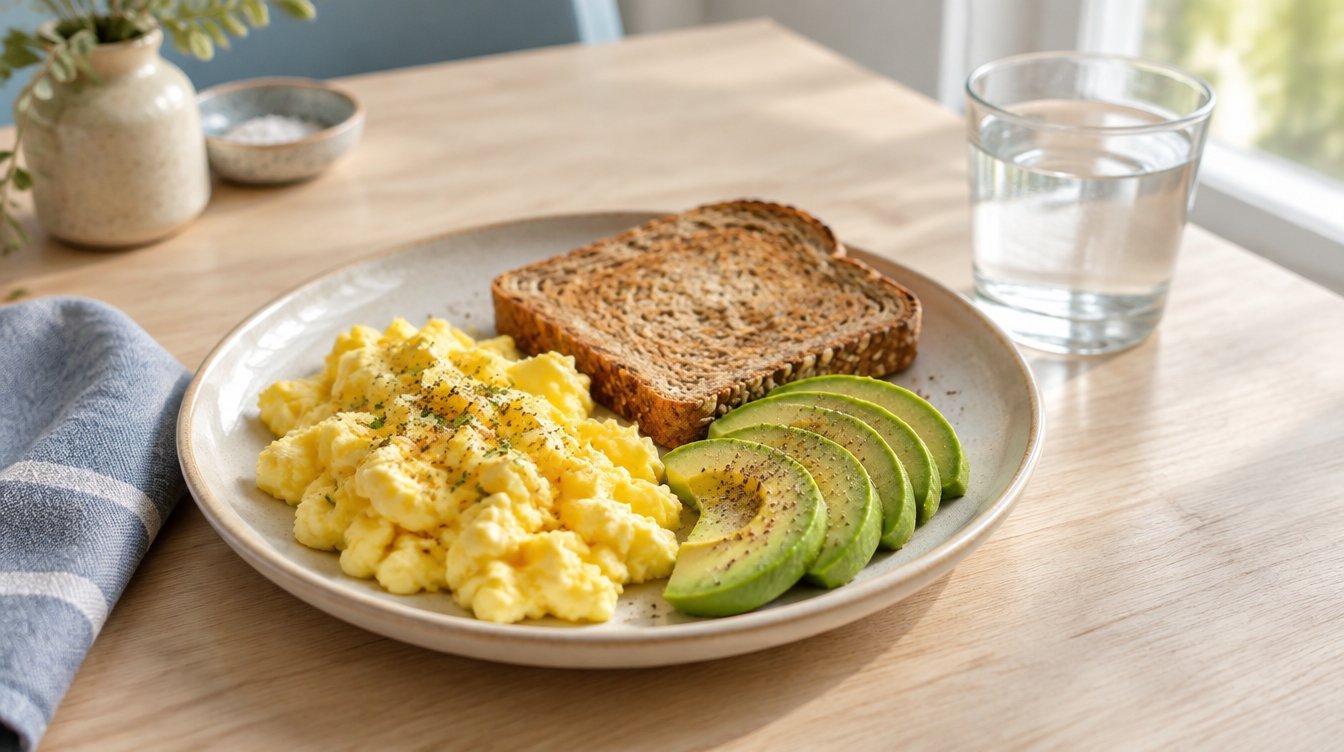
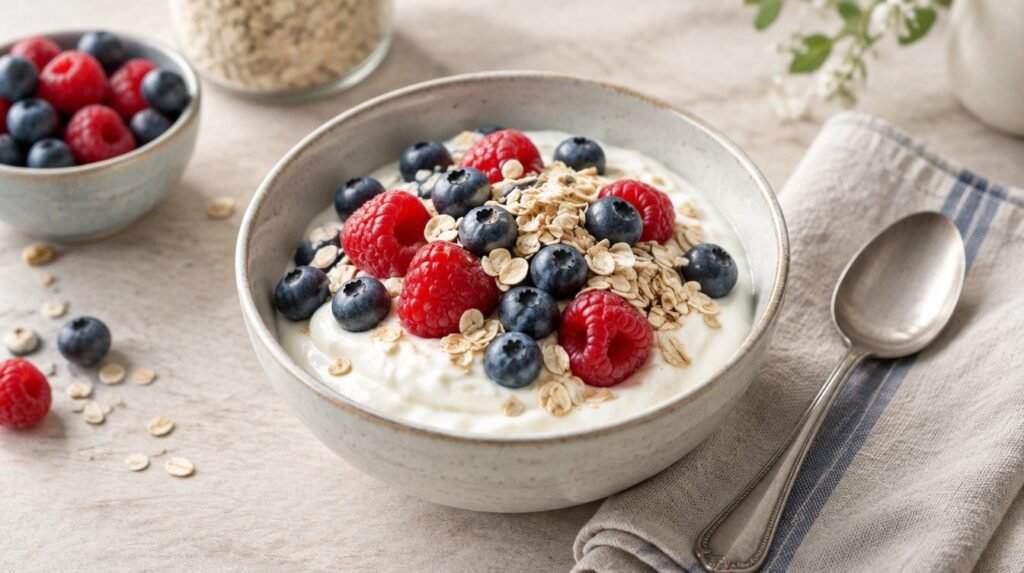
- Build meals around protein: eggs, fish, beans, tofu, chicken or a bowl of strained yogurt; see our notes on Greek yogurt protein.
- Add fiber at every meal: vegetables, fruit, oats, beans and whole grains. Our guide to slow digesting carbs has examples.
- Swap some ultra-processed foods: trade packaged snacks for whole foods you have to chew.
- Slow down: put your fork down between bites and give a meal more time than a few rushed minutes.
- Protect your sleep: a regular bedtime may make next-day hunger easier to manage.
- Check portion size: if you are very active, you may simply need more food.
Here is how a few simple swaps might look:
| Meal that may leave you hungry | Swap that may hold you longer | Why |
|---|---|---|
| White toast with jam | Eggs on whole-grain toast | Adds protein and fiber |
| Sweetened flavored yogurt | Plain Greek yogurt with berries and oats | More protein, more fiber, less added sugar |
| Packaged snack bar | Apple with peanut butter | Fiber and fat, more chewing |
| White pasta with sauce | Pasta with beans or chicken and vegetables | Adds protein and bulk |
If you need ideas, our gut-healthy breakfast guide pulls many of these together.
When to see a doctor
Hunger soon after a meal is rarely an emergency, but some signs need prompt attention. Call or see your doctor right away, or seek urgent care, if you have:
- Black or tarry stool, or red or maroon blood in your stool
- Vomit with blood or that looks like coffee grounds
- Sudden, sharp or severe belly pain that doesn’t go away
- Feeling dizzy or fainting, or a racing pulse
The NIDDK lists these as possible signs of a peptic ulcer complication. Also book a regular appointment if you are hungry all the time along with thirst, frequent urination, weight loss you can’t explain, a fast heartbeat, or burning stomach pain that keeps coming back. The NHS also advises getting checked if you lose your appetite, feel full after a very small amount of food, or have trouble swallowing.
Related topics
- Stomach Problems: The Complete Guide: a wider look at common stomach complaints.
- Foods That Slow Digestion: foods that may keep you full longer.
- Slow Digesting Carbs: carbohydrate choices that digest more gradually.
- How to Digest Food Faster: the other side of the same system.
- Motility: how food moves through the gut.
Sources
- Your Digestive System & How It Works (National Institute of Diabetes and Digestive and Kidney Diseases)
- Ghrelin (Cleveland Clinic)
- Hall KD, et al. Ultra-processed diets cause excess calorie intake and weight gain: an inpatient randomized controlled trial of ad libitum food intake (Cell Metabolism, 2019)
- Leidy HJ, et al. The role of protein in weight loss and maintenance (American Journal of Clinical Nutrition, 2015)
- Andrade AM, et al. Eating slowly led to decreases in energy intake within meals in healthy women (Journal of the American Dietetic Association, 2008)
- Spiegel K, et al. Sleep curtailment in healthy young men is associated with decreased leptin levels, elevated ghrelin levels, and increased hunger and appetite (Annals of Internal Medicine, 2004)
- Symptoms & Causes of Peptic Ulcers (Stomach Ulcers) (NIDDK)
- Stomach ulcer (NHS)
- Symptoms & Causes of Gastritis & Gastropathy (NIDDK)
- Symptoms & Causes of Indigestion (NIDDK)
- Symptoms & Causes of Diabetes (NIDDK)
- Hyperthyroidism (Overactive Thyroid) (NIDDK)
- Low Blood Glucose (Hypoglycemia) (NIDDK)
- Symptoms & Causes of Dumping Syndrome (NIDDK)
This article is for general information and is not medical advice. Talk to your doctor or a registered dietitian before changing your diet, supplements or medication, especially if you have a health condition.