Oregano Oil for Gut Health: What You Need to Know
What oregano oil is
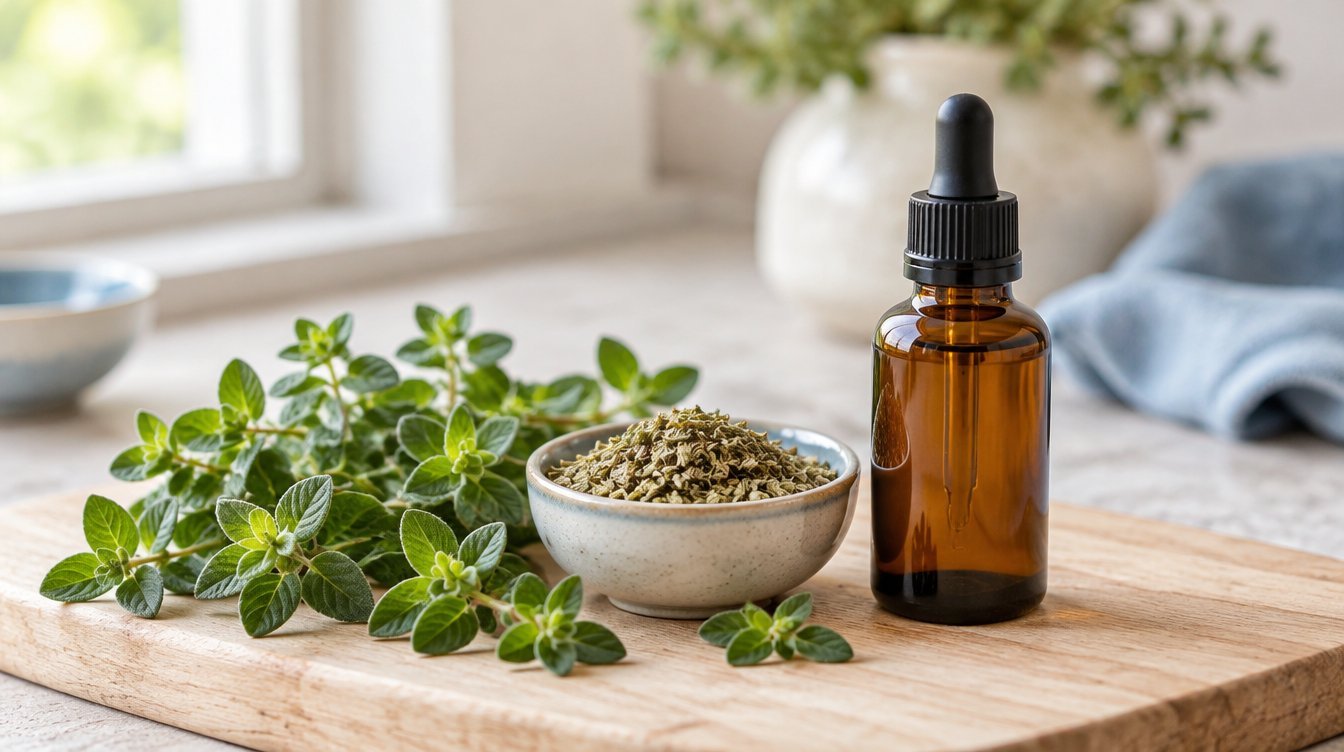
Oregano is the familiar kitchen herb, and it is generally recognized as safe as a food ingredient. Oregano oil is a concentrated extract of the plant sold as a dietary supplement, often in softgels or as drops mixed into a carrier oil. Its main active compounds are thought to be carvacrol and thymol (LiverTox, NIDDK).
There are two very different products on the shelf. Oregano essential oil is the pure, highly concentrated oil used in aromatherapy. Supplements labeled “oil of oregano” are usually diluted and made to be swallowed. Mixing the two up can be dangerous, because many essential oils can be poisonous if swallowed or misused (Poison Control).
This article is general information, not medical advice.
Why people try it for gut health
Oregano oil is promoted for gut problems because its compounds kill or slow many microbes in lab and animal studies (LiverTox). People often take it hoping to clear small intestinal bacterial overgrowth (SIBO), yeast or intestinal parasites, or as part of a “gut cleanse.”
The gap between lab and people is large. The NIDDK’s LiverTox database notes that oregano’s antimicrobial, antifungal and antiparasitic effects have been shown in lab and animal studies, but “have not been demonstrated in humans.” It also notes that oregano extracts are not approved for any disease (LiverTox). Because it is a supplement, the FDA does not have the authority to approve it for safety or effectiveness before it is sold (FDA).
What the research shows
Human research on oregano oil and the gut is thin. These are the studies most often cited.
| Study | Who and what | Result | Main limits |
|---|---|---|---|
| Force et al., 2000 | 14 adults with parasites in their stool took 600 mg emulsified oregano oil daily for 6 weeks | Some parasites cleared; symptoms improved in 7 of 11 with Blastocystis | Tiny, no control group |
| Chedid et al., 2014 | 104 people with SIBO chose rifaximin (an antibiotic) or herbal blends for 4 weeks | 46% on herbs vs 34% on rifaximin had a negative breath test; difference not significant | Not randomized; blends had many herbs, not oregano alone |
| Gopalsamy et al., 2025 | Systematic review of animal studies on essential oil compounds, including carvacrol and thymol | Reduced gut inflammation markers in animals | No human data; authors call for clinical trials |
Parasites
The parasite study gave adults 600 mg of emulsified oregano oil a day for 6 weeks. Parasites disappeared in some people, and digestive symptoms improved in 7 of the 11 people who had Blastocystis hominis (Force et al., Phytotherapy Research, 2000). With only 14 people and no comparison group, it is not possible to tell how much of that change was due to the oil.
SIBO
In a gastroenterology practice, 104 patients with SIBO on a breath test chose either rifaximin or commercial herbal blends. One blend contained oregano oil, along with thyme oil, berberine and other herbs. After 4 weeks, 17 of 37 people (46%) on herbs and 23 of 67 (34%) on rifaximin had a negative follow-up test, a difference the study did not find statistically significant (Chedid et al., Global Advances in Health and Medicine, 2014). The authors called for further prospective studies. This was not a test of oregano oil by itself.
Effects on helpful bacteria
An antimicrobial does not always choose its targets. In lab cultures of human gut bacteria, most essential oils hit harmful species harder than helpful ones, but Faecalibacterium prausnitzii, a beneficial species, was as sensitive or more sensitive than the pathogens (Thapa et al., Microbiology, 2012). In a follow-up using mixed stool samples, thymol at high concentration suppressed bacteria overall, while lower amounts had little effect (Thapa et al., Microbiology, 2015). These are lab findings and may not reflect what happens in your gut.
Safety and who should avoid it
Oregano oil is usually well tolerated. Higher doses can cause abdominal discomfort, heartburn, constipation or diarrhea, and sometimes nausea, vomiting, dizziness or headache. Allergic reactions are rare. LiverTox rates oregano as an unlikely cause of liver injury (LiverTox).
- Pregnancy: LiverTox warns that oregano at dietary supplement doses should not be used during pregnancy (LiverTox).
- Breastfeeding: there are no safety data, and the NIH LactMed database says amounts higher than those used as a food flavoring should probably be avoided (LactMed).
- Children: keep essential oils locked away. Children may be more susceptible to their toxic effects (Poison Control).
- People taking medicines or facing surgery: supplements may interact with medications or pose risks with certain health problems (NCCIH). Essential oils can also interact with medicines (Poison Control).
- Pure essential oil: do not swallow it. Use only products labeled for oral use, as directed (Poison Control).
How to approach oregano oil
If you are thinking about oregano oil for a gut problem, a few steps keep you on safer ground:
- Get a diagnosis first: SIBO symptoms such as bloating, gas, belly pain and diarrhea overlap with many conditions, and a doctor may suggest a breath test to confirm it (Cleveland Clinic). Our article on SIBO and bad breath covers more symptoms.
- Do not self-treat a suspected infection: untreated SIBO can lead to poor nutrient absorption and vitamin B12 deficiency (Cleveland Clinic), and parasites need proper testing.
- Tell your doctor: mention any supplement you take, especially alongside antibiotics or other medicines (NCCIH).
- Cook with the herb: oregano is generally recognized as safe as a food ingredient (LiverTox). Our guide to herbs for gut health covers others.
- Be skeptical of cleanse claims: see our look at gut cleanses for what the evidence says.
When to see a doctor
Talk with a doctor right away if you or someone in your care has diarrhea with any of these signs (NIDDK):
- Diarrhea lasting more than 2 days in an adult, or six or more loose stools a day.
- High fever, frequent vomiting, or severe pain in the belly or rectum.
- Stools that are black and tarry or contain blood or pus.
- Signs of dehydration, such as extreme thirst, dark urine, little urine or dizziness.
Also get checked if you have unexplained weight loss, anemia or rectal bleeding along with gut symptoms (NIDDK), or ongoing bloating, cramps or bowel changes for more than 4 weeks (NHS).
Does oregano oil kill good gut bacteria?
It may affect some. In lab studies, the helpful species Faecalibacterium prausnitzii was sensitive to several essential oils (Thapa et al., 2012), but human data are lacking.
Can oregano oil treat SIBO?
There is no good evidence that oregano oil alone does. One non-randomized study of herbal blends that included oregano oil reported results similar to an antibiotic (Chedid et al., 2014).
Is oregano oil safe during pregnancy?
No. LiverTox warns that oregano at supplement doses should not be used during pregnancy (LiverTox).
Related topics
- Herbs for Gut Health: other herbs and what research supports them.
- Does SIBO Cause Bad Breath?: symptoms of bacterial overgrowth.
- Gut Cleanse: what cleanses can and cannot do.
- How to Restore Gut Health After Antibiotics: rebuilding after antimicrobials.
- Best Tea for Digestion: gentler herbal options for everyday use.
Sources
- Oregano. LiverTox: Clinical and Research Information on Drug-Induced Liver Injury (National Institute of Diabetes and Digestive and Kidney Diseases)
- Oregano. Drugs and Lactation Database (LactMed) (National Library of Medicine)
- Essential oils: Poisonous when misused (Poison Control, National Capital Poison Center)
- Questions and Answers on Dietary Supplements (U.S. Food and Drug Administration)
- Using Dietary Supplements Wisely (National Center for Complementary and Integrative Health)
- Small Intestinal Bacterial Overgrowth (SIBO) (Cleveland Clinic)
- Symptoms & Causes of Diarrhea (National Institute of Diabetes and Digestive and Kidney Diseases)
- Diagnosis of Irritable Bowel Syndrome (National Institute of Diabetes and Digestive and Kidney Diseases)
- Symptoms of IBS (irritable bowel syndrome) (NHS)
- Force M, et al. Inhibition of enteric parasites by emulsified oil of oregano in vivo (Phytotherapy Research, 2000)
- Chedid V, et al. Herbal therapy is equivalent to rifaximin for the treatment of small intestinal bacterial overgrowth (Global Advances in Health and Medicine, 2014)
- Thapa D, et al. Sensitivity of pathogenic and commensal bacteria from the human colon to essential oils (Microbiology, 2012)
- Thapa D, et al. Essential oils have different effects on human pathogenic and commensal bacteria in mixed faecal fermentations compared with pure cultures (Microbiology, 2015)
- Gopalsamy RG, et al. Dietary essential oil components: A systematic review of preclinical studies on the management of gastrointestinal diseases (Phytomedicine, 2025)
This article is for general information and is not medical advice. Talk to your doctor or a registered dietitian before changing your diet, supplements or medication, especially if you have a health condition.