Hack Your Health: The Secrets of Your Gut, Explained
What the documentary is
Hack Your Health: The Secrets of Your Gut is a 2024 Netflix documentary that runs about 80 minutes. According to Netflix’s own write-up, German doctor and author Giulia Enders leads viewers through the digestive system with colleagues including neuroscientist John Cryan and microbial ecologist Jack Gilbert, mixing interviews with animation.
The film follows four people: Maya Okada Erickson, a pastry chef recovering from anorexia who gets stomach pain with many foods; Daniell Koepke, a doctoral student with long-running digestive problems who has tried a fecal transplant; Kimmie “Karma” Gilbert, a mother of three working on her weight; and competitive eater Takeru “Kobi” Kobayashi, who says he no longer feels hunger. Each gives a stool sample, and the experts talk through what it shows.
Despite the word “hack,” the film’s main advice is slow and ordinary: eat a wider variety of foods, especially plants. There is no single trick on offer. Below, we look at its big ideas against published research and health agency guidance.
Why it matters for gut health: the big ideas, checked
| Idea in the film | What the evidence says | How solid |
|---|---|---|
| Gut bacteria help you digest food | The NIH’s digestive disease institute says bacteria in your GI tract, the microbiome, help with digestion. | Well established |
| What you eat shapes your gut microbes | In a 17-week Stanford trial of 36 healthy adults, a diet high in fermented foods raised microbe diversity; a high-fiber diet changed microbial enzymes but not diversity. | Moderate; small trials |
| Aim for 20 to 30 different plants a week | In the American Gut Project, people reporting more than 30 plant types a week had different gut bacteria than those eating 10 or fewer. | Early; observational |
| The gut is a “second brain” | Johns Hopkins describes more than 100 million nerve cells lining the gut that talk to the brain but don’t appear capable of thought. | Anatomy is solid; mood links still studied |
| Stool transplants can help | The FDA approved Vowst in 2023 to help prevent repeat C. difficile infection in adults after antibiotic treatment. | Strong for that one use; experimental otherwise |
Diet and diversity
The Stanford study, from the lab of Justin and Erica Sonnenburg, is one of the clearest tests of the film’s food message. Over 17 weeks, the fermented-food group saw their gut microbe diversity rise steadily and several inflammation markers fall. But only 18 people were in each group, so the results are a starting point.
The “30 plants” idea comes largely from the American Gut Project, a citizen-science effort with samples from over 10,000 people. Its authors linked eating more than 30 plant types a week with more bacteria thought to ferment fiber into short-chain fatty acids. Because people chose to join and reported their own diets, this shows a link, not cause and effect.
The gut-brain link
John Cryan’s line that the gut is a second brain has a real basis. Johns Hopkins explains that this nerve network manages swallowing, enzyme release and elimination, and that gut irritation may send signals that affect mood, which could help explain why people with IBS have higher rates of anxiety and depression. Much of the research on gut microbes and mood is still in animals or early human studies.
What the film can’t tell you
- Four people are not a study. Their stories are useful for explaining ideas, but they can’t show what will happen for you.
- A stool snapshot isn’t a diagnosis. It shows which microbes were present when you sampled. Our page on gut health tests covers what they can and can’t do.
- Probiotic pills aren’t a shortcut. The NIH’s complementary health center says that in most cases, we still don’t know which probiotics are helpful or how much to take.
- Fecal transplants are medical procedures. The approved products are for a specific infection and are given under a doctor’s care.
How to put the film’s advice to work
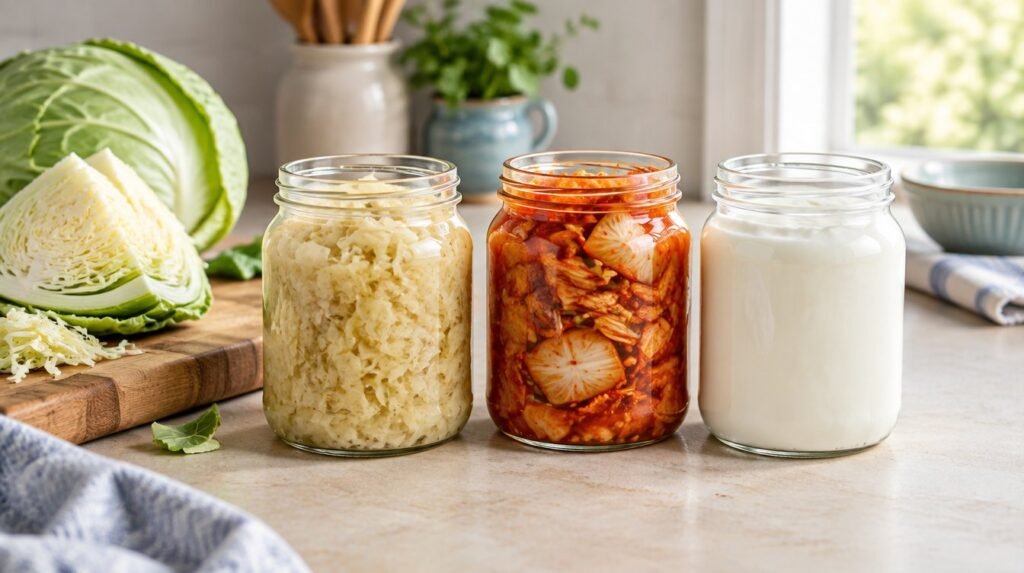
Most Americans have room to improve. The Dietary Guidelines for Americans, 2020-2025 report that more than 90 percent of women and 97 percent of men don’t get the recommended amount of fiber. A few plain steps fit what the film suggests:
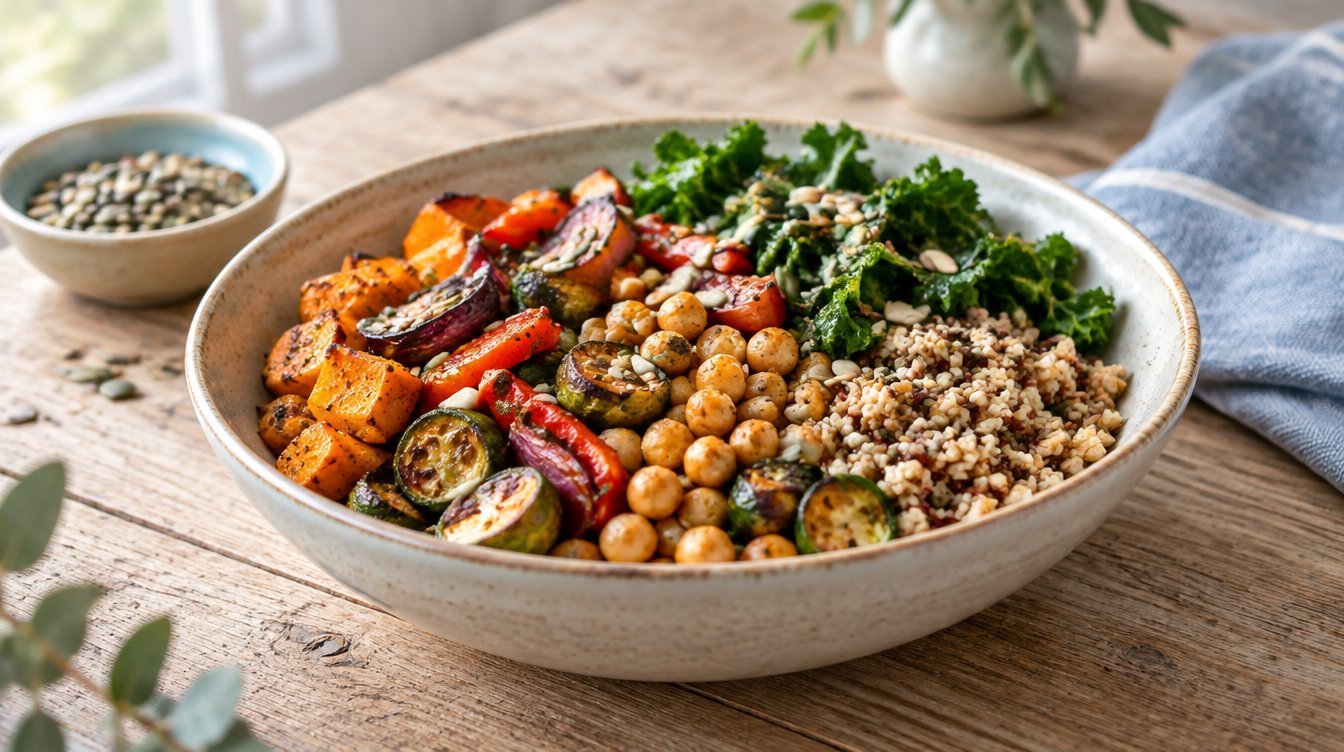
- Count plant types, not servings. Vegetables, fruit, whole grains, beans, nuts, seeds, herbs and spices all count. Try adding one new one a week.
- Add a fermented food most days. Yogurt with live cultures, kefir, sauerkraut or kimchi are easy places to start. See our fermented foods guide.
- Go up slowly. Gut bacteria break down carbohydrates you don’t digest, which produces gas, so a sudden jump in fiber can leave you bloated for a while.
- Use a simple plan. Our gut health diet plan and list of the best foods for gut health turn this into meals.
When to see a doctor
Changing what you eat is reasonable for most people, but some symptoms need a professional, not a documentary. Talk to a doctor if:
- Gas, bloating or other digestive symptoms bother you, change suddenly, or come with belly pain, constipation, diarrhea or weight loss (NIDDK).
- You have black, tarry or bloody stools, severe pain in the abdomen or rectum, frequent vomiting, or signs of dehydration. These call for help right away (NIDDK).
- Your bowel habits change in a way that isn’t usual for you, or you lose weight without trying (NHS).
If food has become a source of fear or you are cutting back sharply on what you eat, as one person in the film describes, a doctor can help you find support. This article is general information, not medical advice.
Where can I watch Hack Your Health: The Secrets of Your Gut?
It is a Netflix documentary released in 2024; availability is listed on its Netflix title page.
Who is the doctor in Hack Your Health?
German doctor and author Giulia Enders leads the film, joined by researchers including John Cryan and Jack Gilbert.
Is eating 30 plants a week proven to improve gut health?
Not proven. The idea comes mainly from the observational American Gut Project, which found links between plant variety and gut bacteria but can’t show cause and effect.
Related topics
- How to Improve Gut Health: practical steps beyond the film.
- Fermented Foods for Gut Health: which fermented foods have the most research.
- Best Foods for Gut Health: fiber-rich and fermented foods to try.
- Gut Health Test: what at-home stool tests can tell you.
- 10 Signs of an Unhealthy Gut: symptoms worth paying attention to.
- Gut Health Diet Plan: a week of meals built on variety.
Sources
- Hack Your Health: The Secrets of Your Gut (Netflix, 2024)
- Hack Your Health: The Secrets of Your Gut documentary explores how to improve your microbiome (Netflix Tudum, 2024)
- Your Digestive System & How It Works (NIDDK)
- Wastyk HC, et al. Gut-microbiota-targeted diets modulate human immune status (Cell, 2021)
- McDonald D, et al. American Gut: an Open Platform for Citizen Science Microbiome Research (mSystems, 2018)
- The Brain-Gut Connection (Johns Hopkins Medicine)
- FDA Approves First Orally Administered Fecal Microbiota Product for the Prevention of Recurrence of Clostridioides difficile Infection (U.S. Food and Drug Administration, 2023)
- Probiotics: Usefulness and Safety (National Center for Complementary and Integrative Health)
- Dietary Guidelines for Americans, 2020-2025 (USDA and HHS)
- Symptoms & Causes of Gas in the Digestive Tract (NIDDK)
- Symptoms & Causes of Diarrhea (NIDDK)
- Symptoms of bowel cancer (NHS)
This article is for general information and is not medical advice. Talk to your doctor or a registered dietitian before changing your diet, supplements or medication, especially if you have a health condition.