Herbs for Gut Health: What You Need to Know
What people mean by herbs for gut health
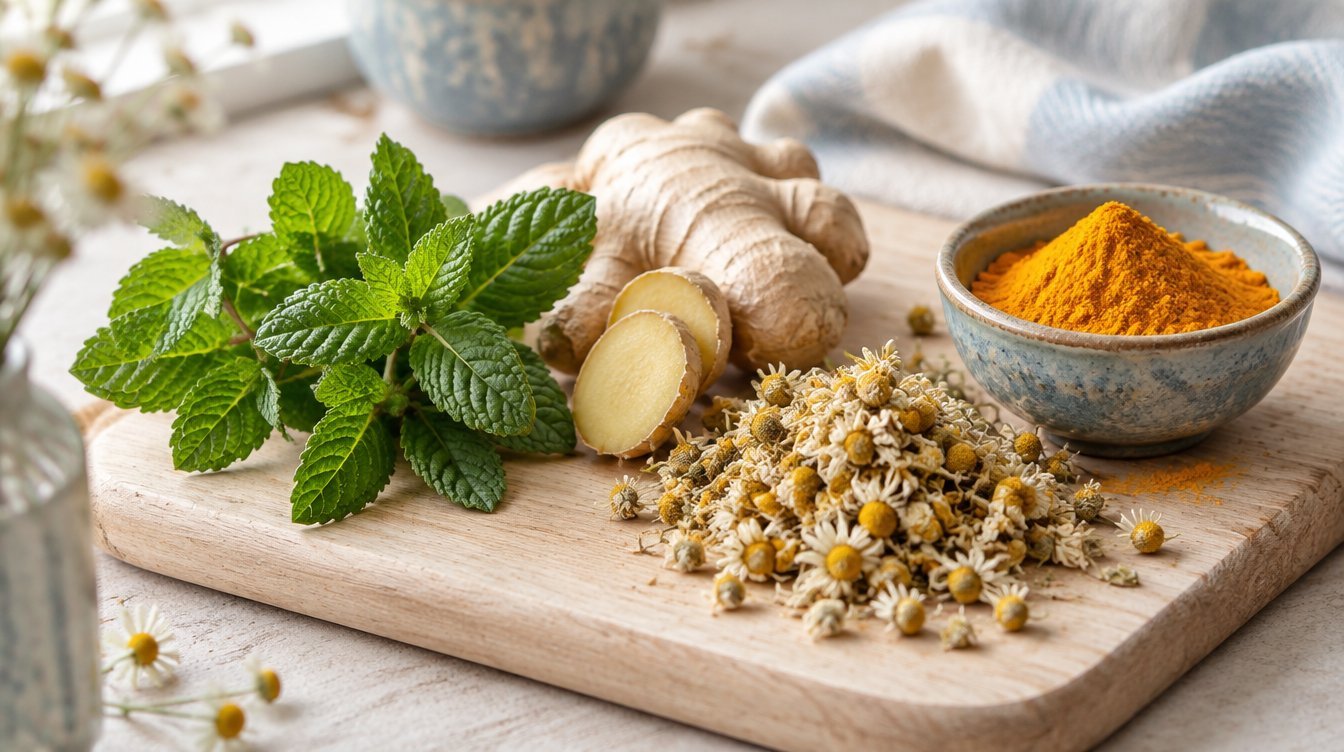
“Herbs for gut health” covers two quite different things. One is the everyday kitchen kind: mint, ginger, fennel, parsley, oregano and the rest, used in food and tea. The other is concentrated herbal products, such as peppermint oil capsules, turmeric extracts or licorice tablets, sold as dietary supplements for digestion.
The evidence for each is very different. A few herbs have reasonable human research behind them for specific symptoms. Many others have a long history of traditional use but little modern testing. And concentrated extracts carry risks that a sprinkle of herbs on dinner does not.
This guide covers the herbs people ask about most. It is general information, not medical advice.
Why herbs might matter for your gut
Herbs and spices are rich in plant compounds called polyphenols, and some of these reach the large intestine, where gut bacteria break them down. In a controlled-feeding study at Penn State, 54 adults at higher risk for heart disease ate an average American diet with low, moderate or high amounts of mixed herbs and spices, each for 4 weeks (Petersen 2022). The moderate amount, about 3.3 grams a day, slightly raised one measure of gut bacterial diversity compared with the low amount, and the high amount increased a family of fiber-fermenting bacteria called Ruminococcaceae.
That is an interesting early finding, not proof of a health benefit. The researchers called it exploratory and said the effects on health still need study. Still, cooking with plenty of herbs is a reasonable habit, and it makes vegetables, beans and whole grains, the main fiber sources, more appealing.
Some herbs also act directly on the digestive tract. Peppermint relaxes smooth muscle, and ginger appears to speed up how fast the stomach empties. Those effects are the reason these two have the most research.
What the evidence shows, herb by herb
Here is a quick summary, drawn mainly from the National Center for Complementary and Integrative Health (NCCIH) at the NIH, followed by more detail on each.
| Herb | Main digestive use | What the evidence shows | Key caution |
|---|---|---|---|
| Peppermint oil | IBS symptoms | Some support in adults, low-quality evidence | Heartburn, nausea |
| Ginger | Nausea, slow digestion | Some support for pregnancy nausea; little for digestion | Heartburn, stomach upset |
| Chamomile | Indigestion, calming tea | Not enough reliable evidence | Allergy (ragweed family) |
| Turmeric | Indigestion (traditional) | No good evidence for digestion | Liver injury with some extracts |
| Licorice root | Indigestion, ulcers (traditional) | Unclear | Blood pressure, heart rhythm |
| Aloe (oral) | Laxative | Not enough reliable evidence | Cramps, diarrhea; removed from OTC laxatives |
Peppermint
Peppermint oil has the strongest case of any herb for a gut symptom. A 2022 review pooled 10 randomized trials with 1,030 people who have irritable bowel syndrome (IBS) and found peppermint oil beat placebo for overall symptoms and belly pain (Ingrosso 2022). The authors still rated the quality of the evidence as very low, and side effects were more common than with placebo.
NCCIH notes that enteric-coated capsules are often used to reduce heartburn, and that peppermint oil alone hasn’t been shown to help ordinary indigestion and may make it worse in some people (NCCIH). Peppermint tea appears safe, though it is much weaker than the oil.
Ginger
Ginger is best known for nausea. NCCIH says research suggests it may help with nausea and vomiting in pregnancy, while most studies haven’t found it helpful for motion sickness (NCCIH). Most of these studies used supplements rather than ginger in food.
For digestion more broadly, the evidence is thin. In one small trial of 24 healthy volunteers, 1,200 mg of ginger in capsules roughly halved the time the stomach took to empty half of a test meal compared with placebo, though it didn’t change how anyone felt (Wu 2008). Fresh ginger in tea or cooking is a reasonable thing to try for a heavy, slow feeling after meals. Side effects can include heartburn, diarrhea and stomach discomfort.
Chamomile
Chamomile tea is a common evening drink for an unsettled stomach, and in food and tea amounts it is likely safe. But NCCIH says studies haven’t provided enough reliable evidence to rate it for any specific condition (NCCIH). People allergic to ragweed, chrysanthemums, marigolds or daisies are more likely to react to it, and it may interact with the blood thinner warfarin.
Turmeric
Turmeric has been used in traditional medicine for indigestion, but NCCIH doesn’t report good evidence that it helps digestion. Taken as a supplement it can itself cause nausea, reflux, diarrhea or constipation (NCCIH). More important, NCCIH warns that highly absorbable curcumin products have been linked to liver injury. Turmeric as a cooking spice is a different matter.
Licorice and aloe
Licorice root is sold for indigestion and ulcers, but NCCIH says it is unclear whether licorice on its own affects digestive symptoms. Its natural compound glycyrrhizin can cause serious effects, including irregular heartbeat, especially with large amounts, long-term use, high blood pressure, or heart or kidney disease (NCCIH). Products labeled DGL have most of the glycyrrhizin removed.
Oral aloe is promoted for digestion and as a laxative. In 2002 the FDA had aloe latex removed from over-the-counter laxatives because of missing safety data, and aloe latex can cause cramps and diarrhea (NCCIH).
Safety: natural doesn’t always mean safe
Herbal supplements are regulated as dietary supplements in the U.S. The FDA explains that, unlike drugs, there are no provisions in the law for it to approve supplements for safety before they reach consumers. Quality and dose can vary between products, and NCCIH notes that the FDA has found prescription drugs in some products sold as supplements (NCCIH).
- Tell your doctor and pharmacist: several herbs interact with medicines, including blood thinners and drugs processed by the liver.
- Pregnancy and breastfeeding: little is known about medicinal amounts of most herbs. Turmeric supplements may be unsafe in pregnancy, and large amounts of licorice are.
- Children: many supplements haven’t been tested in children. NCCIH also warns against putting peppermint oil on the faces of infants or young children.
- Before surgery: mention every supplement, since some affect bleeding or anesthesia.
- Stop and call your doctor if you notice signs of liver trouble, such as dark urine, yellowing skin or eyes, nausea or unusual tiredness.
How to use herbs for gut health sensibly
- Start in the kitchen. Cook with a variety of fresh and dried herbs and spices. It is low-risk and makes plant-heavy meals more enjoyable.
- Try a tea before a capsule. Peppermint, ginger or chamomile tea after a meal is a gentle way to see whether an herb agrees with you.
- Match the herb to the symptom. Peppermint oil has the most support for IBS; ginger for nausea. Skip peppermint if you have heartburn.
- Choose one product at a time. Multi-herb blends make it hard to tell what is helping or causing side effects.
- Set a time limit. If a remedy hasn’t helped within a couple of weeks, stop and talk to a clinician rather than adding more.
If you have IBS, note that garlic and onions are high in FODMAPs, a group of carbohydrates that can trigger symptoms. The NIDDK lists both among FODMAP foods, so “gut-healthy” garlic can backfire for some people. Herbs work best alongside the basics: enough fiber, regular meals and fermented foods if you tolerate them.
When to see a doctor
Herbs are not a substitute for medical care. The NIDDK advises seeing a doctor if indigestion doesn’t improve, and getting care right away if it comes with any of these:
- Pain that spreads to the chest, jaw, neck or arm, or shortness of breath
- Trouble swallowing or pain when swallowing
- Frequent vomiting, or vomit with blood
- Black, tar-like stools
- Severe, constant stomach pain or long-lasting bloating
- Weight loss without trying, loss of appetite, or yellowing of the skin or eyes
Related topics
- Best Tea for Digestion: how herbal teas compare after a meal.
- Upset Stomach Remedies: simple steps for a short-term upset.
- Best Foods for Gut Health: the fiber and fermented foods that matter most.
- Gut Health Supplements: what the research says about other products.
- What to Eat When Your Stomach Hurts from Gas: food choices for gas and bloating.
Sources
- Peppermint Oil (National Center for Complementary and Integrative Health)
- Ginger (National Center for Complementary and Integrative Health)
- Chamomile (National Center for Complementary and Integrative Health)
- Turmeric (National Center for Complementary and Integrative Health)
- Licorice Root (National Center for Complementary and Integrative Health)
- Aloe Vera (National Center for Complementary and Integrative Health)
- Using Dietary Supplements Wisely (National Center for Complementary and Integrative Health)
- Ingrosso MR, et al. Systematic review and meta-analysis: efficacy of peppermint oil in irritable bowel syndrome (Alimentary Pharmacology & Therapeutics, 2022)
- Wu KL, et al. Effects of ginger on gastric emptying and motility in healthy humans (European Journal of Gastroenterology & Hepatology, 2008)
- Petersen KS, et al. Herbs and spices modulate gut bacterial composition in adults at risk for CVD (Journal of Nutrition, 2022)
- Eating, Diet, & Nutrition for Irritable Bowel Syndrome (National Institute of Diabetes and Digestive and Kidney Diseases)
- Symptoms & Causes of Indigestion (National Institute of Diabetes and Digestive and Kidney Diseases)
- Questions and Answers on Dietary Supplements (U.S. Food and Drug Administration)
This article is for general information and is not medical advice. Talk to your doctor or a registered dietitian before changing your diet, supplements or medication, especially if you have a health condition.