Easy to Digest Vegetables: What You Need to Know
What makes a vegetable easy to digest
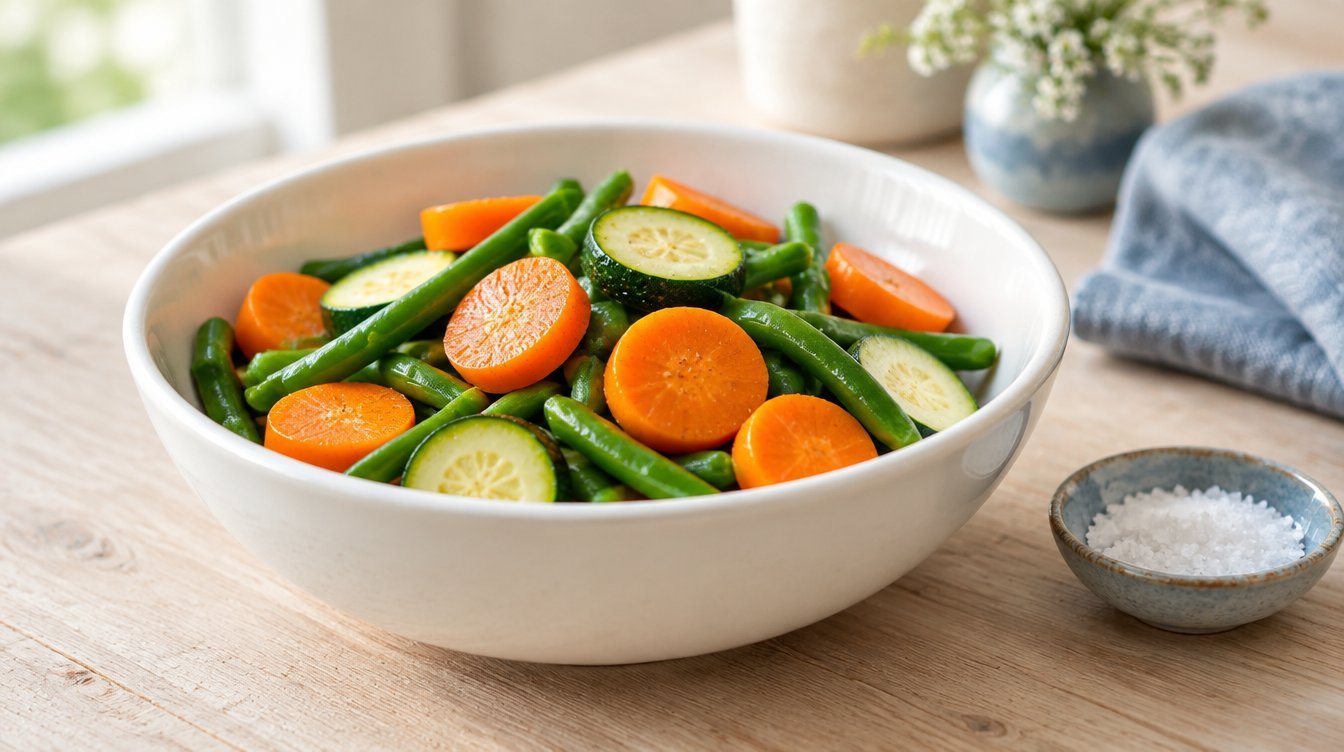
Easy to digest vegetables are ones that are soft, low in tough fiber, free of skins and seeds, and less likely to ferment into gas. In practice that usually means well-cooked carrots, zucchini, peeled potatoes, squash, green beans and spinach. MedlinePlus, the National Library of Medicine’s health site, lists these among the vegetables allowed on a low-fiber diet when they are well cooked or canned, without skins or seeds.
Three things make the biggest difference:
- Fiber and texture. MedlinePlus says many raw vegetables, fruit and vegetable skins, and seeds are harder to digest. Cooking until soft, peeling and removing seeds make the same vegetable gentler.
- Gas-forming carbohydrates. Some carbohydrates are not fully digested in the small intestine. The NIDDK explains that when they reach the large intestine, bacteria break them down and create gas, and cruciferous vegetables such as broccoli, cauliflower and kale are common examples.
- FODMAPs. These are carbohydrates that are hard to digest and can set off bloating and pain in people with irritable bowel syndrome (IBS). The NIDDK lists artichokes, asparagus, cabbage, cauliflower, garlic, mushrooms and onions among foods that contain them.
“Easy to digest” also depends on why you are asking. A vegetable that suits someone recovering from a stomach bug may not suit someone with IBS, and the reverse. Our broader guide to easy to digest foods covers other food groups.
The easiest vegetables to digest
The table below combines the MedlinePlus low-fiber vegetable list with the low-FODMAP swaps listed by Monash University, whose researchers created the Monash low-FODMAP diet. A check means the vegetable appears on that list.
| Vegetable | How to prepare it | Low-fiber list (MedlinePlus) | Low-FODMAP swap (Monash) |
|---|---|---|---|
| Carrots | Boiled, steamed or roasted until soft | Yes | Yes |
| Potatoes | Peeled, then boiled, baked or mashed | Yes | Yes |
| Green beans | Cooked until tender | Yes | Yes |
| Zucchini | Raw or cooked, peeled if skins bother you | Yes | Not listed |
| Eggplant | Cooked, skin and seeds removed | Yes | Yes |
| Cucumber | Raw, without seeds or skin | Yes | Yes |
| Lettuce | Raw, shredded, small amounts at first | Yes | Yes |
| Spinach | Well cooked | Yes | Not listed |
| Yellow squash and pumpkin | Well cooked, seeds removed | Yes | Not listed |
| Bok choy | Cooked until soft | Not listed | Yes |
| Asparagus | Well cooked tips | Yes | No: high FODMAP |
Asparagus shows why the goal matters. It is fine on a low-fiber plan when well cooked, but Monash lists it as high in FODMAPs, so people with IBS may want to skip it. Monash also cautions that FODMAP content cannot be guessed from the type of food, which is why it keeps its own tested food list.
Vegetables that are harder on some stomachs
These are not “bad” vegetables. Most are excellent sources of fiber and nutrients. They are simply the ones most often linked with gas, bloating or discomfort:
- Cruciferous vegetables: broccoli, cauliflower, collard greens and kale, which the NIDDK links with more gas symptoms in some people.
- Onions, garlic and leeks: common FODMAP sources. Onions and garlic are on the NIDDK list, and all three are on the Monash list. Cabbage is on the NIDDK list too.
- Mushrooms and artichokes: also on both FODMAP lists.
- Legumes and peas: beans, lentils and peas, including sugar snap and snow peas, which the NIDDK names among gas-forming and FODMAP foods.
- Raw vegetables with skins and seeds: raw salads and vegetables with tough peels are among the foods MedlinePlus leaves off its low-fiber diet.
For a fuller list across all food groups, see our guide to foods that are hard to digest.
Why it matters for gut health
Gentle vegetables are useful for a flare, a sensitive stretch or recovery after illness, but a long-term diet low in vegetables misses fiber your gut needs. MedlinePlus notes that a low-fiber diet is usually a temporary plan, for example during a flare of IBS, diverticulitis or inflammatory bowel disease, or after some types of bowel surgery. The NIDDK says most adults need 22 to 34 grams of fiber a day.
Fiber also keeps things moving. A review of intervention trials found that in people with slow transit, each extra gram of cereal, fruit or vegetable fiber shortened transit time by about 30 minutes. Our article on motility explains how that works.
If FODMAPs are your issue, the restriction is meant to be short. In a crossover trial of 30 people with IBS, three weeks on a low-FODMAP diet roughly halved overall symptom scores compared with a typical Australian diet. But Monash describes it as a 3 step diet: 2 to 6 weeks of swaps, then testing foods one FODMAP group at a time, then adding back as much variety as you tolerate.
How to make vegetables easier to digest
- Cook them until soft. MedlinePlus allows many vegetables when they are well-cooked or canned that it would not allow raw. Steaming, boiling and roasting all work; fried vegetables are on its avoid list.
- Peel and seed. Remove potato, zucchini, cucumber and eggplant skins, and scoop out squash and cucumber seeds.
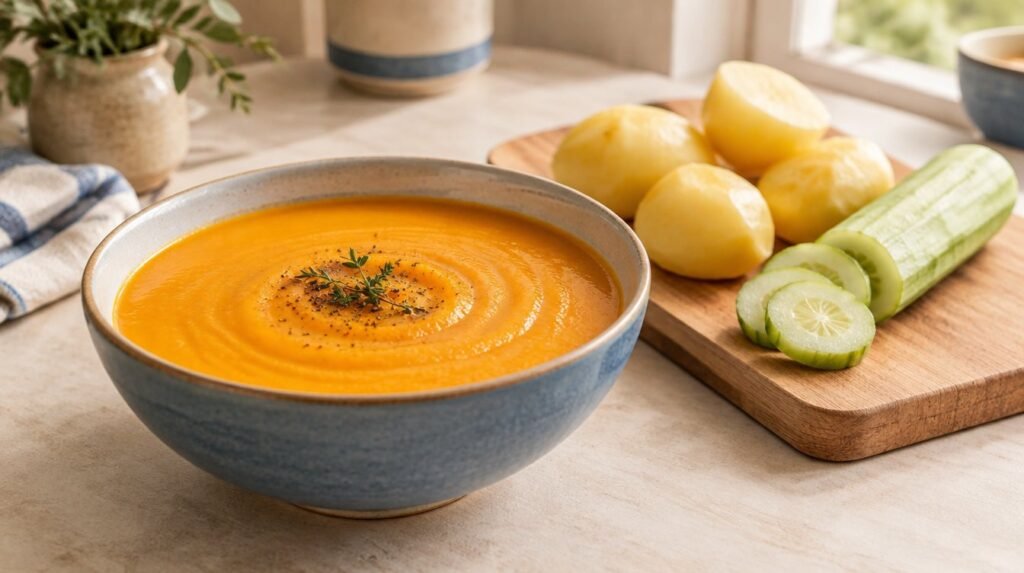
- Blend or mash. Soups and purées are the gentlest form. For people with gastroparesis, the NIDDK notes a doctor may suggest solid foods puréed in a blender.
- Start small. The NIDDK suggests smaller, more frequent meals and cutting back on the foods that cause you the most gas. When adding fiber back, it advises going a little at a time.
- Swap, don’t cut. Trade onion and garlic for low-FODMAP flavors, or broccoli for green beans or carrots, so the plate stays full of vegetables.
- Pair with other gentle foods. Rice, eggs, broth and plain yogurt round out a calm meal. See our diet for a sensitive stomach for ideas.
When to see a doctor
Changing vegetables should not replace a checkup when symptoms persist. The NIDDK advises talking with a doctor if gas symptoms bother you or change suddenly, or come with belly pain, constipation, diarrhea or weight loss. It says to see a doctor right away for bleeding from the rectum, blood in the stool, constant belly pain, vomiting, fever or weight loss without trying. This article is general information, not medical advice.
Related topics
- Easy to Digest Foods: gentle options beyond vegetables.
- Foods That Are Hard to Digest: what tends to cause trouble.
- What to Eat When Your Stomach Hurts from Gas: food steps for bloating.
- BRAT Diet: a short-term plan after a stomach bug.
- Stewed Apples for Gut Health: a soft, cooked fruit option.
Sources
- Low-fiber diet (MedlinePlus, U.S. National Library of Medicine)
- FODMAP food list (Monash University)
- Starting the Low FODMAP Diet (Monash University)
- Eating, Diet, and Nutrition for Gas in the Digestive Tract (NIDDK)
- Treatment for Gas in the Digestive Tract (NIDDK)
- Symptoms and Causes of Gas in the Digestive Tract (NIDDK)
- Eating, Diet, and Nutrition for Irritable Bowel Syndrome (NIDDK)
- Eating, Diet, and Nutrition for Gastroparesis (NIDDK)
- Eating, Diet, and Nutrition for Constipation (NIDDK)
- Symptoms and Causes of Constipation (NIDDK)
- Halmos EP, et al. A diet low in FODMAPs reduces symptoms of irritable bowel syndrome (Gastroenterology, 2014)
- de Vries J, et al. Effects of cereal, fruit and vegetable fibers on human fecal weight and transit time: a comprehensive review of intervention trials (Nutrients, 2016)