Lactobacillus delbrueckii: How to Culture It at Home (110-115°F / 8h)
What Lactobacillus delbrueckii is
Lactobacillus delbrueckii is a lactic acid bacterium best known as the “bulgaricus” half of yogurt culture. It is also the type species of the whole genus Lactobacillus, the reference species every other member is measured against (LPSN, the List of Prokaryotic names with Standing in Nomenclature). The name honors M. Delbrück, a German bacteriologist, and the species was first described in 1896 as Bacillus delbruecki.
Like other lactic acid bacteria, it ferments sugar into lactic acid. It mainly makes the D(-) form of lactic acid, which is why food scientists have studied it as a production organism for that compound (Beitel et al., BioMed Research International, 2020). In your kitchen, its job is simpler: turn milk sour and thick.
When people search for “Lactobacillus delbrueckii yogurt,” they almost always mean one subspecies, L. delbrueckii subsp. bulgaricus. The FDA standard for yogurt names it, together with Streptococcus thermophilus, as the culture that defines the food (21 CFR 131.200). The species has several other subspecies, though, and they live very different lives.
The subspecies, and which one is in your yogurt
A 2023 genome comparison described six subspecies of L. delbrueckii (Baek et al., Scientific Reports, 2023), and LPSN has since added a seventh name, subsp. allosunkii, published in 2024. Only two matter much to home fermenters.
| Subspecies | Where it shows up | Relevance at home |
|---|---|---|
| bulgaricus | Yogurt, as the partner of S. thermophilus (21 CFR 131.200) | The one in yogurt starters and live plain yogurt |
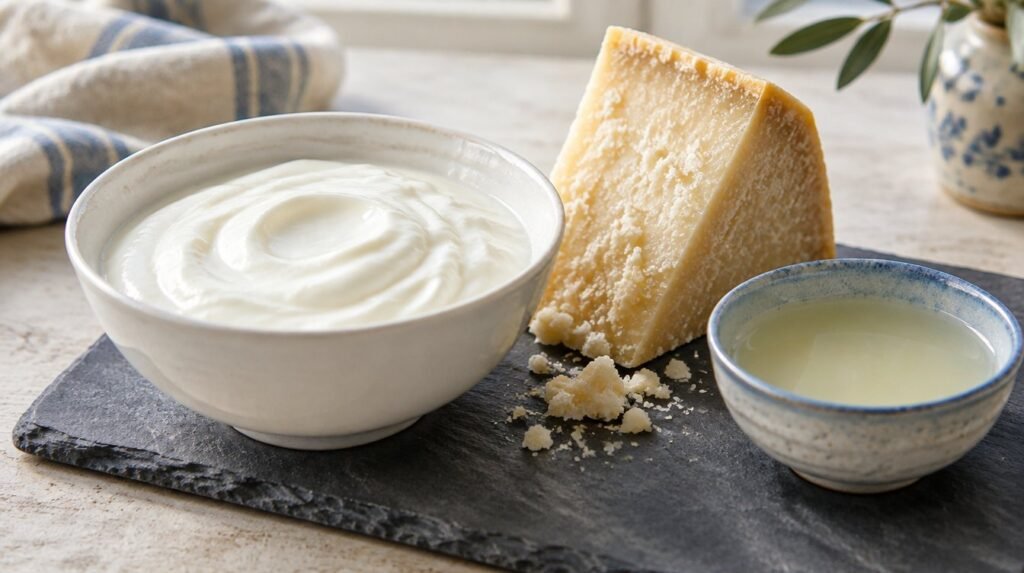
| lactis | Cheese making; one of the species in the natural whey starters used for Grana Padano (Santarelli et al., 2008) | Found in some thermophilic cheese cultures, rarely sold for yogurt |
| delbrueckii | The original subspecies from the 1896 description (LPSN) | Not a dairy culture |
| jakobsenii | Isolated from malted sorghum wort used to brew dolo, a beer from Burkina Faso (Adimpong et al., 2013) | Not a dairy culture |
| indicus, sunkii, allosunkii | Described between 2005 and 2024; sunkii is now listed as a synonym (LPSN) | Research interest only |
For a deep dive on the yogurt subspecies alone, see our Lactobacillus bulgaricus guide. This page looks at the species as a whole and what that means when you culture it.
Where it sits in the family tree
The table follows the NCBI Taxonomy database. Bacillota is the newer name for the phylum once called Firmicutes. When scientists split the old genus Lactobacillus into 25 genera in 2020, L. delbrueckii and its close relatives kept the genus name, while many familiar probiotics moved to new genera (Zheng et al., International Journal of Systematic and Evolutionary Microbiology, 2020). As the type species, it could hardly have moved: the genus is defined around it.
| Domain | Phylum | Genus | Species | Strain |
|---|---|---|---|---|
| Bacteria | Bacillota (formerly Firmicutes) | Lactobacillus | L. delbrueckii (subsp. bulgaricus, lactis, delbrueckii and others) | Type strain ATCC 9649 (DSM 20074); dairy strains vary widely |
Between phylum and genus it belongs to the class Bacilli, order Lactobacillales and family Lactobacillaceae. When you read a study, check the subspecies and the strain code. A result from one strain does not carry over to the culture in your packet.
What the research says
Genomes shaped by milk
The first full genome of subsp. bulgaricus showed many broken and missing genes, a sign it was shedding functions it no longer needed in milk (van de Guchte et al., PNAS, 2006). A follow-up comparison found that subsp. lactis is on the same path but has not gone as far, so it keeps more ability to use different sugars (El Kafsi et al., BMC Genomics, 2014).
The same study found that the lactose-fermenting genes of subsp. bulgaricus, its most useful trait for yogurt, were picked up from other bacteria rather than inherited from a distant ancestor. The authors called it “a natural GMO” in a playful sense. The 2023 comparison added that subsp. bulgaricus split from the others long ago and has evolved on its own since (Baek et al., 2023).
A heat-loving culture
In a study of 10 strains of subsp. bulgaricus, optimum growth temperatures ranged from 43 to 46°C (109 to 115°F), warmer than the 35 to 42°C (95 to 108°F) of nine S. thermophilus strains tested alongside them (Radke-Mitchell and Sandine, Journal of Dairy Science, 1986). That is the basis for the 110 to 115°F range in this guide. Cheese makers lean on the same heat tolerance: in Grana Padano whey starters, a 54°C (129°F) heat step, similar to curd cooking, reshaped which bacteria survived (Santarelli et al., 2008).
Easier lactose digestion
The best-supported benefit of live yogurt cultures is easier lactose digestion. A review explains that the lactase inside the bacteria survives the stomach and keeps working in the small intestine, and that typical yogurts contain enough subsp. bulgaricus and S. thermophilus, about 100 million bacteria per milliliter, to help people who are lactose intolerant (Savaiano, American Journal of Clinical Nutrition, 2014).
Human trials of specific strains
Trials of L. delbrueckii as a probiotic are few and strain-specific. In an Irish randomized trial, 84 healthy adults with mild to moderate gut symptoms took 20 g a day of a skim milk powder fermented with subsp. bulgaricus, plain skim milk powder or maltodextrin for 8 weeks. The authors concluded the fermented powder had “limited effects” on gut health, and plain milk powder did better on some quality-of-life scores (Rooney et al., Gut Microbiome, 2026).
A Korean trial gave 100 adults aged 55 to 80 with mild cognitive impairment either a capsule of subsp. lactis strain CKDB001 or a placebo for 12 weeks. The capsule group scored better on several memory and reaction tests (Baek et al., Nutrients, 2025). It is one trial, several authors worked for the companies involved, and the result does not apply to yogurt or to other strains.
How to culture Lactobacillus delbrueckii at home (110-115°F / 8h)
At home you will be culturing subsp. bulgaricus, usually paired with S. thermophilus. That pairing is what you want, since the two help each other grow. The heating and cooling steps follow the University of Alaska Fairbanks Cooperative Extension Service, which incubates at 110°F (plus or minus 5°F) for 4 to 7 hours. This guide holds the top of that range for a full 8 hours to give the heat-loving rods more time, which yields a firmer, tangier yogurt. For starter options, see our yogurt starter guide.
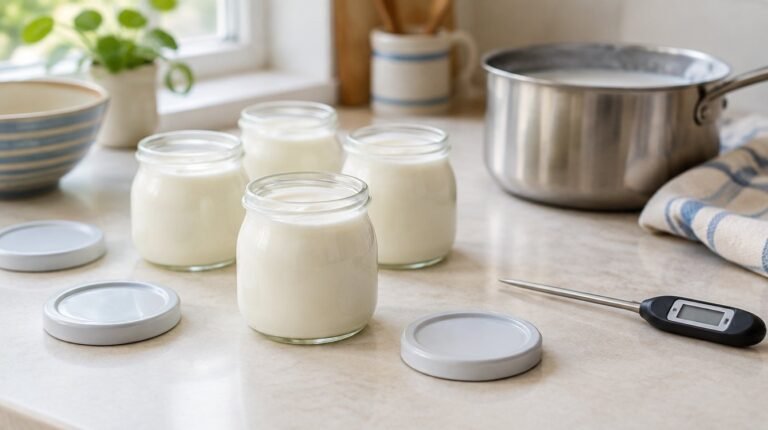
You will need: 1 quart of pasteurized whole or 2% milk; a starter (a freeze-dried culture that lists L. delbrueckii subsp. bulgaricus, or 1/4 cup of plain yogurt with live cultures, the UAF amount per quart); a heavy pot; an instant-read thermometer; clean jars; and a way to hold 110 to 115°F for 8 hours.
- Clean everything. Wash the pot, whisk, thermometer and jars in hot, soapy water and rinse well.
- Heat the milk to 185°F (85°C). Warm it slowly without boiling, then hold it there for 10 minutes, or up to 20 minutes for thicker yogurt (UAF Extension).
- Cool to 112 to 115°F (44 to 46°C). Set the pot in a sink of cold water and stir so the temperature evens out.
- Add the starter. UAF suggests 1/4 cup of live plain yogurt per quart, or a dry starter per its package directions, usually one 5-gram packet per quart. Whisk the starter into a cup of the warm milk, then stir it back into the pot. The mix should read about 110 to 112°F. Adding culture to milk above 115°F can kill the bacteria (UAF Extension). For larger batches, see how much starter for a gallon of milk.
- Fill the jars. Cover loosely and place them in your incubator.
- Incubate at 110 to 115°F (43 to 46°C) for 8 hours. Keep the jars still. Check the temperature with a thermometer, not just a dial. See how to incubate yogurt for setups that hold steady heat.
- Check at 6 hours on your first batch. A mixed culture is often set by then and mild. Each extra hour adds tang as the rods keep making acid.
- Chill promptly. Refrigerate at 40°F (4°C) or below. The UAF guide says homemade yogurt keeps about 10 to 21 days at that temperature; see how long homemade yogurt lasts.
- Save starter from a fresh batch. Keep 1/4 cup in a clean covered jar in the fridge to start the next quart.
If you have a cheese culture that lists subsp. lactis, it is made for cheese vats, not yogurt jars, so follow the supplier’s cheese recipe. A culture labeled as pure subsp. bulgaricus can make yogurt on its own, but expect a sharper, thinner result than the classic pair. For a deliberately tangy batch, see how to make sour yogurt.
How to tell it worked
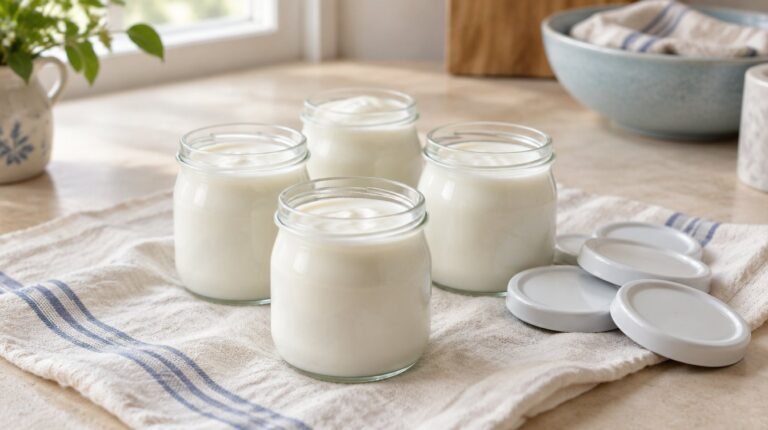
- It sets as one mass. Tilt the jar. The yogurt should pull away from the glass in one soft piece, not pour.
- The pH is 4.6 or lower. The FDA yogurt standard and the UAF guide both use this mark (21 CFR 131.200). Food-grade pH strips are cheap and easy to read.
- It tastes clearly tart. An active L. delbrueckii culture gives a sharp, clean tang. A mild, almost sweet batch suggests the rods did little work.
- A little whey, not a pool. Some separation is normal. A lot means it ran long or was jostled (UAF Extension). See whey from yogurt.
Common problems and fixes
| Problem | Likely cause | Fix |
|---|---|---|
| Still liquid after 8 hours | Starter added to milk above 115°F, or the incubator ran cool | Measure the milk before adding culture, and check the incubator with a thermometer. |
| Set but very mild | Streptococcus did most of the work; temperature sat near 105°F | Keep the incubator at 110 to 115°F so the rods stay active, and run the full 8 hours. |
| Sour, grainy or chalky | Ran too long or above 115°F | Chill at 6 to 7 hours next time, and lower the heat slightly. |
| Lots of whey | Over-fermented or moved while setting | Shorten the time and keep the jars still. Strain it if you like thicker yogurt. |
| Weaker with each batch | The balance between the two bacteria drifted over many transfers | Restart from a fresh packet or store yogurt. See heirloom starter weakened over time. |
| Mold, pink or orange spots, yeasty smell | Contamination | Throw the batch out, wash everything in hot, soapy water and start fresh. |
The USDA says to discard yogurt that has mold, because high-moisture foods can be contaminated below the surface and bacteria may grow along with the mold (USDA FSIS, Molds on Food). Do not taste a batch that looks or smells wrong to check it.
Related topics
- Lactobacillus bulgaricus: How to Culture It at Home: the yogurt subspecies in detail.
- Streptococcus thermophilus: How to Culture It at Home: the partner that starts the acid.
- Lactobacillus helveticus: How to Culture It at Home: another heat-loving cheese and yogurt rod.
- Yogurt Temperature: how incubation heat changes texture and tang.
- How to Make Yogurt at Home: the complete beginner method.
Sources
- 21 CFR 131.200 Yogurt (U.S. Food and Drug Administration, Electronic Code of Federal Regulations)
- Making Yogurt at Home (FNH-00062) (University of Alaska Fairbanks Cooperative Extension Service)
- Species Lactobacillus delbrueckii (LPSN, List of Prokaryotic names with Standing in Nomenclature, DSMZ)
- Lactobacillus delbrueckii, Taxonomy Browser (National Center for Biotechnology Information)
- Molds on Food: Are They Dangerous? (USDA Food Safety and Inspection Service)
- Beitel SM, et al. Efficient conversion of agroindustrial waste into D(-) lactic acid by Lactobacillus delbrueckii using fed-batch fermentation (Biomed Res Int, 2020)
- Baek MG, et al. Subspecies-level genome comparison of Lactobacillus delbrueckii (Sci Rep, 2023)
- Santarelli M, et al. Whey starter for Grana Padano cheese: effect of technological parameters on viability and composition of the microbial community (J Dairy Sci, 2008)
- Adimpong DB, et al. Lactobacillus delbrueckii subsp. jakobsenii subsp. nov., isolated from dolo wort, an alcoholic fermented beverage in Burkina Faso (Int J Syst Evol Microbiol, 2013)
- Zheng J, et al. A taxonomic note on the genus Lactobacillus: description of 23 novel genera, emended description of the genus Lactobacillus Beijerinck 1901, and union of Lactobacillaceae and Leuconostocaceae (Int J Syst Evol Microbiol, 2020)
- van de Guchte M, et al. The complete genome sequence of Lactobacillus bulgaricus reveals extensive and ongoing reductive evolution (Proc Natl Acad Sci U S A, 2006)
- El Kafsi H, et al. Lactobacillus delbrueckii ssp. lactis and ssp. bulgaricus: a chronicle of evolution in action (BMC Genomics, 2014)
- Radke-Mitchell LC, Sandine WE. Influence of temperature on associative growth of Streptococcus thermophilus and Lactobacillus bulgaricus (J Dairy Sci, 1986)
- Savaiano DA. Lactose digestion from yogurt: mechanism and relevance (Am J Clin Nutr, 2014)
- Rooney M, et al. A Lactobacillus delbrueckii subsp. bulgaricus fermented skimmed milk powder has limited effects on gastrointestinal health in healthy individuals with mild-to-moderate gastrointestinal symptoms: results from a randomised controlled trial (Gut Microbiome (Camb), 2026)
- Baek HI, et al. Efficacy and safety of Lactobacillus delbrueckii subsp. lactis CKDB001 supplementation on cognitive function in mild cognitive impairment: a randomized, double-blind, placebo-controlled clinical trial (Nutrients, 2025)