Juice Cleanse: What You Need to Know
What a juice cleanse is
A juice cleanse means drinking only fruit and vegetable juices for a set time, usually one to several days, in place of meals. The National Center for Complementary and Integrative Health (NCCIH) lists juice-only diets among the “detox” and “cleanse” programs that claim to remove toxins, help with weight loss or improve health.
The short answer: a juice cleanse will probably make you lighter on the scale for a few days, mostly because you eat far fewer calories. There is little good evidence that it removes toxins or resets your gut, and it strips out the fiber your gut bacteria depend on. For some people it carries real risks.
This article is general information, not medical advice. Talk with your doctor before starting any cleanse, especially if you have a health condition or take medication.
What the research shows
The research base is thin. NCCIH says only a small number of human studies exist and their quality is low. It points to a 2015 review that found no convincing research supporting detox diets for weight management or toxin removal, and a 2017 review that found juicing and detox diets cause early weight loss that is usually regained once normal eating resumes.
A 2015 critical review in the Journal of Human Nutrition and Dietetics reached the same place. Its authors found no randomized controlled trials testing commercial detox diets in people, and said the few clinical studies that exist have flawed methods and small samples.
The one gut study people cite
The most quoted study is a 2017 UCLA trial in Scientific Reports. Twenty healthy adults drank only vegetable and fruit juices from a commercial juice company for 3 days, six 16-ounce bottles a day, then went back to their usual diet. On average they lost about 1.7 kg (3.7 pounds) during the juice days, and some gut bacteria groups shifted.
The details matter. There was no control group, the sample was small, and the bacteria changes were partly reversed by day 17. It shows a juice-only diet changes gut bacteria in the short term. It does not show the change is good for you or lasts.
Your body already has a detox system
Your liver and kidneys do the cleaning continuously. MedlinePlus explains that the liver helps your body digest food, store energy and remove poisons. The NIDDK says healthy kidneys filter about 150 quarts of blood a day, pulling wastes into one to two quarts of urine. No juice has been shown to speed that up in healthy people.
What a juice cleanse does to fiber

Juicing removes most of the pulp and skin, and with them most of the fiber. Gut bacteria ferment fiber into short-chain fatty acids, which a 2018 review describes as having anti-inflammatory effects, so a juice-only diet gives them little to work with. The numbers from USDA FoodData Central show the gap:
| Food (1 cup) | Fiber | Total sugars | Calories |
|---|---|---|---|
| Orange sections, raw (180 g) | 4.3 g | 16.8 g | 85 |
| Orange juice, raw (248 g) | 0.5 g | 20.8 g | 112 |
| Apple, raw with skin, chopped (125 g) | 3.0 g | 13.0 g | 65 |
| Apple juice, unsweetened (248 g) | 0.5 g | 23.9 g | 114 |
Values are USDA averages per cup, calculated from the per-100-gram figures. Most Americans are already short on fiber. The Dietary Guidelines for Americans, 2020-2025 say more than 90 percent of women and 97 percent of men fall below recommended intakes, and advise that at least half of your fruit come from whole fruit rather than juice. A few days of juice moves you further from that goal. If fiber is a gap for you, our guide to fiber supplements and whole-food sources can help.
Risks and who should skip a juice cleanse
- Unpasteurized juice. The FDA says fresh or raw juice can carry harmful bacteria and has been linked to outbreaks. Packaged untreated juice must carry a warning, but juice sold by the glass, as at many juice bars, does not. Children, older adults, pregnant women and people with weakened immune systems or diabetes face the most serious risk.
- Oxalate and kidneys. Juices made from high-oxalate foods such as leafy greens and beets may be a problem for people prone to kidney stones, according to NCCIH; the NIDDK lists spinach among high-oxalate foods. Case reports describe kidney failure after heavy juicing in a person with chronic kidney disease (Getting, 2013) and after a week-long juice diet in a man with diabetes (Raja, 2023).
- Diabetes. NCCIH says people with diabetes should talk with their care team before major diet changes. As the fiber table above shows, a cup of fruit juice carries about 20 grams or more of sugar and almost none of the fiber in whole fruit.
- Medications. Grapefruit juice can change how statins, some blood pressure drugs and several other medicines work. The FDA adds that Seville oranges, pomelos and tangelos may act the same way, and that some blended juices contain grapefruit.
- Very low intake. Fasting-style plans can cause headaches, fainting, weakness and dehydration, and drinking lots of fluid while eating almost nothing can upset your electrolytes (NCCIH).
A gentler way to use juice
If you like juice, you don’t need a cleanse to enjoy it. These swaps keep the parts people like and lose most of the downsides:
- Drink juice with a meal, not instead of one. Keep portions small and choose pasteurized or 100% juice, as the Dietary Guidelines advise.
- Blend instead of juicing. A smoothie keeps the whole fruit or vegetable, fiber included. Our article on the detox smoothie shows how to build one that is more than sugar.
- Lean on vegetables. Vegetable-heavy juices carry less sugar than fruit-only ones, though people prone to kidney stones should go easy on spinach and beets.
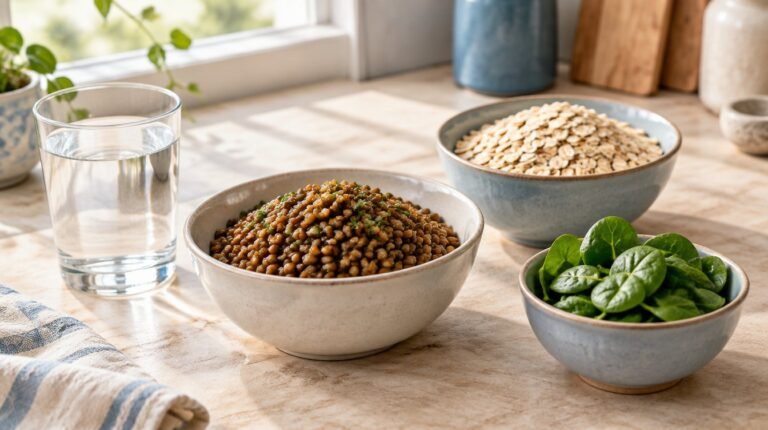
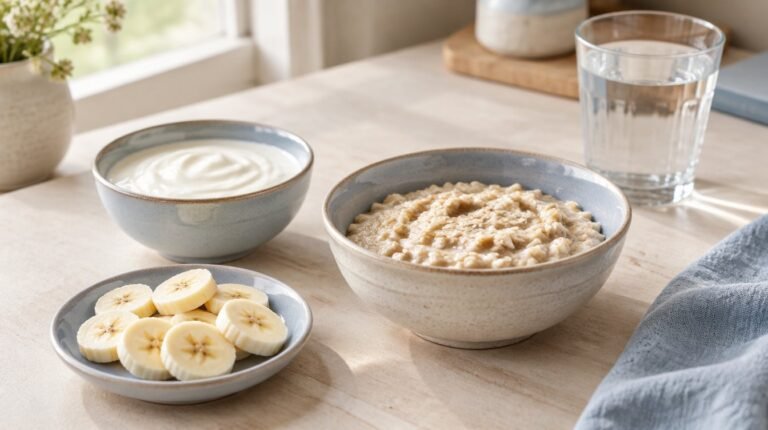
- Add foods that feed your gut. Beans, oats, yogurt and kefir do more for gut bacteria than a week of juice. Our gut reset guide lays out a food-first plan.
If your goal is to feel less bloated or sluggish, a few days of regular meals built around fiber, water and fermented foods is a better test than a juice-only diet. Our guide on how to improve gut health covers the habits with the most evidence.
When to see a doctor
Check with your doctor before a juice cleanse if you have kidney disease or a history of kidney stones, diabetes, heart disease, an eating disorder, or a weakened immune system, or if you are pregnant or take daily medication. NCCIH advises talking with a health care provider before any detox or cleanse.
Stop the cleanse and get medical help if you feel faint, dizzy or very weak, or if you can’t keep fluids down. NCCIH lists fainting, weakness, dehydration and electrolyte imbalances among the possible harms of very low-food plans.
Related topics
- Gut Cleanse: what cleanses claim and what the evidence supports.
- Colon Cleanse: the risks of laxatives and colonic irrigation.
- Detox Smoothie: a fiber-friendly alternative to juice.
- Juice for Inflammation: which juices have research behind them.
- Gut Health Drinks: kefir, kombucha and other options.
- Gut Reset: a food-first plan for your gut.
Sources
- ‘Detoxes’ and ‘Cleanses’: What You Need To Know (National Center for Complementary and Integrative Health)
- Klein AV, Kiat H. Detox diets for toxin elimination and weight management: a critical review of the evidence (Journal of Human Nutrition and Dietetics, 2015)
- Henning SM, et al. Health benefit of vegetable/fruit juice-based diet: Role of microbiome (Scientific Reports, 2017)
- Getting JE, et al. Oxalate nephropathy due to ‘juicing’: case report and review (American Journal of Medicine, 2013)
- Raja N, et al. Oxalate Nephropathy: A Case Report of Acute Kidney Injury Due to Juice Diet (Cureus, 2023)
- What You Need to Know About Juice Safety (U.S. Food and Drug Administration)
- Grapefruit Juice and Some Drugs Don’t Mix (U.S. Food and Drug Administration)
- Liver Diseases (MedlinePlus, National Library of Medicine)
- Your Kidneys and How They Work (NIDDK)
- Eating, Diet, and Nutrition for Kidney Stones (NIDDK)
- Dietary Guidelines for Americans, 2020-2025 (USDA and HHS)
- Salem I, et al. The Gut Microbiome as a Major Regulator of the Gut-Skin Axis (Frontiers in Microbiology, 2018)
- Oranges, raw, all commercial varieties, Orange juice, raw, Apples, raw, with skin and Apple juice, canned or bottled, unsweetened (USDA FoodData Central, SR Legacy)
This article is for general information and is not medical advice. Talk to your doctor or a registered dietitian before changing your diet, supplements or medication, especially if you have a health condition.