Can You Make a Smoothie Without Yogurt? What the Evidence Says
The verdict: yes, a smoothie works fine without yogurt
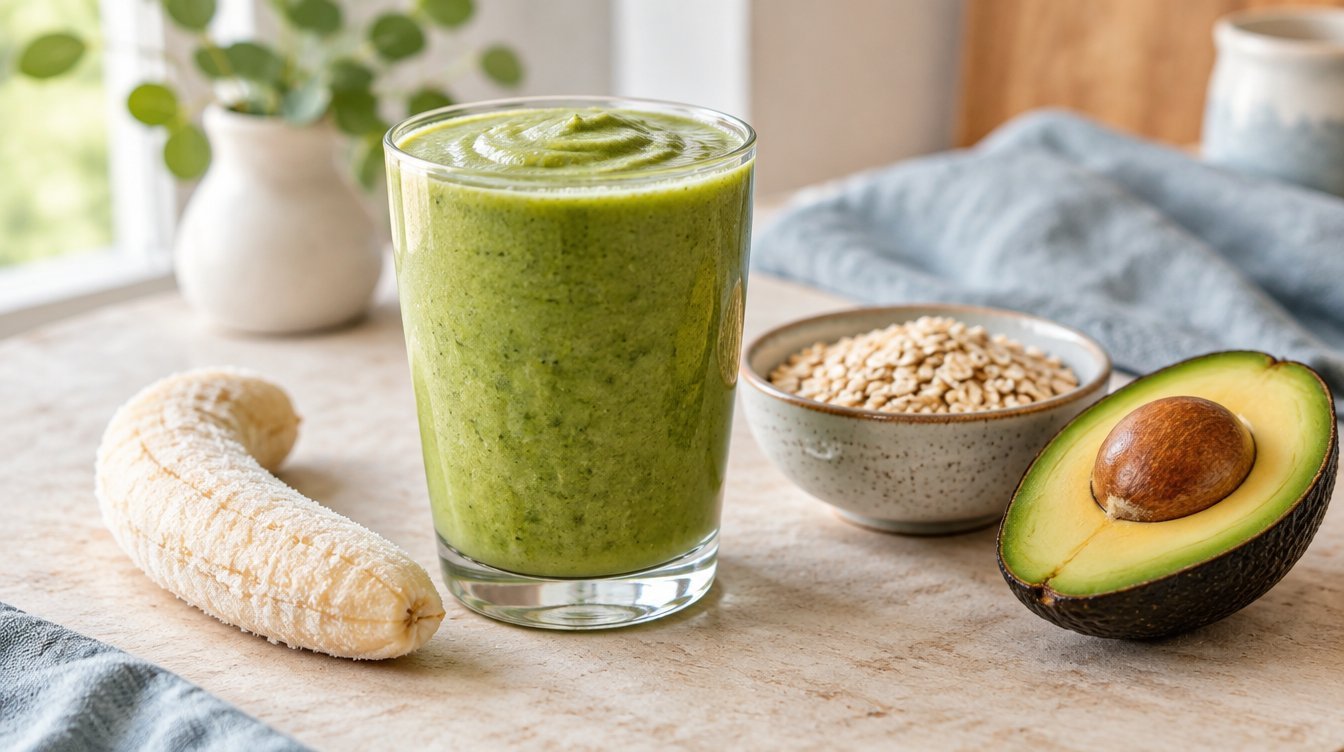
Yes. Yogurt contributes three things to a smoothie: protein, a thick creamy body and, if the label says so, live cultures. Each can be replaced. Frozen banana, avocado, oats or chia handle thickness; milk, silken tofu, cottage cheese or nut butter handle protein; and kefir is the closest swap if you want live cultures. The one thing most substitutes don’t bring is the cultures.
If you do want yogurt, our yogurt smoothie guide has the base formula. This page covers what to use instead.
What the research shows
What yogurt actually adds
Protein varies widely by style. USDA lists 8.5 grams of protein in a cup of plain whole-milk yogurt and 17.3 grams in a 6-ounce container of plain nonfat Greek yogurt. Thickness comes from yogurt’s gel, which is why removing it can leave a smoothie thin and icy unless you add something else with body.
Live cultures are not guaranteed either. Under the federal yogurt standard, 21 CFR 131.200, yogurt is made with Lactobacillus delbrueckii subsp. bulgaricus and Streptococcus thermophilus, but it may be treated after culturing to inactivate those microbes and extend shelf life. Our page on whether all yogurt has probiotics explains how to read the label.
Substitutes compared
Protein values are calculated from the USDA FoodData Central entry linked in each row for the serving shown.
| Substitute | What it adds | Protein per serving (USDA) | Live cultures? | Notes |
|---|---|---|---|---|
| Kefir | Tang, pourable base | 9.2 g per cup | Yes, if labeled | Thinner; little or no extra liquid needed |
| Silken tofu | Creamy body | 5.8 g per 3 oz | No | Neutral taste; USDA entry is one brand (Mori-Nu firm) |
| Frozen banana | Thickness, sweetness | 1.3 g per medium | No | 3.1 g fiber |
| Avocado | Creaminess | 1.0 g per 1/4 fruit | No | 3.4 g fiber, 80 calories |
| Rolled oats | Body | 2.7 g per 1/4 cup dry | No | 2.0 g fiber; blend well |
| Chia seeds | Thickens as it gels | 1.7 g per tablespoon | No | 3.6 g fiber; rest 5 minutes |
| Cottage cheese | Protein, creaminess | 12.5 g per 1/2 cup | Not reliably; check label | About 354 mg sodium per 1/2 cup |
| Peanut butter | Richness | 7.1 g per 2 tablespoons | No | 191 calories |
| Plant-based yogurt | Tang, spoonable texture | Soy 8.2 g, almond 5.2 g, coconut 4.0 g per 6 oz | Varies; check label | Generic USDA entries; fortification varies by brand |
| Milk | Liquid, some protein | 2%: 8.1 g per cup | No | Fortified soymilk 6.3 g; unsweetened almond milk 1.0 g |
Plant-based yogurt is not a one-to-one swap
A 2023 analysis in Frontiers in Nutrition compared nutrition labels on 612 regular-style yogurts launched in the U.S. from 2016 to 2021. Plant-based yogurts made from coconut, almond, cashew and oat had, on average, less protein, calcium and potassium than dairy yogurts, but less total sugar and sodium and more fiber. The authors pointed to fortification as a way to close the gap.
The 2020-2025 Dietary Guidelines count fortified soy yogurt and soy milk in the dairy group because their nutrients are similar, but not almond, rice, coconut, oat or hemp “milks.” For dairy-free options with cultures, see non-dairy probiotics.
Kefir is the closest substitute
Traditional kefir is a fermented milk made with grains that hold lactic acid bacteria and yeasts, according to a 2016 review in Frontiers in Microbiology, and it typically has a tart flavor and a slightly viscous texture. In a smoothie it replaces both the yogurt and the liquid, though the result is thinner.
Caveats to keep in mind
- Numbers are typical, not exact. Some USDA entries are generic averages and one is a single brand, so check the Nutrition Facts on what you buy.
- Most swaps add no live cultures. Tofu, fruit, oats, seeds, nut butter and plain milk are not fermented.
- Cottage cheese is not a dependable probiotic food. Some brands add cultures and say so on the label; see does cottage cheese have probiotics.
- Calories can climb. Two tablespoons of peanut butter or a quarter avocado adds more calories than most fruit.
How to choose a substitute
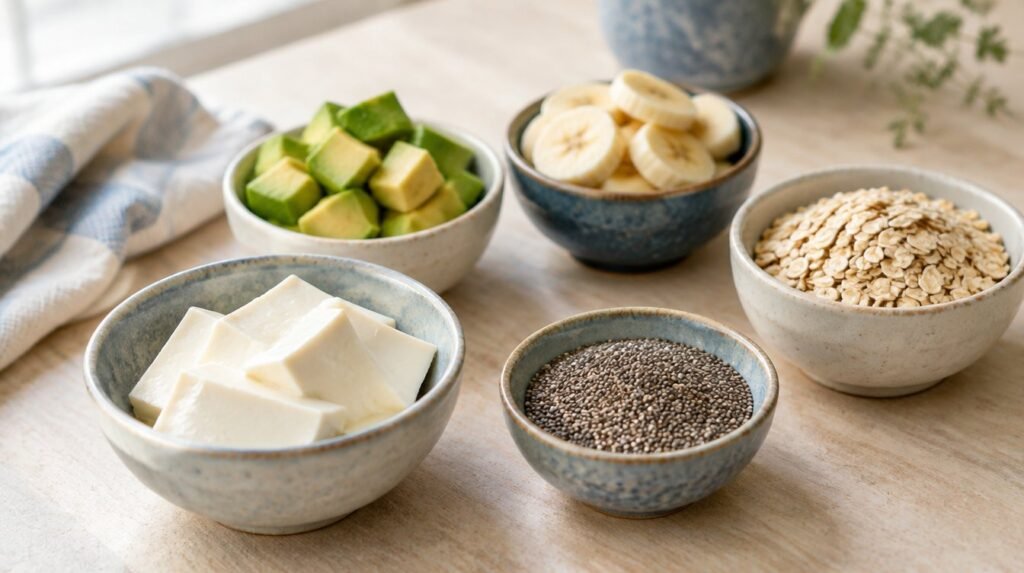
- For thickness: 1 frozen banana, 1/4 avocado, 1/4 cup oats or 1 tablespoon chia.
- For protein: 1/2 cup cottage cheese, 3 ounces silken tofu, 1 cup milk or fortified soymilk, or 2 tablespoons peanut butter.
- For live cultures: 1 cup plain kefir, or a plant-based yogurt that says it has live and active cultures.
- For dairy-free: 3 ounces silken tofu blended with 1 cup fortified soymilk gives about 12 grams of protein, more than a cup of plain whole-milk yogurt.
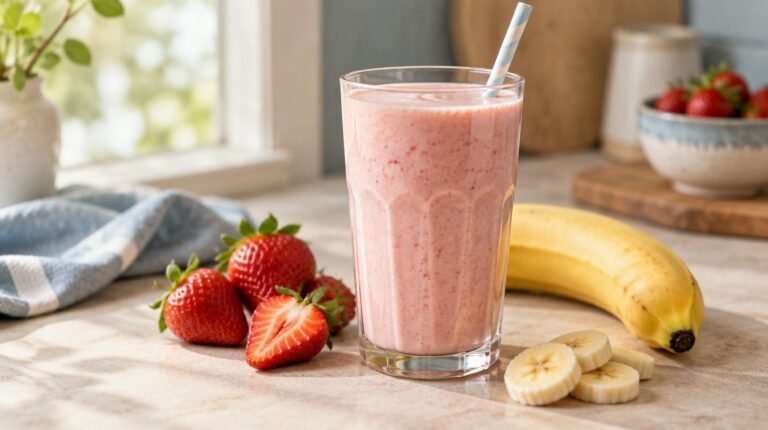
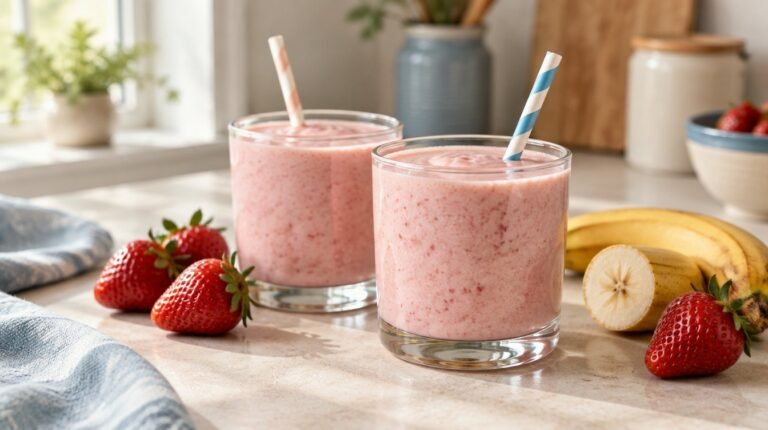
A simple yogurt-free formula: 1 cup milk or fortified soymilk, 1 frozen banana, 1 cup frozen fruit and 1 tablespoon chia seeds. For blends built around fiber, see the gut health smoothie guide.
Frequently asked questions
Can you make a smoothie without yogurt or milk?
Yes. Use water or a plant milk with frozen banana, avocado or oats for body, and add silken tofu, nut butter or seeds if you want more protein.
What is the best yogurt substitute for a creamy smoothie?
Frozen banana and avocado give the most creaminess, and silken tofu adds creaminess plus some protein.
Does a smoothie without yogurt have probiotics?
Only if you add a fermented ingredient with live cultures, such as kefir or a plant-based yogurt labeled with live and active cultures.
Is plant-based yogurt as nutritious as dairy yogurt?
Not on average: a 2023 analysis of 612 U.S. products found plant-based yogurts had less protein, calcium and potassium but less sugar and sodium and more fiber (Frontiers in Nutrition).
Related topics
- Greek Yogurt Smoothie: the high-protein version if you do use yogurt.
- Best Milk for Gut Health: choosing the liquid base.
- Coconut Yogurt: a dairy-free yogurt you can make or buy.
- Probiotic Foods: other fermented foods with live cultures.
Sources
- 21 CFR 131.200: Yogurt (Electronic Code of Federal Regulations)
- D’Andrea AE, et al. A comparison of the nutritional profile and nutrient density of commercially available plant-based and dairy yogurts in the United States (Frontiers in Nutrition, 2023)
- Bourrie BC, et al. The microbiota and health promoting characteristics of the fermented beverage kefir (Frontiers in Microbiology, 2016)
- Dietary Guidelines for Americans, 2020-2025 (U.S. Department of Agriculture and U.S. Department of Health and Human Services)
- Yogurt, plain, whole milk (FDC ID 171284) (USDA FoodData Central)
- Yogurt, Greek, plain, nonfat (FDC ID 170894) (USDA FoodData Central)
- Kefir, lowfat, plain, LIFEWAY (FDC ID 170904) (USDA FoodData Central)
- MORI-NU, Tofu, silken, firm (FDC ID 172461) (USDA FoodData Central)
- Bananas, raw (FDC ID 173944) (USDA FoodData Central)
- Avocados, raw, all commercial varieties (FDC ID 171705) (USDA FoodData Central)
- Cereals, oats, regular and quick, not fortified, dry (FDC ID 173904) (USDA FoodData Central)
- Seeds, chia seeds, dried (FDC ID 170554) (USDA FoodData Central)
- Cheese, cottage, creamed, large or small curd (FDC ID 172179) (USDA FoodData Central)
- Peanut butter, smooth style, without salt (FDC ID 172470) (USDA FoodData Central)
- Yogurt, soy (survey entry) (FDC ID 2707444) (USDA FoodData Central)
- Yogurt, almond milk (survey entry) (FDC ID 2707570) (USDA FoodData Central)
- Yogurt, coconut milk (survey entry) (FDC ID 2707569) (USDA FoodData Central)
- Milk, reduced fat, fluid, 2% milkfat, with added vitamin A and vitamin D (FDC ID 171267) (USDA FoodData Central)
- Soymilk, original and vanilla, with added calcium, vitamins A and D (FDC ID 172456) (USDA FoodData Central)
- Beverages, almond milk, unsweetened, shelf stable (FDC ID 174832) (USDA FoodData Central)