How to Make Strawberry Yogurt: A Step-by-Step Guide
What you will end up with
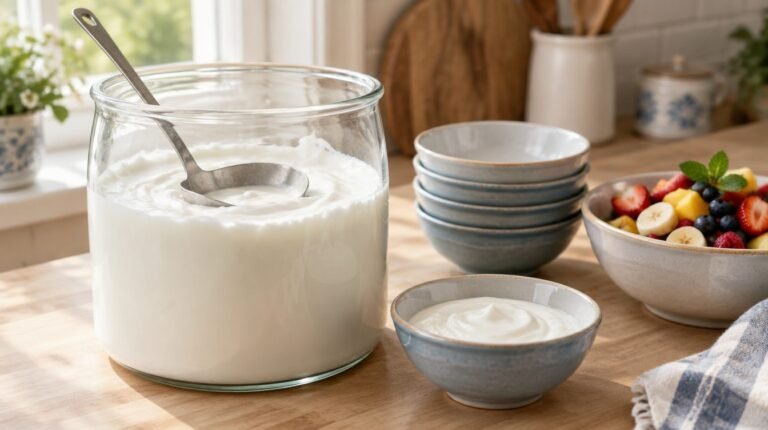
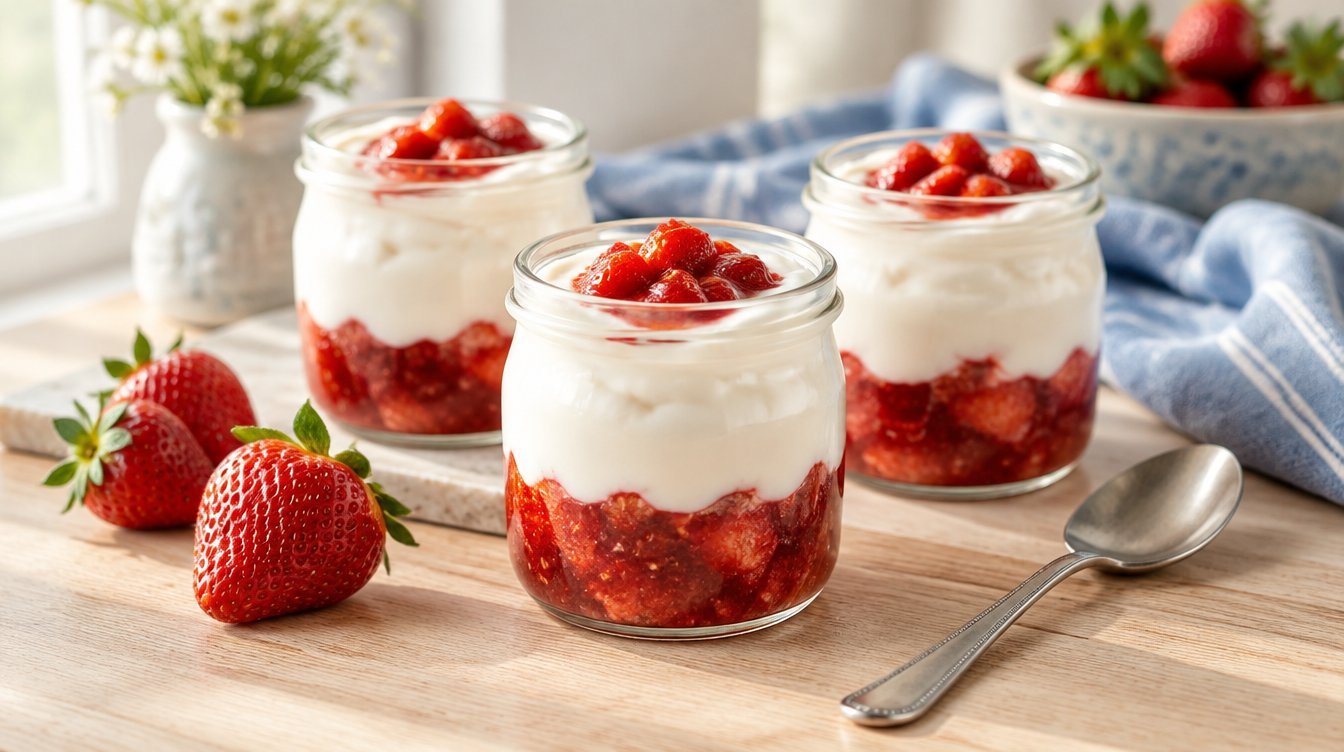
Homemade strawberry yogurt is plain yogurt you make yourself, paired with a strawberry layer you control: fresh mash, a quick cooked compote, or freeze-dried berry powder. You get to choose how sweet it is, how thick it is, and whether the fruit sits on the bottom, swirls through, or blends in.
This guide makes about 1 quart of yogurt (eight half-cup servings) plus enough strawberry compote for four to six servings. Plan on about 45 minutes of hands-on work, 6 to 10 hours of incubation, and at least 2 hours of chilling. Most people start the yogurt in the evening and add the fruit the next day.
The key idea is simple. Make the yogurt plain first, chill it, and add the strawberries after. The University of Kentucky’s home yogurt guide advises adding fruit, honey or cereal right before serving, because yeasts and molds can cause off flavors even in the fridge. Keeping the fruit separate until you eat it also stops the yogurt from turning watery.
Equipment
- A 2-quart heavy saucepan for heating the milk.
- A food or candy thermometer. Accurate temperatures matter more than any other tool.
- An incubator: a yogurt maker, an oven with the light on, a cooler with warm water, or a slow cooker on warm. Our guide on how to incubate yogurt compares these.
- Clean jars or containers with lids (glass, food-safe plastic or metal).
- A small saucepan and a potato masher or fork for the strawberries.
- Optional: a fine-mesh strainer if you like thick, Greek-style strawberry yogurt.
Ingredients
For the plain yogurt base
- 1 quart (4 cups) milk. Whole milk gives the creamiest result; 1% or 2% works too.
- 2 tablespoons plain yogurt with live and active cultures, or a freeze-dried starter used as its package directs.
- Optional: 1/4 cup nonfat dry milk powder for a firmer set, stirred into the cold milk before heating.
Check that the starter yogurt says it contains live and active cultures. Under the federal yogurt standard, yogurt that was heat-treated after culturing must carry the words “does not contain live and active cultures” on the label, and that kind will not start a new batch. For more on choosing a culture, see our yogurt starter guide.
For the strawberry layer
- 1 pound fresh strawberries (about 3 cups), or the same weight of frozen unsweetened strawberries.
- 1 to 2 tablespoons sugar, honey or maple syrup, to taste.
- 1 teaspoon lemon juice.
- Optional: 1/2 teaspoon vanilla extract, or a pinch of salt to make the berry flavor stand out.
Step 1: Make the plain yogurt base
These temperatures follow the University of Illinois Extension basic yogurt recipe and the National Center for Home Food Preservation fact sheet.
- Wash your hands and make sure every jar, spoon and pot is clean.
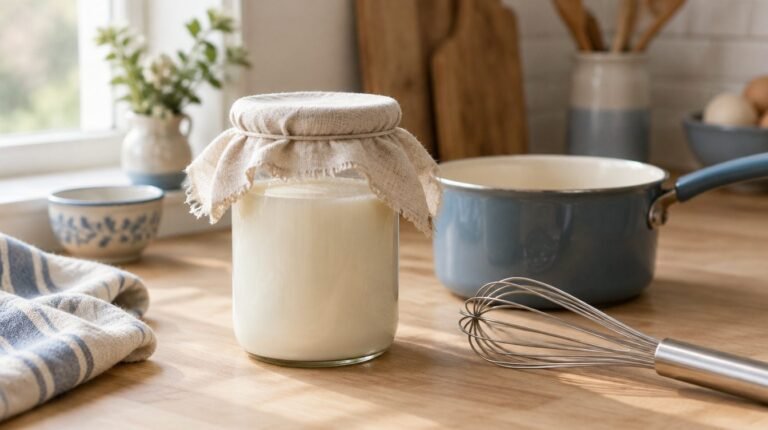
- Pour the milk into the saucepan and heat it slowly over medium-low to 180 to 185°F, stirring now and then so it does not scorch. This takes about 15 to 20 minutes. Heating changes the milk proteins so the yogurt sets thick instead of separating.
- Take the pot off the heat and let the milk cool to 108 to 115°F. This takes 30 to 45 minutes on the counter, or about 10 minutes if you set the pot in a sink of cold water and stir. Do not add the starter above 115°F, since very hot milk can kill the bacteria.
- Ladle about 1 cup of the warm milk into a small bowl, stir in the 2 tablespoons of starter until smooth, then stir that mixture back into the pot.
- Pour into jars, cover, and incubate at 108 to 115°F for 6 to 10 hours without moving them. Shorter times give a milder yogurt; longer times give a tangier one. Our guide on how long to incubate yogurt explains the trade-offs.
- When the yogurt is set (it pulls away from the side of the jar in one mass when tilted), move it to the refrigerator at 40°F or below and chill for at least 2 hours. Cold stops the bacteria from making more acid.
If you want thick yogurt that holds a fruit layer cleanly, strain the chilled yogurt in a fine-mesh strainer for 1 to 2 hours in the fridge. The liquid that drains off is whey, and our page on whey from yogurt covers what to do with it.
Step 2: Cook the strawberry layer
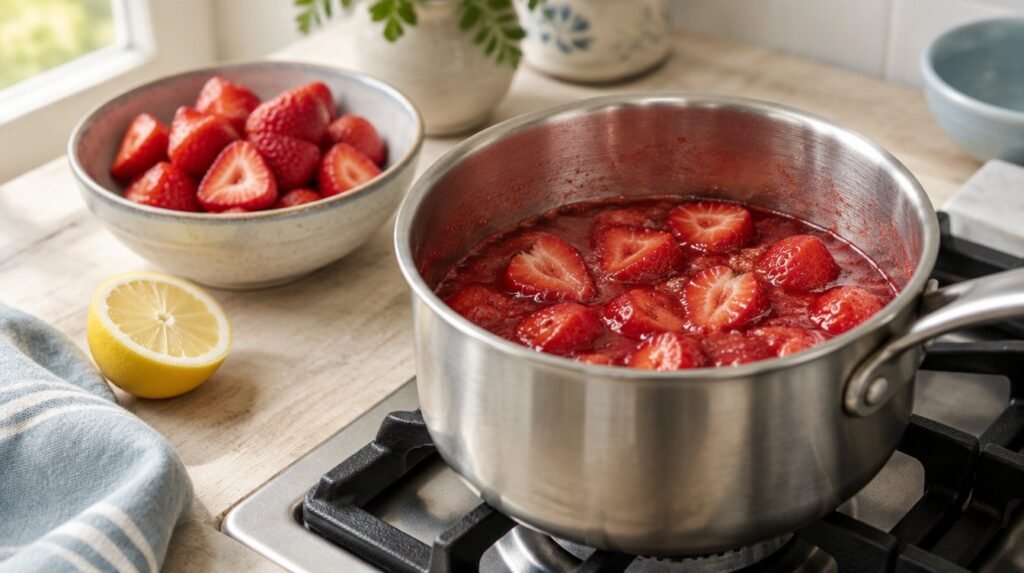
Strawberries are mostly water, so raw berries stirred straight into yogurt will weep and thin it within a few hours. Cooking them briefly drives off some of that water and concentrates the flavor. Here are three ways to do it, from most flavor to least effort.
Quick strawberry compote (best all-around)
- Rinse the strawberries under running water right before you use them, then hull and quarter them. The FDA advises washing produce under running water and not with soap or produce wash.
- Put the berries, sugar or honey, and lemon juice in a small saucepan over medium heat. Once the juices start to bubble, after about 3 minutes, turn the heat to medium-low.
- Simmer for 8 to 12 minutes, stirring and mashing lightly, until the juices turn glossy and coat a spoon. Frozen berries need 3 to 5 minutes more.
- Stir in vanilla if using. Spoon into a clean jar, let it cool for 20 minutes, then refrigerate until fully cold, about 1 hour. Never layer warm fruit over yogurt, because it will thin the yogurt and look curdled.
Fresh strawberry mash (no cooking)
Mash 1 cup of washed, hulled ripe strawberries with 1 to 2 teaspoons of sugar and let it sit for 10 minutes so the juices come out. This tastes the brightest but is the most watery, so spoon it over yogurt right before eating rather than storing the two together.
Freeze-dried strawberries (thickest result)
Blend about 1/2 cup of freeze-dried strawberries into a fine powder and stir 1 to 2 tablespoons into each cup of chilled yogurt. The powder adds color and strong flavor without adding water, so the yogurt stays thick. It is the closest homemade match to a smooth, pink, store-style strawberry yogurt.
Step 3: Put it together
Choose the style that suits how you eat yogurt.
- Fruit on the bottom: spoon 2 to 3 tablespoons of cold compote into a jar, then top with about 3/4 cup of chilled yogurt. Stir when you eat it.
- Swirled: fold the cold compote through the yogurt with three or four strokes of a spoon so you keep ribbons of red.
- Blended: stir freeze-dried powder or pureed compote evenly through the yogurt for a uniform pink cup.
- Drinkable: the Illinois Extension guide makes a pourable yogurt by incubating a shorter time and stirring in 1/2 cup fresh strawberries pureed with a small banana and 1 tablespoon honey or sugar after chilling. For a thicker blended drink, see our yogurt smoothie page.
On sweetness: the Dietary Guidelines for Americans, 2025-2030 say no amount of added sugar is recommended, suggest no more than 10 grams in one meal, and apply FDA “healthy” limits to snacks, which for yogurt is 2.5 grams of added sugar per 2/3 cup. Ripe berries need very little help, so start with 1 tablespoon of sweetener in the compote and add more only if you miss it. Plain whole-milk yogurt itself carries about 4.7 grams of natural milk sugar per 100 grams, which does not count as added sugar.
Why add the fruit after incubation
It is tempting to stir strawberries into the warm milk and let everything ferment together. There are three good reasons not to.
- Texture: fruit and its juices interrupt the gel as it forms, so you tend to get a soft, uneven set with pockets of whey.
- Flavor: fresh fruit held in yogurt can pick up yeasty, fermented notes over time, which is why the Kentucky guide says to add fruit just before serving.
- Control: keeping plain yogurt and strawberries separate lets you vary sweetness and amount day to day, and the plain yogurt stays useful for savory dishes.
The NCHFP sheet lists fruit yogurt as a style where fruit, fruit syrup or pie filling is placed on top, on the bottom, or stirred into finished yogurt. That is the method used here.
Problems and fixes
| Problem | Likely cause | Fix next time |
|---|---|---|
| Yogurt never set | Starter lacked live cultures, milk was above 115°F when you added it, or incubation was too cool | Use a fresh starter that says “live and active cultures” and check the milk temperature before adding it |
| Strawberry yogurt turned watery | Raw berries released juice, or compote was added while warm | Cook the berries, chill the compote fully, and combine just before eating |
| Too sour | Incubated too long | Stop closer to 6 hours and chill promptly; see how to make sour yogurt for the reverse |
| Lots of whey on top | Long incubation or jars moved while setting | Leave jars still; pour off or stir in the whey |
| Clumps or strings in the milk | Some milk proteins jelled during heating | Heat gently and stir; lift out clumps with a slotted spoon or pour the milk through a clean strainer before adding the starter |
| Dull, brownish fruit | Compote overcooked | Simmer only until glossy and add a little more lemon juice |
The troubleshooting lists from Illinois Extension and the NCHFP cover the same causes for failed sets: dead starter, wrong incubation temperature, and milk that was not heated enough. Our yogurt temperature guide goes further into each range.
How to store strawberry yogurt
- Plain yogurt: keep it covered at 40°F or below. Illinois Extension says to eat homemade yogurt within 14 days. Our guide on how long homemade yogurt lasts covers signs of spoilage.
- Compote: store it in its own covered jar in the fridge and spoon it out with a clean spoon. Throw it out if you see mold or it smells fermented.
- Drinkable strawberry yogurt: the NCHFP gives a shorter shelf life of 4 to 10 days for drinking yogurt thinned with milk, because the added milk raises the pH.
- Keep a starter: set aside 2 tablespoons of plain yogurt before adding any fruit if you want to start your next batch from this one. Illinois suggests using homemade starter within 5 to 7 days.
Can I add strawberries before incubating the yogurt?
You can, but the set is usually softer and more watery. Adding fruit after chilling gives a thicker yogurt and a fresher fruit flavor, as the University of Kentucky guide recommends.
Can I use frozen strawberries?
Yes. Frozen unsweetened strawberries work well in the cooked compote; simmer them 3 to 5 minutes longer than fresh berries.
Why did my strawberry yogurt get runny?
Raw strawberries release juice into the yogurt over a few hours. Cook the berries into a compote or use freeze-dried powder, and combine just before eating.
Does homemade strawberry yogurt still have live cultures?
Yes, if you used a live starter and did not heat the yogurt after it set. Stirring in cold fruit does not heat it.
Related topics
- How to Make Yogurt at Home: the full plain-yogurt method this guide builds on.
- How to Make Greek Yogurt: strain your base thicker before adding fruit.
- How to Incubate Yogurt: ways to hold 108 to 115°F at home.
- Yogurt Starter: picking a culture that sets reliably.
- How Long does Homemade Yogurt Last?: storage times and spoilage signs.
- Yogurt Recipes You Can Make at Home: more ways to use a fresh batch.
Sources
- Making Yogurt at Home (University of Illinois Extension, 2024)
- Fermenting Yogurt at Home (National Center for Home Food Preservation, University of Georgia, 2002)
- Making Yogurt at Home, IP-36 (University of Kentucky Cooperative Extension)
- Selecting and Serving Produce Safely (U.S. Food and Drug Administration)
- 21 CFR 131.200 Yogurt (Electronic Code of Federal Regulations)
- Dietary Guidelines for Americans, 2025-2030 (U.S. Departments of Agriculture and Health and Human Services)
- Yogurt, plain, whole milk (FDC ID 171284) (USDA FoodData Central)