Easy to Digest Foods: A Practical Guide
What are easy to digest foods?
Easy to digest foods are foods your stomach and intestines can break down with little effort. They tend to be low in fiber, low in fat, soft or well cooked, and eaten in modest portions. Think white rice, eggs, ripe bananas, cooked carrots, broth and plain yogurt. They are most useful for a few days after a stomach bug or during a flare, not as a permanent way of eating.
There is no official scientific list of “easy” foods. The idea comes from clinical diets that doctors and dietitians use for specific problems, such as the gastroparesis eating plan from the National Institute of Diabetes and Digestive and Kidney Diseases (NIDDK), the low-fiber diet described by Mayo Clinic and the soft food diet described by Cleveland Clinic. Those plans share the same few principles, and those principles are what this guide is built on.
Tolerance is also personal. NIDDK notes that the foods and drinks that trigger indigestion vary from person to person, so a food that sits well with one reader may bother another. Use the lists below as a starting point, then adjust to what your own body tells you.
What makes a food easier to digest
Five things do most of the work: how much and what kind of fiber a food has, how much fat it carries, how it is cooked, how ripe or soft it is, and how much of it you eat at once. A sixth factor, certain sugars that some people absorb poorly, explains why foods like milk or apples are easy for some people and hard for others.
Fiber: amount and type
Fiber is the part of plant food your body does not digest. Mayo Clinic explains that soluble fiber dissolves in water and forms a gel that slows digestion, while insoluble fiber does not dissolve and adds bulk to stool. Oats, bananas, carrots and apples are sources of soluble fiber. Whole-wheat flour, wheat bran, nuts, beans and cauliflower supply more of the insoluble kind.
A low-fiber diet works because less undigested material moves through the large intestine, so stools are less bulky. Mayo’s version suggests choosing foods with no more than 1 to 2 grams of fiber per serving. Too much fiber at once is also a common cause of gas: NIDDK lists too much fiber among the things that can cause gas and bloating.
Fat
Fat slows the rate at which the stomach empties. In one small experiment, Houghton and colleagues gave seven healthy young men a 300 ml bowl of beef consommé with and without 60 grams of margarine stirred in. Without the fat, half the meal left the stomach in about 15 minutes. With it, that took about 88 minutes. The study was tiny and used a liquid meal, but the direction of the effect matches clinical advice.
NIDDK advises people with gastroparesis to choose foods and drinks that are low in fat and low in fiber, and Mayo Clinic notes that fat slows digestion and gives food more time to ferment, which can add to gas. Fatty or greasy food is also on NIDDK’s list of common indigestion triggers.
Cooking and texture
Cooking softens plant cell walls and makes food easier to chew and break down. Mayo Clinic recommends cooking foods until tender by simmering, poaching, stewing, steaming or braising, or baking them in a covered dish. Cleveland Clinic adds three useful habits: cook vegetables well or use canned ones, remove skins and seeds, and chew until food reaches the texture of mashed potatoes.
The same vegetable can land on either side of the line depending on how you prepare it. A raw broccoli floret is tough going for a sore stomach. Broccoli steamed until soft and eaten in a small portion is a different food in practice.
Ripeness and softness
Fruit that is ripe enough to mash with a fork is usually the gentlest choice. The fruits that show up again and again on clinical soft and low-fiber lists are soft ones: bananas, avocados, seedless melon, peeled apples, peaches and pears, applesauce and canned fruit without skin. Dried fruit, coconut and seedy berries sit on the “avoid” side of the same lists.
Portion size and pace
A big meal asks more of the stomach than a small one. NIDDK’s gastroparesis advice is to eat five or six small, nutritious meals a day instead of two or three large ones. For gas, NIDDK suggests eating slowly while seated and having smaller, more frequent meals. Eating slowly also means swallowing less air, which Mayo Clinic links to less belching.
Sugars some people absorb poorly
Lactose, the natural sugar in milk, is the best-known example. NIDDK estimates that about 36% of people in the United States have lactose malabsorption, though not all of them get symptoms. A second group of carbohydrates, called FODMAPs, is found in foods such as apples, pears, onions, garlic, beans and wheat. NIDDK describes FODMAPs as carbohydrates that are hard to digest and notes that a low-FODMAP plan may help some people with irritable bowel syndrome (IBS).
Sugar alcohols are the third group. Sweeteners ending in “-ol,” such as sorbitol and xylitol, appear in sugar-free gum and candy, and NIDDK lists them among products that can cause gas. If a “healthy” sugar-free snack keeps upsetting your stomach, the sweetener is worth checking first.
What the evidence says
Much of the advice on easy foods comes from clinical experience and agency guidance, not from large trials. The table below separates the claims by how much support they have.
| Claim | Evidence strength | Source |
|---|---|---|
| Fat slows how fast the stomach empties | Consistent with clinical guidance; the cited experiment is small (7 healthy men, one liquid meal) | Houghton et al., Gut; NIDDK |
| Low-fiber, soft, well-cooked foods reduce stool bulk and are useful short term | Clinical guidance used for specific conditions; not tested as a general diet | Mayo Clinic; Cleveland Clinic |
| Adding fiber too fast can cause gas, bloating and cramping | Clinical guidance | Mayo Clinic |
| Many people with lactose intolerance can handle about 12 grams of lactose, and yogurt and hard cheese contain less lactose than milk | Agency guidance | NIDDK |
| A low-FODMAP diet improves IBS symptom scores more than standard dietary advice | Moderate; a meta-analysis of 10 studies with high variation between them | Varjú et al., PLoS ONE |
| Fasting or a strict restricted diet is not needed for viral gastroenteritis | Expert guidance | NIDDK |
| Higher fiber intake is linked with lower rates of heart disease, type 2 diabetes and colorectal cancer | Strong but mostly observational (185 prospective studies, 58 trials); applies to the general population | Reynolds et al., The Lancet |
| Gas from beans often fades after the first few weeks of regular eating | Limited; three small feeding studies with self-reported symptoms | Winham and Hutchins, Nutrition Journal |
The easiest foods to digest, by food group
The lists below draw on Mayo Clinic’s low-fiber food list and Cleveland Clinic’s soft food diet. Portion size still matters, and any food you know bothers you belongs off your personal list no matter where it appears here.
Grains and starches
- White rice: plain, boiled or steamed, and one of the most common first foods after a stomach bug.
- White pasta and noodles: cooked soft, served with a little broth or oil instead of a heavy cream sauce.
- White bread, toast, bagels and saltine crackers: made with refined flour and without seeds.
- Low-fiber cereals: such as cornflakes or cream of rice. Mayo suggests cereals with under 2 grams of fiber per serving.
- Peeled potatoes: boiled, baked or mashed, without the skin.
Fruits
- Ripe bananas: soft, portable and easy to eat in small amounts.
- Applesauce: cooked and smooth, with the skin removed.
- Melon: seedless and ripe.
- Canned peaches or pears: without skin, ideally in juice rather than heavy syrup.
- Avocado: soft, but rich in fat, so keep the portion small if fat bothers you.
Vegetables
- Carrots: peeled and cooked until a fork slides in easily.
- Green beans: well cooked or canned.
- Zucchini and other summer squash: peeled and steamed or roasted until soft.
- Plain tomato sauce and vegetable juice: on Mayo’s low-fiber list, though acidic foods such as tomatoes can bother people with reflux, according to NIDDK’s GERD guidance.
Proteins
- Eggs: scrambled, poached or soft-boiled, cooked without much butter.
- Chicken and turkey: skinless, baked, poached or simmered in soup.
- Fish: baked or steamed white fish or salmon.
- Tofu: soft or silken tofu is especially gentle.
- Smooth nut butter: in a thin layer on toast or crackers. Chunky versions are on the “avoid” side of the low-fiber list.
Dairy and dairy alternatives
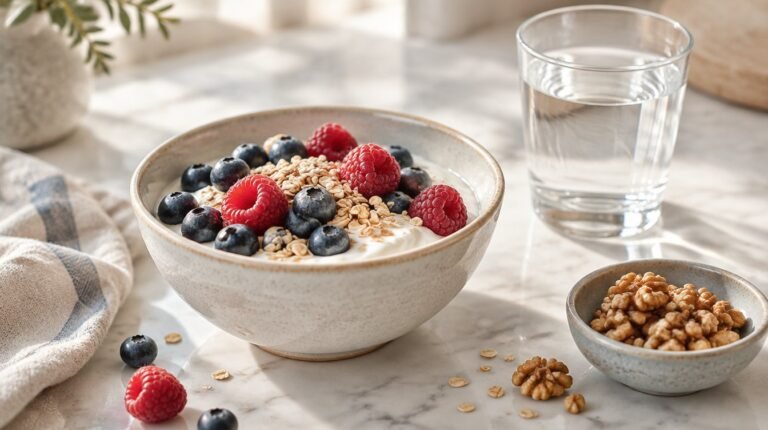
Dairy is easy for some people and hard for others, and lactose is usually the reason. NIDDK says yogurt and hard cheeses such as cheddar and Swiss contain less lactose than other milk products, and lactose-free milk is just as nutritious as regular milk. That is why plain yogurt shows up on many gentle-food lists. If you want to know more about choosing one, see our guide to plain yogurt and our look at whether yogurt is good for an upset stomach.
Skip yogurts with seeds, granola or large amounts of added sugar while your stomach is sensitive. Mayo also points out that some yogurts, cereals and drinks contain added fiber, so it pays to read the label.
Fats, seasonings and extras
Small amounts of butter, olive oil or mayonnaise are fine for most people. Trouble usually starts with larger amounts, as in fried food or rich sauces. Salt and mild dried herbs are normally well tolerated. Hot spices and heavily seasoned dishes bother some people, which is why Mayo Clinic suggests avoiding fatty or highly seasoned foods until you recover from a stomach bug. Our article on whether spicy food is good for you covers the topic in more depth.
Drinks
- Water: in small, frequent sips when your stomach is unsettled.
- Clear broth: adds fluid and a little salt.
- Oral rehydration solutions: the CDC says over-the-counter versions work best for mild dehydration after vomiting and diarrhea.
- Caffeine-free herbal tea: a gentle option once the worst has passed.
Easier vs. harder choices at a glance
This table pairs gentler choices with the versions that tend to be harder on a sensitive gut. For a deeper look at the right-hand column, see our guide to foods that are hard to digest.
| Food group | Usually easier | Usually harder |
|---|---|---|
| Grains | White rice, white pasta, white toast, saltines, cornflakes | Brown or wild rice, bran cereal, granola, popcorn, seeded whole-grain bread |
| Fruit | Ripe bananas, applesauce, seedless melon, canned peaches without skin | Dried fruit, coconut, seedy berries, raw apples and pears with skin |
| Vegetables | Well-cooked carrots, green beans, peeled potatoes, soft squash | Raw broccoli, cabbage, onions, corn, large salads |
| Protein | Eggs, skinless chicken, baked fish, tofu, smooth nut butter | Fried meat, sausage, hot dogs, gristly cuts, chunky nut butter, whole nuts |
| Legumes | Small portions of well-cooked lentils or beans, once you are recovered | Large servings of beans, lentils and peas, especially when you are not used to them |
| Dairy | Plain yogurt, lactose-free milk, hard cheese (if lactose bothers you) | Large glasses of regular milk, ice cream, soft cheeses (if lactose bothers you) |
| Fats | A teaspoon of butter or olive oil | Fried foods, pizza, fast food, heavy cream sauces |
| Drinks | Water, broth, oral rehydration solution, caffeine-free tea | Carbonated drinks, alcohol, coffee, sugary juices |
Using easy foods after a stomach bug
Most viral stomach bugs pass quickly. The CDC says most people with norovirus recover within 1 to 3 days. The main job during that time is replacing fluids. Food comes back in gradually as your appetite returns.

- Let your stomach settle. Mayo Clinic suggests stopping solid foods for a few hours and taking small, frequent sips of water or sucking on ice chips.
- Replace fluids and salts. Clear broth, water and an oral rehydration solution are good choices. Sports drinks can help with mild dehydration, but the CDC notes they may not replace all the minerals you lose.
- Start with small portions of bland food. Mayo’s examples include soda crackers, soup, oats, noodles, bananas and rice. Stop eating if nausea returns.
- Hold off on the usual irritants. Caffeine, alcohol and fatty or highly seasoned foods are best avoided until you feel better.
- Go easy on dairy for a while. NIDDK notes that some people have trouble digesting lactose for a month or more after a stomach bug. Plain yogurt or lactose-free milk may sit better than a glass of regular milk.
- Return to your normal diet as your appetite comes back. NIDDK says most experts do not recommend fasting or a restricted diet for viral gastroenteritis, and you can usually go back to normal eating even if some diarrhea continues.
That last step matters. Bland foods are a short bridge back to normal meals, not a treatment in themselves. For meal ideas during this stage, see what to eat when your stomach is upset and what to eat when you have diarrhea.
Using easy foods with a sensitive stomach
If your stomach is often touchy rather than briefly ill, the goal shifts. You are not trying to live on white rice. You are trying to find out which foods, portions and habits set you off, and to keep as much variety as you can.
- Keep a food and symptom diary. NIDDK says your doctor may ask you to record what you eat and drink and when symptoms happen to help identify triggers. The NHS recommends a food and symptom diary for IBS as well.
- Eat regular, smaller meals. The NHS advises people with IBS not to skip meals and not to eat too quickly.
- Use cooking to your advantage. Soft-cooked vegetables are often tolerated when raw ones are not.
- Change one thing at a time. If you cut five foods at once and feel better, you will not know which one mattered.
- Mind the timing if you have reflux. NIDDK says eating at least 3 hours before you lie down may improve nighttime reflux symptoms.
Our full guide to a diet for a sensitive stomach includes a sample day of meals.
Who this way of eating is not for
Easy to digest foods are a short-term tool for most people. A long-term low-fiber diet is not recommended unless a clinician has prescribed it, because fiber does a great deal of good. A large Lancet review of 185 prospective studies and 58 clinical trials found that people with the highest fiber intakes had 15% to 30% lower rates of death from any cause, heart disease, stroke, type 2 diabetes and colorectal cancer than people with the lowest intakes. Most of that evidence is observational, so it shows a link rather than proof of cause, but it is consistent.
Mayo Clinic describes the low-fiber diet as usually temporary and notes that meeting nutritional needs on it can be hard. If you need to follow it longer than directed, Mayo suggests working with a registered dietitian.
Some people should not use a general list like this one at all. If a doctor has put you on a specific diet for gastroparesis, a narrowed bowel, Crohn’s disease, recent bowel surgery or radiation treatment, follow that plan and your care team’s instructions instead. Children, older adults, pregnant people and anyone with a weakened immune system should also check with a clinician sooner when stomach symptoms appear.
How to bring fiber back
Once you feel well, add higher-fiber foods back gradually. Mayo Clinic recommends increasing fiber over a few weeks and drinking plenty of water, because adding a lot at once can cause gas, bloating and cramping. Cleveland Clinic suggests adding one new fiber-rich food every two to three days after a soft diet so you can see how each one sits.
Mayo’s daily fiber targets for adults are 25 grams for women 50 or younger and 21 grams after 50, and 38 grams for men 50 or younger and 30 grams after 50. Oats, cooked vegetables with the skin left on, berries, whole-grain bread and small portions of beans are good next steps. Our guide to the best foods for gut health has more ideas.
When to see a doctor
This article is general information, not medical advice, and it cannot diagnose the cause of your symptoms. For a stomach bug, Mayo Clinic says adults should contact a health care provider if:
- You cannot keep liquids down for 24 hours.
- Vomiting or diarrhea lasts more than two days.
- You are vomiting blood or have blood in your stool.
- You have signs of dehydration, such as intense thirst, a dry mouth, very dark urine or little to none, or severe weakness or dizziness.
- You have severe belly pain or a fever above 102°F (39°C).
For ongoing indigestion, NIDDK lists signs that need prompt attention, including trouble or pain when swallowing, frequent vomiting, black tarry stools, weight loss you did not intend, and chest, jaw, neck or arm pain. NIDDK also says adults who are pregnant, over 65, taking antibiotics or have a weakened immune system should stay in touch with their doctor when they have diarrhea. If easy foods are the only foods you can tolerate for more than a few days, that is a reason to see a doctor too.
Frequently asked questions
What are the easiest foods to digest?
White rice, ripe bananas, applesauce, eggs, plain toast, well-cooked carrots, skinless chicken and clear broth are among the gentlest, because they are low in fiber and fat and soft in texture (Mayo Clinic).
Is yogurt easy to digest?
For many people, yes. Yogurt contains less lactose than milk, though some people with lactose intolerance still notice symptoms (NIDDK).
How long should I eat only easy to digest foods after a stomach bug?
Usually only a few days. NIDDK says you can generally return to your normal diet once your appetite comes back, and strict restricted diets are not recommended (NIDDK).
Are cooked vegetables easier to digest than raw ones?
Usually. Cleveland Clinic advises cooking vegetables well and removing skins and seeds for a soft diet, and lists raw or lightly cooked broccoli, cabbage and onions among foods to avoid (Cleveland Clinic).
Is a low-fiber diet healthy long term?
Not for most people. Higher fiber intake is linked with lower rates of several chronic diseases, so low-fiber eating is best kept short unless a clinician prescribes it (Reynolds et al.).
Related topics
- Foods That Are Hard to Digest: the other side of this list, and how to make those foods easier.
- Diet for a Sensitive Stomach: a day-to-day eating pattern and sample menu.
- What to Eat When Your Stomach Is Upset: food ideas for the first days of an upset stomach.
- What to Eat When Your Stomach Hurts from Gas: foods and habits that may ease gas.
- Upset Stomach Remedies: home measures and when to get help.
Sources
- Eating, Diet, & Nutrition for Gastroparesis (National Institute of Diabetes and Digestive and Kidney Diseases)
- Low-fiber diet do’s and don’ts (Mayo Clinic)
- What To Eat on a Soft Food Diet (Cleveland Clinic)
- Eating, Diet, & Nutrition for Indigestion (National Institute of Diabetes and Digestive and Kidney Diseases)
- Dietary fiber: Essential for a healthy diet (Mayo Clinic)
- Eating, Diet, & Nutrition for Gas in the Digestive Tract (National Institute of Diabetes and Digestive and Kidney Diseases)
- Houghton LA, et al. Effect of incorporating fat into a liquid test meal on the relation between intragastric distribution and gastric emptying in human volunteers (Gut, 1990)
- Belching, gas and bloating: Tips for reducing them (Mayo Clinic)
- Definition & Facts for Lactose Intolerance (National Institute of Diabetes and Digestive and Kidney Diseases)
- Eating, Diet, & Nutrition for Irritable Bowel Syndrome (National Institute of Diabetes and Digestive and Kidney Diseases)
- Varjú P, et al. Low fermentable oligosaccharides, disaccharides, monosaccharides and polyols (FODMAP) diet improves symptoms in adults suffering from irritable bowel syndrome (IBS) compared to standard IBS diet: a meta-analysis of clinical studies (PLoS ONE, 2017)
- Eating, Diet, & Nutrition for Viral Gastroenteritis (“Stomach Flu”) (National Institute of Diabetes and Digestive and Kidney Diseases)
- Reynolds A, et al. Carbohydrate quality and human health: a series of systematic reviews and meta-analyses (The Lancet, 2019)
- Winham DM, et al. Perceptions of flatulence from bean consumption among adults in 3 feeding studies (Nutrition Journal, 2011)
- Eating, Diet, & Nutrition for Lactose Intolerance (National Institute of Diabetes and Digestive and Kidney Diseases)
- Eating, Diet, & Nutrition for GER & GERD (National Institute of Diabetes and Digestive and Kidney Diseases)
- Viral gastroenteritis (stomach flu): Diagnosis and treatment (Mayo Clinic)
- About Norovirus (Centers for Disease Control and Prevention)
- Diet, lifestyle and medicines for IBS (irritable bowel syndrome) (NHS)
- Viral gastroenteritis (stomach flu): Symptoms and causes (Mayo Clinic)
- Symptoms & Causes of Indigestion (National Institute of Diabetes and Digestive and Kidney Diseases)
- Symptoms & Causes of Diarrhea (National Institute of Diabetes and Digestive and Kidney Diseases)