Gut Health Recipes You Can Make at Home
What you will make
These three gut health recipes pair fiber-rich plants with fermented foods: yogurt overnight oats, a red lentil soup and a black bean bowl topped with sauerkraut or kimchi. Each uses everyday groceries and takes 30 minutes or less of hands-on time.
- Overnight oats: 2 servings; 5 minutes active, at least 6 hours in the fridge.
- Red lentil soup: 4 servings; about 40 minutes total.
- Black bean bowl: 2 servings; about 10 minutes with cooked rice.
Why this mix? In a 17-week Stanford trial of 36 healthy adults, a diet high in fermented foods steadily increased gut microbiome diversity and lowered several inflammatory markers, while a high-fiber diet did not change diversity over that time (Wastyk 2021). It was a small study, but fiber matters too: Mayo Clinic cites 25 grams a day for women 50 and younger and 38 grams for men 50 and younger. More background is in our guide to fermented foods for gut health.
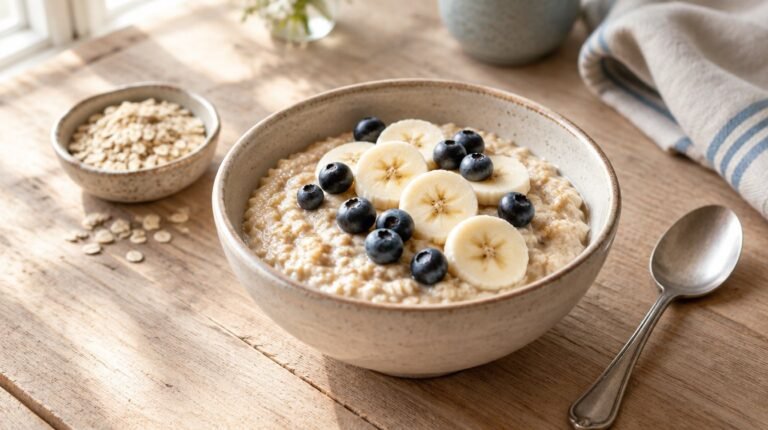
Recipe 1: Yogurt overnight oats with berries
Ingredients
- 1 cup old-fashioned rolled oats
- 1 cup plain yogurt or plain kefir
- ½ cup milk or unsweetened soy milk
- 1 tablespoon chia seeds
- 1 cup berries, fresh or thawed frozen
- 1 to 2 teaspoons honey or maple syrup
Method
- Stir the oats, yogurt, milk and chia seeds together in a bowl until no dry oats remain.
- Divide between two lidded jars and refrigerate for at least 6 hours, or overnight.
- In the morning, stir, add a splash of milk if it is too thick, and top with berries and honey.
Half a cup of dry rolled oats has about 4 grams of fiber, based on USDA FoodData Central. Homemade yogurt works well here; see how to make yogurt at home.
Recipe 2: Red lentil and vegetable soup
Ingredients
- 1 tablespoon olive oil
- 1 medium onion, diced
- 2 carrots, diced
- 2 cloves garlic, minced
- 1 teaspoon ground cumin
- 1 cup dry red lentils, rinsed
- 1 can (14.5 ounces) diced tomatoes
- 5 cups low-sodium vegetable or chicken broth
- 2 cups baby spinach
- Juice of ½ lemon, salt and pepper to taste
- Plain yogurt, for serving (optional)
Method
- Heat the oil in a large pot over medium heat. Cook the onion and carrots for 6 to 8 minutes, until soft.
- Add the garlic and cumin and stir for 1 minute.
- Add the lentils, tomatoes and broth. Bring to a boil, then lower the heat and simmer, partly covered, for 20 to 25 minutes, until the lentils fall apart.
- Stir in the spinach for 2 minutes until wilted. Add lemon juice, salt and pepper.
- Serve with a spoonful of yogurt on top, added off the heat.
One cup of cooked lentils has about 16 grams of fiber, according to USDA FoodData Central. If you are not used to beans and lentils, start with smaller bowls. Mayo Clinic notes that adding fiber too quickly can cause gas, bloating and cramping, and suggests drinking plenty of water.
Recipe 3: Black bean bowl with sauerkraut or kimchi

Ingredients
- 1 can (15 ounces) black beans, drained and rinsed
- ½ teaspoon ground cumin and a pinch of salt
- 1½ cups cooked brown rice or quinoa
- 1 avocado, sliced
- 1 cup shredded red cabbage or sliced cucumber
- ½ cup refrigerated sauerkraut or kimchi
- 1 lime, cut in wedges, and 1 tablespoon olive oil
Method
- Warm the beans with the cumin, salt and 2 tablespoons of water in a skillet over medium heat for 3 to 4 minutes.
- Divide the rice between two bowls and top with the beans, avocado and cabbage.
- Add the sauerkraut or kimchi last, after the hot food is in the bowl, then finish with olive oil and a squeeze of lime.
A cup of cooked black beans has about 15 grams of fiber (USDA FoodData Central). Pick sauerkraut from the refrigerated case; canned sauerkraut is usually heat-treated, which our article on canned sauerkraut explains. For serving ideas, see how to eat sauerkraut for gut health.
Variations
- Dairy-free oats: use a plant yogurt with live cultures and soy milk.
- Heartier soup: add 1 diced sweet potato with the carrots and simmer 5 minutes longer.
- Different beans: chickpeas or pinto beans work in the bowl.
- Kefir instead of yogurt: thinner oats with more tang.
Storage
Refrigerate cooked food within 2 hours, dividing big batches like soup into shallow containers so they cool quickly, as USDA advises. USDA gives 3 to 4 days in the fridge for leftovers, so plan to eat the soup, overnight oats and cooked beans within that window. Reheat soup until it reaches 165°F. Soup also freezes well; USDA says frozen leftovers stay safe indefinitely but lose moisture and flavor over time. Keep sauerkraut and kimchi in the fridge, lid on.
Related topics
- Gut Healthy Meals: more ideas for lunch and dinner.
- Gut Healthy Breakfast: morning options beyond oats.
- Best Foods for Gut Health: the ingredients behind these recipes.
- Gut Health Diet Plan: putting meals together across a week.
- Gut Health Smoothie: a quick blended option.
Sources
- Wastyk HC, et al. Gut-microbiota-targeted diets modulate human immune status (Cell, 2021)
- Dietary fiber: Essential for a healthy diet (Mayo Clinic)
- Leftovers and Food Safety (USDA Food Safety and Inspection Service)
- Cereals, oats, regular and quick, not fortified, dry (USDA FoodData Central, SR Legacy)
- Lentils, mature seeds, cooked, boiled, without salt (USDA FoodData Central, SR Legacy)
- Beans, black, mature seeds, cooked, boiled, without salt (USDA FoodData Central, SR Legacy)