Is Oatmeal Bad for Your Gut? What the Evidence Says
The verdict: oatmeal is not bad for most guts
For most people, oatmeal is one of the more gut-friendly breakfasts you can eat. Reviews of the research link oats with more of the bacteria usually considered beneficial, and most studies find no rise in digestive symptoms. The exceptions are real but narrow: gas when fiber goes up too fast, oats contaminated with gluten for people with celiac disease, and sugary instant packets.
What the research shows
Oats feed gut bacteria
Oats are rich in beta-glucan, a soluble fiber that gut bacteria ferment. USDA data put about 3 g of beta-glucan in a half cup (40 g) of dry rolled oats, and about 4 g of total fiber in the same amount of regular oats.
A 2021 systematic review in the Journal of Nutrition pulled together 84 studies, including 23 randomized trials. Eating oats was linked with higher total bacterial counts and more Lactobacillus and Bifidobacterium in people without gut disease and in people with celiac disease, along with more short-chain fatty acids. In a randomized crossover trial of 32 adults at risk of heart and metabolic disease, 45 g a day of whole-grain oat granola for six weeks raised fecal bifidobacteria and lactobacilli compared with a non-whole-grain cereal.
A 2024 review of 16 randomized trials with 1,091 people found that oats and barley can shift gut microbiota composition. It also found that drops in inflammation markers showed up in people with metabolic risk factors, not in healthy people, and it urged caution because the trials were few and varied.
Most people do not get more symptoms
The same 2021 review found that most studies showed no change in digestive symptoms when people ate oats. That matters, because the worry behind “is oatmeal bad for your gut” is usually bloating or discomfort. The review found no studies at all on oats in irritable bowel syndrome and only three in inflammatory bowel disease, so the evidence is thin for those groups.
Celiac disease: pure oats are usually tolerated
Oats do not contain wheat gluten, but they are often grown and milled near wheat, barley and rye. A 2017 meta-analysis in Gastroenterology covered 28 studies, including 8 controlled trials with 661 patients who used pure, uncontaminated oats. Eating oats for up to 12 months did not change symptoms, intestinal tissue findings or blood tests. The authors rated the evidence as low quality and called for better trials.
NIDDK puts it plainly: most people with celiac disease can safely eat moderate amounts of oats, but cross-contact is common, so oats should be labeled gluten-free. The 2021 review also noted that a small number of people with celiac disease had worse symptoms with certain oat types.
Where gas and bloating come from
When gut bacteria break down fiber and other carbohydrates you did not fully digest, they make gas. NIDDK notes that some people have more gas symptoms when they consume too much fiber. So a big bowl of oatmeal topped with chia, flax and dried fruit can cause gas in someone who usually eats little fiber. That is a dose and pace problem, not a sign that oats are harming the gut.
Caveats to keep in mind
- Research is still limited: many oat trials are small, short or have quality concerns. The 2021 review flagged problems with randomization in most of the trials it graded.
- Industry links: one broad 2024 overview of oat meta-analyses was co-written by a PepsiCo nutrition scientist, and PepsiCo sells oat foods. Its gut findings were modest anyway: more fecal bulk, but no clinical data yet on gut barrier effects.
- Not all oatmeal is the same: flavored instant packets often add sugar. The Dietary Guidelines for Americans, 2025-2030 say a single meal should contain no more than 10 g of added sugars.
- Individual tolerance varies: some people with IBS do better on certain fibers than others, and a doctor or dietitian can help sort that out.
How to use oatmeal so it sits well
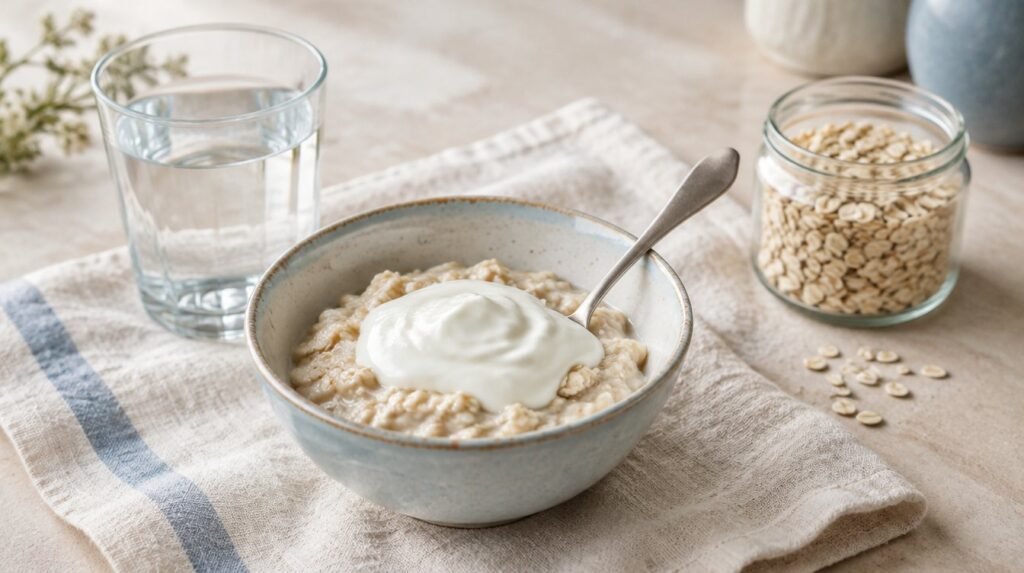
- Start small if fiber is new to you: NIDDK suggests adding fiber slowly, by 2 to 3 g a day, to help prevent gas and bloating. A quarter cup of oats is a reasonable first step.
- Drink water: Mayo Clinic notes fiber works best when it absorbs water, and that adding too much too quickly can cause gas, bloating and cramping.
- Pick plain oats: rolled or steel-cut oats with your own fruit give you fiber without the added sugar.
- Buy gluten-free oats if you have celiac disease: and check with your care team before adding them.
- Pair with a cultured food: a spoon of plain yogurt on top adds protein and, in many yogurts, live cultures. Overnight oats with yogurt combine both.
- Go easy on heavy toppings: large amounts of seeds, bran and dried fruit at once raise the fiber load fast.
NIDDK also notes that soluble fiber, the kind in oat products, is more helpful in relieving IBS symptoms than insoluble fiber, according to the research it reviews. For the fiber numbers in overnight oats, see do overnight oats have fiber, and for a gentler morning list, easy to digest foods.
When to see a doctor
Some gas after a high-fiber meal is normal. NIDDK advises talking with a doctor if gas symptoms bother you, change suddenly, or come with other symptoms such as abdominal pain, constipation, diarrhea or weight loss. If you think oats or any grain might be setting off symptoms, ask about celiac disease before cutting out gluten. NIDDK notes that doctors don’t recommend starting a gluten-free diet before testing, because it can affect the results. This article is general information, not medical advice.
Can oatmeal cause bloating?
It can if you add a lot of fiber quickly. NIDDK notes that too much fiber can cause gas, and suggests adding fiber by 2 to 3 g a day (NIDDK).
Is oatmeal good for gut bacteria?
Reviews link oat intake with more Lactobacillus and Bifidobacterium, though many of the trials are small (Valido 2021).
Are oats safe with celiac disease?
Most people with celiac disease can eat moderate amounts of oats labeled gluten-free, but check with your doctor first (NIDDK).
Is instant oatmeal worse for your gut than rolled oats?
Plain instant oats are still whole-grain oats. Flavored packets are the bigger concern because many add sugar.
Related topics
- Overnight Oats with Yogurt: a no-cook way to pair oats with a cultured food.
- Do Overnight Oats Have Fiber?: how much fiber a jar really has.
- Foods That Help with Bloating: what to eat when you feel puffy.
- Slow Digesting Carbs: where oats fit among other carbohydrates.
- Best Foods for Gut Health: other foods with good evidence behind them.
Sources
- Valido E, et al. Systematic Review of the Effects of Oat Intake on Gastrointestinal Health (Journal of Nutrition, 2021)
- Connolly ML, et al. Hypocholesterolemic and Prebiotic Effects of a Whole-Grain Oat-Based Granola Breakfast Cereal in a Cardio-Metabolic “At Risk” Population (Frontiers in Microbiology, 2016)
- Cortijo-Alfonso ME, et al. Effect of Barley and Oat Consumption on Immune System, Inflammation and Gut Microbiota: A Systematic Review of Randomized Controlled Trials (Current Nutrition Reports, 2024)
- Pinto-Sánchez MI, et al. Safety of Adding Oats to a Gluten-Free Diet for Patients With Celiac Disease: Systematic Review and Meta-analysis of Clinical and Observational Studies (Gastroenterology, 2017)
- Mathews R, Chu Y. An encompassing review of meta-analyses and systematic reviews of the effect of oats on all-cause mortality, cardiovascular risk, diabetes risk, body weight/adiposity and gut health (Critical Reviews in Food Science and Nutrition, 2025)
- Eating, Diet, and Nutrition for Celiac Disease (NIDDK)
- Eating, Diet, and Nutrition for Irritable Bowel Syndrome (NIDDK)
- Symptoms and Causes of Gas in the Digestive Tract (NIDDK)
- Eating, Diet, and Nutrition for Gas in the Digestive Tract (NIDDK)
- Diagnosis of Celiac Disease (NIDDK)
- Dietary fiber: Essential for a healthy diet (Mayo Clinic)
- Dietary Guidelines for Americans, 2025-2030 (U.S. Departments of Agriculture and Health and Human Services)
- Oats, whole grain, rolled, old fashioned (USDA FoodData Central)
- Cereals, oats, regular and quick, not fortified, dry (USDA FoodData Central)