Best Greens Powder: Compared (2026)
Best Greens Powder: Our Picks
No greens powder replaces vegetables, and very few have been studied in people. So we picked by what the label shows and what you actually need, rather than by popularity. Prices are list prices on each brand’s own page, and labels were checked in October 2026.
- Food first: a cup of raw spinach or a handful of frozen greens. It brings more vitamin K than any scoop below, plus fiber, at grocery prices.
- Best simple, whole-food powder: Navitas Organics Superfood+ Greens Blend. Three ingredients, no added vitamins, about 25 cents a serving.
- Best budget all-rounder: Amazing Grass Super Greens The Original. 2 g of fiber, a fully named probiotic strain and no stevia, at about 95 cents a serving.
- Best if you also want a multivitamin: AG1 Next Gen. The only brand here with a published randomized trial, though the trial was company-funded and used an earlier formula. About $2.63 a serving.
- Best for flavor without sugar: Bloom Greens & Superfoods. Stevia-sweetened and 15 calories, but every ingredient sits in a proprietary blend. About $1.13 a serving.
- Only if you want ashwagandha included: Organifi Green Juice, with the cautions below. About $2.50 a serving.
Ultimate Gut is published by Ultimate Health Solutions, which sells a yogurt maker, probiotic capsules and an inulin fiber supplement. None of the products reviewed here are ours, and these brands don’t pay us.
Greens powders compared
| Product | Serving | Price per serving | Fiber | Notable on the label | Watch out for |
|---|---|---|---|---|---|
| Navitas Superfood+ Greens Blend | 1 tsp (3 g), 10 calories | About $0.25 ($14.99 for about 60) | 1 g | Kale, wheatgrass juice and moringa powders only | California Prop 65 lead warning |
| Amazing Grass Super Greens The Original | 8 g, 30 calories | About $0.95 ($28.49 for 30) | 2 g | Vitamin C 100% DV, vitamin K 57% DV, Bacillus subtilis DE111 (1 billion CFU) | Contains fructose; proprietary blends |
| AG1 Next Gen | 13 g, 40 calories | About $2.63 (subscription) | 2 g | 5 named probiotic strains (10 billion cells); high-dose B vitamins and zinc | Vitamin K2; doubling up with a multivitamin |
| Bloom Greens & Superfoods | 5.44 g, 15 calories | About $1.13 ($33.99 for 30) | 2 g | 38 ingredients in 7 blends; stevia | Adaptogens and probiotics without amounts or strain IDs |
| Organifi Green Juice | Not shown as text on page | About $2.50 ($74.95 for 30) | Not shown as text on page | Ashwagandha (600 mg) | Ashwagandha cautions; Prop 65 lead warning |
What the research says
Greens powders sell a simple idea: an easy way to cover the vegetables you miss. The gap is real. The Dietary Guidelines for Americans, 2020-2025 report that fruits, vegetables and whole grains are underconsumed by more than 85% of adults. But the evidence that powders close that gap in a meaningful way is thin.
The best-known trial tested AG1 in 30 healthy adults for four weeks. Compared with placebo, AG1 increased two probiotic species likely coming from the product itself, did not worsen digestion, and showed a possible improvement in a digestive quality-of-life score that did not reach statistical significance (La Monica and colleagues, 2024). The paper lists two authors as employees of Athletic Greens International, the company behind AG1, and the trial used the formula sold at that time.
A separate 2026 trial gave 18 older adults a commercial fruit, vegetable and berry juice powder in capsules for six months and compared them with 16 controls. It found the product safe and saw some favorable changes in blood markers, but the authors call the results “hypothesis-generating rather than confirmatory” (Ziegler and colleagues, 2026). We found no published human trials of the Bloom, Amazing Grass, Navitas or Organifi products themselves in a PubMed search in October 2026.
Compare that with whole foods. Fiber from food has some of the strongest evidence in nutrition: a 2019 Lancet analysis linked higher fiber intake with lower rates of heart disease, type 2 diabetes and colorectal cancer, with the largest benefits at 25 to 29 grams a day (Reynolds and colleagues, 2019). The powders here supply 1 to 2 grams per serving.
How each greens powder stacks up
Food first: real greens
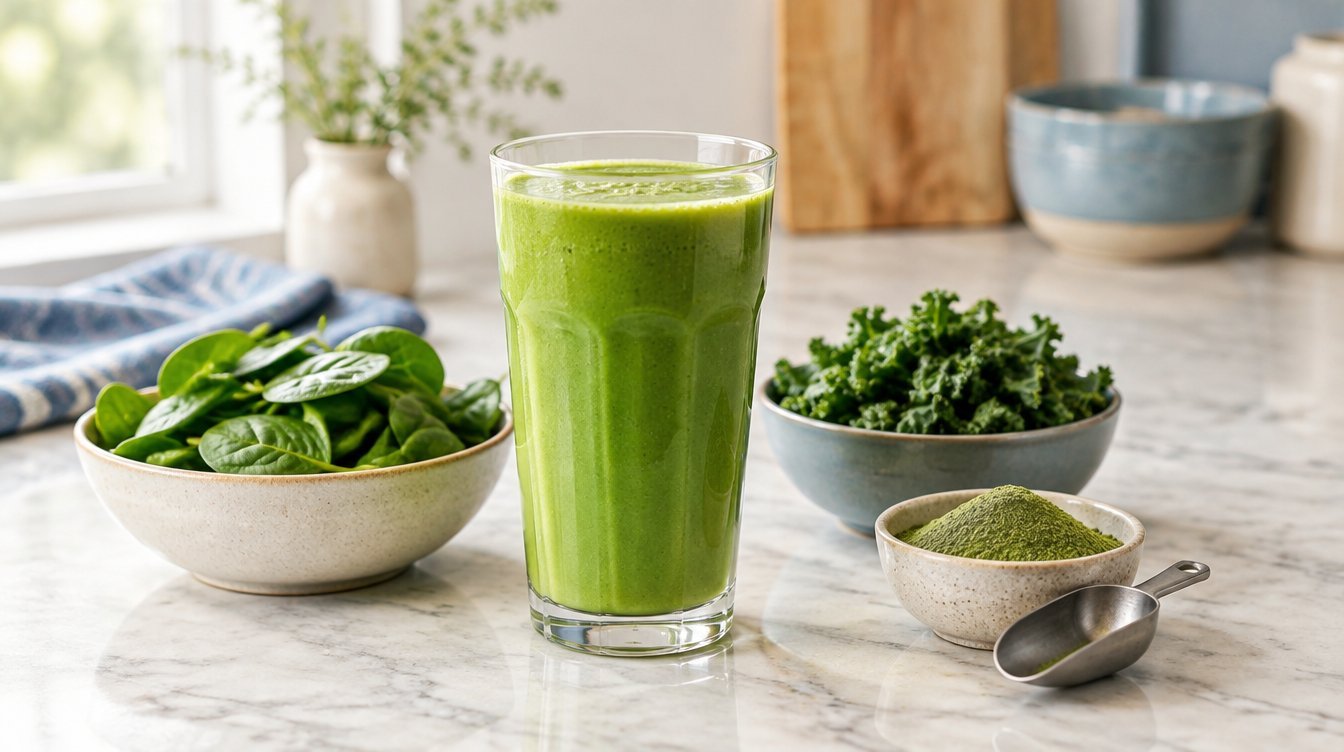
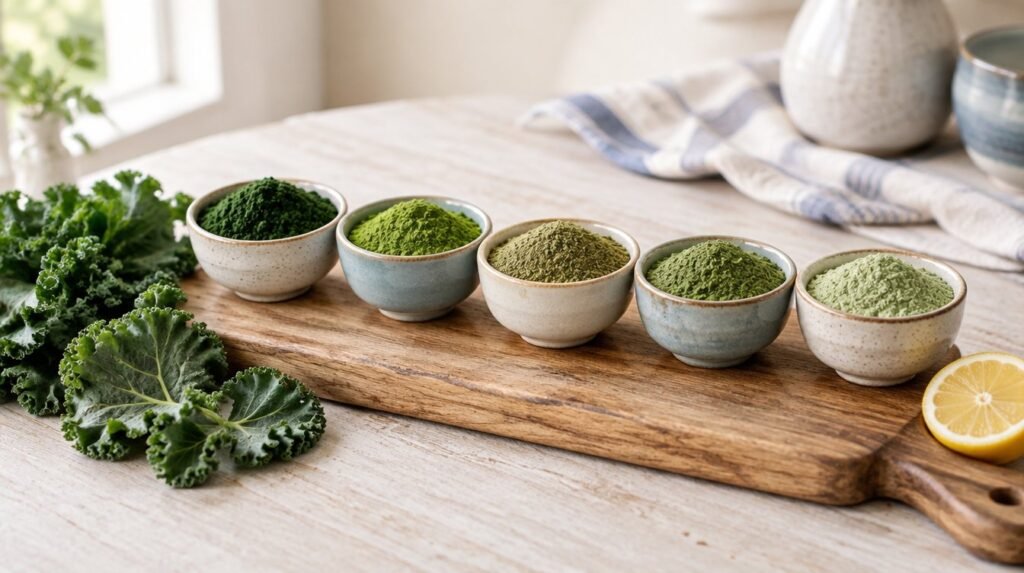
One cup of raw spinach (30 g) contains about 145 mcg of vitamin K and 0.7 g of fiber, according to USDA FoodData Central. That is more vitamin K than a scoop of any powder here whose label lists it, and more than the 120 mcg Daily Value. Raw kale has 4.1 g of fiber and 93 mg of vitamin C per 100 g (USDA FoodData Central). Frozen chopped greens stirred into soup, eggs or a gut health smoothie cost little and need no label reading.
Navitas Organics Superfood+ Greens Blend: best simple, whole-food powder
This is the plainest option: organic kale powder, wheatgrass juice powder and moringa powder, nothing else. A 1-teaspoon (3 g) serving has 10 calories and 1 g of fiber, and the bag holds about 60 servings for $14.99 (Navitas Organics). It is sold as a food with a Nutrition Facts panel, not as a supplement, and it makes no probiotic or enzyme claims. The brand does say the blend supports “your body’s detox system,” a claim that has not been shown in human trials of this product.
The back-of-bag image on the brand page carries a California Proposition 65 warning that the product can expose you to chemicals including lead, and it says to consult a physician before use if pregnant. A Prop 65 warning means the business decided a warning was required for a listed chemical; it does not by itself mean the product breaks a safety standard (California OEHHA).
Amazing Grass Super Greens The Original: best budget all-rounder
An 8 g scoop has 30 calories, 2 g of fiber, 90 mg of vitamin C (100% DV), 69 mcg of vitamin K (57% DV) and 1.7 mg of iron. The greens blend (5.4 g) lists organic wheatgrass, barley grass, alfalfa, spinach, spirulina, peppermint, chlorella and broccoli, followed by an antioxidant fruit blend and a small fiber blend of flaxseed and apple pectin. It is sweetened with fructose, with less than 1 g of total sugars and 0 g added sugars listed (Amazing Grass). The 30-serving tub lists at $28.49.
Its probiotic is named to the strain, Bacillus subtilis DE111, at 1 billion CFU. That strain has some research, but results are modest: in a four-week pilot trial in healthy adults, DE111 shifted some immune cell responses but largely did not change perceived gut health, gut bacteria or inflammation markers, and the authors note the study may have been too small to detect differences (Freedman and colleagues, 2021).
AG1 Next Gen: best if you also want a multivitamin
AG1 Next Gen is as much a multivitamin as a greens powder. A 13 g serving has 40 calories and 2 g of fiber, plus 500 mg of vitamin C (556% DV), 400 mcg of vitamin B12 (16,667% DV), 330 mcg of biotin (1,100% DV), 20 mg of zinc (182% DV) and 90 mcg of vitamin K2. Its probiotic blend lists five strains, including Lactobacillus rhamnosus GG and Bifidobacterium lactis HN019, at 10 billion viable cells. It is sweetened with stevia (AG1). The brand lists it at $79 a month, about $2.63 a serving, and says its products are NSF Certified for Sport (AG1).
It also has the only published randomized trial in this group, described above (La Monica and colleagues, 2024). The current label lists different probiotic strains from the ones that increased in that trial, so results may not carry over. If you already take a multivitamin, check the totals before adding this; high-dose zinc and B vitamins add up quickly. Our review of AG1 for gut health goes deeper.
Bloom Greens & Superfoods: best for flavor without sugar
A 5.44 g scoop of the Berry flavor has 15 calories, 2 g of fiber and 0.6 mg of iron, and is sweetened with stevia leaf extract. Its 38 ingredients sit in seven blends: fiber (1,606 mg), green superfoods (1,367 mg), pre- and probiotics (648 mg), fruits and vegetables (572 mg), an “antioxidant beauty” blend (550 mg), digestive enzymes (150 mg) and adaptogens (100 mg) (Bloom Nutrition). The brand says the product helps relieve bloating and supports digestion; we found no published trial of it. The 30-serving tub lists at $33.99.
Federal rules let a proprietary blend list only its total weight, with ingredients in order of weight (21 CFR 101.36). So you cannot tell how much ashwagandha, licorice root or spirulina is in a scoop, and the probiotics are listed by species without strain names or a CFU count. Bloom’s own Prop 65 page says some of its products carry a lead warning (Bloom Nutrition). For more, see our full Bloom Greens review.
Organifi Green Juice: only if you want ashwagandha
Organifi’s product page highlights 600 mg of ashwagandha alongside chlorella and spirulina, and lists 30 servings for $74.95. The page carries a Prop 65 warning for lead. It also markets the drink for weight loss, lower cortisol and detox (Organifi). Those are the brand’s claims; we found no trial of this product supporting them, and a greens drink is not a weight-loss treatment.
Ashwagandha is the main reason for caution. The NCCIH says it should be avoided in pregnancy and while breastfeeding, is not recommended for people with autoimmune or thyroid disorders, and has been linked in rare cases to liver injury. Evidence for stress and sleep is promising for some products but unclear for anxiety.
Who should check with a doctor first
- People taking warfarin (Coumadin): vitamin K can interact seriously with it, and the NIH Office of Dietary Supplements advises keeping vitamin K intake from food and supplements about the same every day. Starting or stopping a greens powder changes that.
- Pregnant or breastfeeding people: avoid ashwagandha-containing blends (NCCIH), and note that some labels here carry lead warnings.
- People with serious illness or a weakened immune system: the risk of harm from probiotics is greater in these groups (NCCIH).
- Anyone on regular medication or with a chronic condition: blends with herbs such as licorice, ginseng or rhodiola deserve a quick check with a pharmacist.
Dietary supplements do not need FDA approval before they are sold, and companies do not have to show the agency their safety evidence first (FDA). If you notice side effects, stop and talk to your doctor. This is general information, not medical advice.
How We Compared
We read each product’s Supplement Facts or Nutrition Facts panel and product page on the brand’s own site, then searched PubMed for trials of each product and its named ingredients. We did not buy, taste or test any product. We compared on:
- Human evidence: published trials of the product or its named strains and ingredients.
- Label transparency: individual amounts versus proprietary blends, and strain-level probiotic names.
- Useful nutrition per serving: fiber and vitamins compared with FDA Daily Values.
- Safety flags: herbs with known cautions, high-dose vitamins and minerals, and posted lead warnings.
- Price per serving: only where the brand page lists both price and servings.
What labels cannot tell you: how much of each ingredient sits inside a blend, whether probiotic counts hold up to the end of shelf life, and how much lead or other contaminants a batch contains. Federal rules require blend totals and order by weight, not individual amounts (21 CFR 101.36). If fiber is your goal, our guide to fiber supplements covers options with far more per serving, and our gut health powder guide explains the wider category.
Related topics
- Best Foods for Gut Health: whole foods with the most research behind them.
- Gut Health Drinks: what else people mix into their morning glass.
- Gut Health: The Complete Guide: the basics, with evidence sorted by strength.
- Gut Health Supplements: probiotics, fibers and more compared.
- Vegan Gut Health Foods: plant foods that do the same job as a scoop.
Sources
- Superfood+ Greens Blend product page and label (checked October 2026) (Navitas Organics)
- Super Greens The Original product page and label (checked October 2026) (Amazing Grass)
- AG1 Next Gen formula and Supplement Facts (checked October 2026) (AG1)
- AG1 home page and pricing (checked October 2026) (AG1)
- Greens & Superfoods product page and label (checked October 2026) (Bloom Nutrition)
- Proposition 65 page (checked October 2026) (Bloom Nutrition)
- Green Juice product page (checked October 2026) (Organifi)
- La Monica MB, et al. The effects of AG1 supplementation on the gut microbiome of healthy adults: a randomized, double-blind, placebo-controlled clinical trial (J Int Soc Sports Nutr, 2024)
- Ziegler T, et al. Effects of a Commercial Fruit, Vegetable and Berry Juice Powder Concentrate on Metabolic Safety and Cardiovascular Health in Older Adults: 6-Month Results of a Randomized Controlled Trial (Nutrients, 2026)
- Freedman KE, et al. Examining the Gastrointestinal and Immunomodulatory Effects of the Novel Probiotic Bacillus subtilis DE111 (Int J Mol Sci, 2021)
- Reynolds A, et al. Carbohydrate quality and human health: a series of systematic reviews and meta-analyses (Lancet, 2019)
- Dietary Guidelines for Americans, 2020-2025 (U.S. Department of Agriculture and U.S. Department of Health and Human Services)
- Spinach, raw (USDA FoodData Central)
- Kale, raw (USDA FoodData Central)
- Daily Value on the Nutrition and Supplement Facts Labels (U.S. Food and Drug Administration)
- Questions and Answers on Dietary Supplements (U.S. Food and Drug Administration)
- 21 CFR 101.36: Nutrition labeling of dietary supplements (eCFR)
- Vitamin K: Fact Sheet for Consumers (NIH Office of Dietary Supplements)
- Ashwagandha (National Center for Complementary and Integrative Health)
- Probiotics: What You Need To Know (National Center for Complementary and Integrative Health)
- Lead and Lead Compounds (California Office of Environmental Health Hazard Assessment, Proposition 65 Warnings)