Gut Health and Hair Loss: What You Need to Know
How gut health and hair loss might be connected
Hair grows in cycles, and the cells at the root of each hair divide quickly. That makes hair sensitive to what happens elsewhere in the body, including in your digestive system. Your gut absorbs the nutrients hair needs, it can be a source of body-wide inflammation, and its bacteria help train your immune system.
That does not mean most hair loss starts in the gut. Mayo Clinic says heredity is the most common cause, followed by hormone changes, medical conditions, some medicines, stress and hair treatments. The gut is one possible piece of the puzzle, mostly for people who already have a digestive condition.
The NHS also notes that losing hair is usually nothing to worry about, and that temporary shedding can follow illness, stress, weight loss or iron deficiency. Several of those are where gut health comes in.
Three ways the gut can affect your hair
1. Absorbing the nutrients hair needs
Iron is the nutrient most often discussed. The NIH Office of Dietary Supplements (ODS) lists people with gastrointestinal disorders among those at risk of low iron, because some digestive diseases interfere with nutrient absorption. Celiac disease is one example: the NHS notes that the tiredness it causes may come from iron deficiency anemia or low vitamin B12 or folate.
The link between low iron and hair loss is real but not settled. A 2006 review in the Journal of the American Academy of Dermatology found that some studies tie iron deficiency to several types of hair loss while others do not. The authors said there is not enough evidence to give iron to everyone with hair loss, and they flagged that in men and in women past menopause, iron deficiency often comes from blood loss in the gut, which needs its own workup.
Zinc follows a similar pattern. ODS says people with digestive disorders such as ulcerative colitis or Crohn’s disease, or who have had gut surgery, can absorb less zinc, and that zinc deficiency can cause hair loss. Biotin is often marketed for hair, but ODS says biotin deficiency is very rare in the United States and there is little scientific evidence that extra biotin helps hair in people who are not deficient.
A 2019 review in Dermatology and Therapy of vitamins and minerals in hair loss reached a cautious conclusion: these nutrients matter for the hair cycle, but large placebo-controlled trials are still needed to show who benefits from supplements.
2. Illness and inflammation
A flare of a gut disease is a physical stress on the body, and physical stress can trigger shedding months later. A 2013 review in Inflammatory Bowel Diseases said the most common disease-related cause of hair loss in people with inflammatory bowel disease (IBD) is probably telogen effluvium, a temporary shedding tied to flares. Medicine side effects and nutrient shortfalls were other causes. The authors also noted that good data on how often this happens is lacking.
3. Gut bacteria and the immune system
This is the newest and least proven route. Alopecia areata, which causes patchy hair loss, is an autoimmune condition driven by immune T cells, as the researchers in the study below describe it. Because gut bacteria help shape immunity, researchers have looked for differences.
A 2020 Spanish study compared stool samples from 15 people with alopecia universalis (total body hair loss) and 15 controls. Overall gut bacterial diversity was not different, though a few specific bacteria were more common in the patients. A 2017 case report described two people with alopecia universalis whose hair regrew after a fecal transplant given for a C. difficile infection. Two cases cannot show cause and effect.
In animals, a 2013 mouse study in PLOS One found that aged mice fed probiotic bacteria grew thicker, shinier fur. Mouse fur is not human hair, so this is a lead for researchers, not advice. A 2026 review in the International Journal of Dermatology summed up the field: the evidence is limited and inconsistent, and there is not enough to recommend microbiome testing or microbiome treatments for alopecia areata.
The evidence at a glance
| Claim | Evidence strength | Source |
|---|---|---|
| Gut disorders can lower iron and zinc absorption | Well established | NIH ODS, NIH ODS |
| Low iron is linked with some hair loss | Mixed: studies disagree | Trost 2006 |
| IBD flares can trigger temporary shedding | Moderate: clinical reviews, little prevalence data | Patel 2013 |
| Gut bacteria differ in alopecia areata | Early: small studies | Moreno-Arrones 2020 |
| Probiotics or gut treatments regrow hair | Very early: case reports and mouse data | Rebello 2017, McMullen 2026 |
| Biotin helps hair without a deficiency | Little evidence | NIH ODS |
What you can do
The practical takeaway is to treat the gut as something to check, not something to guess at. These steps are sensible whether or not your hair loss has a gut link.
- Ask about blood tests before supplements: the Cleveland Clinic authors of the 2006 iron review said they screen hair-loss patients for iron deficiency, and Mayo Clinic lists thyroid problems among causes of hair loss. Testing first avoids taking iron you do not need. ODS warns that too much iron can be harmful and that people with hereditary hemochromatosis should avoid iron supplements.
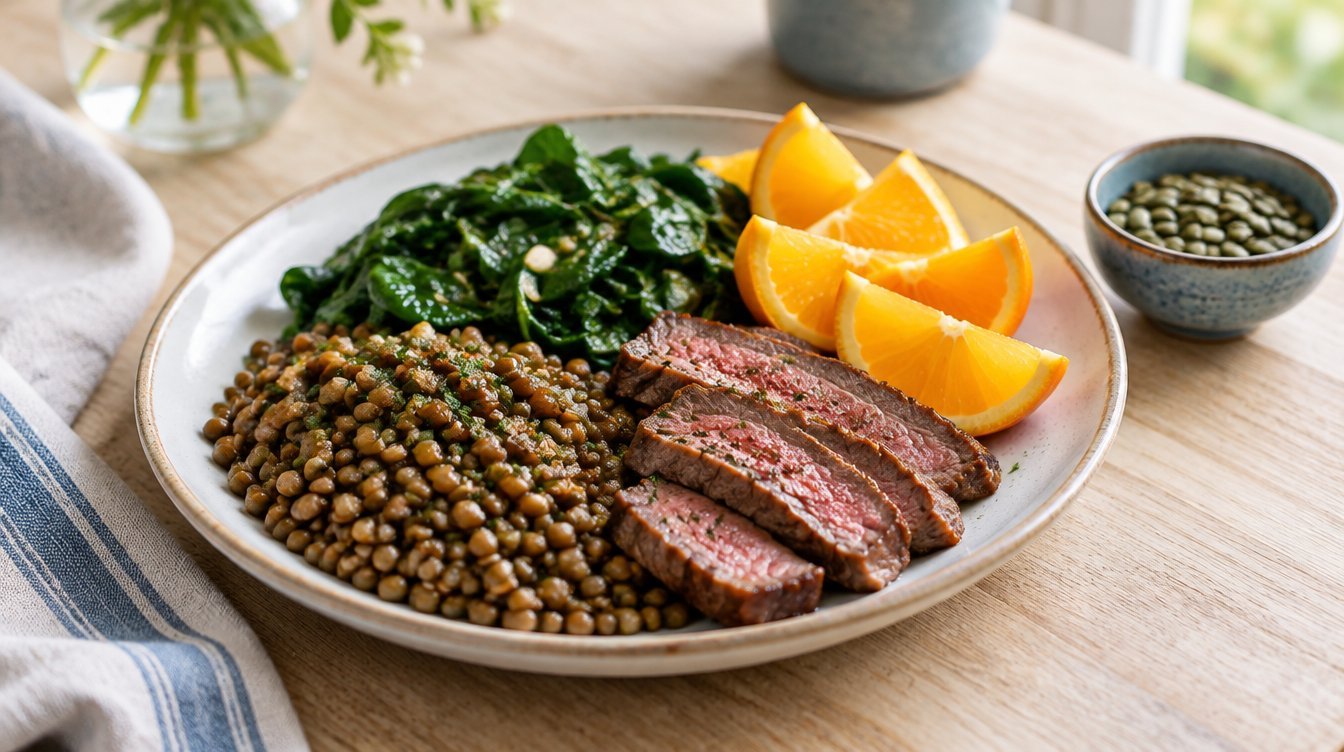
- Get iron from food: meat, seafood and poultry contain heme iron as well as nonheme iron. Plant iron is absorbed better with vitamin C foods such as citrus, strawberries or tomatoes, according to ODS.
- Be careful with biotin: ODS says biotin above recommended amounts can cause false results in some lab tests, including hormone tests. Tell your doctor if you take a hair, skin and nails supplement.
- Take ongoing gut symptoms seriously: diarrhea, bloating, belly pain or fatigue that keep coming back are worth raising with a doctor, especially together with hair shedding. Our list of signs of an unhealthy gut can help you describe what you notice.
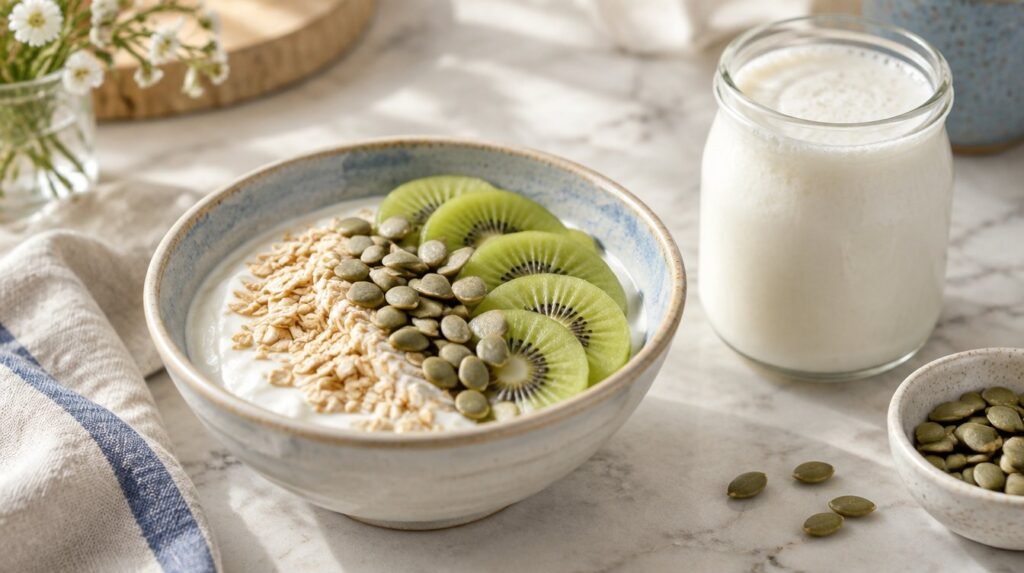
- Eat for your gut in general: fiber from vegetables, beans and whole grains, plus fermented foods such as yogurt and kefir, are a reasonable base for gut health. See the best foods for gut health and how to improve gut health. No trial shows these regrow hair.
- Skip unproven gut tests for hair: the 2026 review advised against microbiome testing for alopecia areata. Our guide to stool tests for gut health explains what consumer tests can and cannot tell you.
Be patient with any change. Shedding triggered by illness or stress often shows up months after the event, as Mayo Clinic notes, so regrowth also takes time.
When to see a doctor
This article is general information, not medical advice. Mayo Clinic advises seeing a doctor if you have:
- Sudden or patchy hair loss.
- More hair than usual coming out when you comb or wash it.
- Ongoing hair loss that worries you.
Mayo Clinic adds that sudden hair loss can signal an underlying medical condition that needs treatment. Also get checked if hair loss comes with gut symptoms such as diarrhea or belly pain, unexpected weight loss or constant tiredness, which the NHS lists among the signs of celiac disease. If you already have IBD or celiac disease, tell your specialist about any new shedding, since a flare, a medicine or a nutrient gap could be involved.
Related topics
- Gut Health and Skin: the wider gut-skin research.
- Rosacea and Gut Health: another condition with gut links.
- 10 Signs of an Unhealthy Gut: symptoms worth noting.
- How to Improve Gut Health: everyday habits with evidence behind them.
- Gut Health Supplements: what the research says about popular options.
Sources
- Hair loss (NHS)
- Coeliac disease: Symptoms (NHS)
- Hair loss: Symptoms and causes (Mayo Clinic)
- Iron: Fact Sheet for Consumers (NIH Office of Dietary Supplements)
- Zinc: Fact Sheet for Consumers (NIH Office of Dietary Supplements)
- Biotin: Fact Sheet for Consumers (NIH Office of Dietary Supplements)
- Trost LB, et al. The diagnosis and treatment of iron deficiency and its potential relationship to hair loss (Journal of the American Academy of Dermatology, 2006)
- Almohanna HM, et al. The Role of Vitamins and Minerals in Hair Loss: A Review (Dermatology and Therapy, 2019)
- Patel KV, et al. Hair loss in patients with inflammatory bowel disease (Inflammatory Bowel Diseases, 2013)
- Moreno-Arrones OM, et al. Analysis of the gut microbiota in alopecia areata: identification of bacterial biomarkers (Journal of the European Academy of Dermatology and Venereology, 2020)
- Rebello D, et al. Hair Growth in Two Alopecia Patients after Fecal Microbiota Transplant (ACG Case Reports Journal, 2017)
- Levkovich T, et al. Probiotic bacteria induce a “glow of health” (PLOS One, 2013)
- McMullen E, et al. The Gut Microbiome as a Therapeutic Target in Alopecia Areata: Not Yet Part of the Patient Treatment Plan (International Journal of Dermatology, 2026)
This article is for general information and is not medical advice. Talk to your doctor or a registered dietitian before changing your diet, supplements or medication, especially if you have a health condition.