Is Cheese a Probiotic? What the Evidence Says
The verdict: many cheeses carry live microbes, but few are probiotics
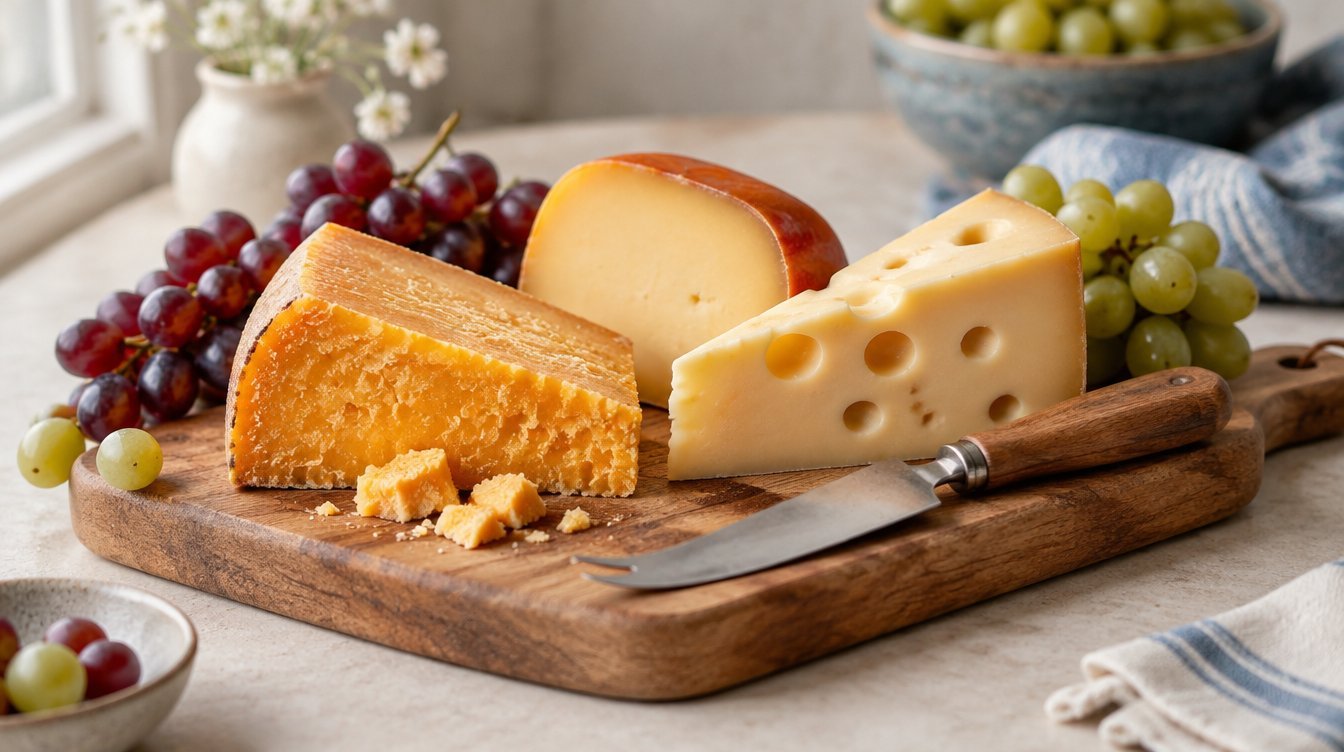
Is cheese a probiotic? Usually not in the strict sense, although many aged cheeses that aren’t heated after they are made, such as cheddar, gouda and Swiss, still carry live bacteria when you eat them. But scientists reserve “probiotic” for defined strains shown to benefit health, and most cheese cultures haven’t been tested that way, so most cheese is better described as a fermented food with live cultures (ISAPP, 2021). Processed cheese and melted cheese have little or nothing alive in them.
What the research shows
What counts as a probiotic
The ISAPP consensus statement keeps the FAO/WHO definition: probiotics are “live microorganisms which when administered in adequate amounts confer a health benefit on the host.” The later consensus on fermented foods says a fermented food should only be labeled “contains probiotics” when its strains are identified to the strain level, their genomes are known and they stay at adequate numbers through shelf life. It expects most fermented foods sold today to fall short of that bar.
The NIH Office of Dietary Supplements agrees: not all fermented foods with live cultures, cheeses included, contain probiotic microorganisms.
Which cheeses tend to carry live cultures
The ISAPP panel lists “most cheeses” among fermented foods that contain live microorganisms. A 2022 study of U.S. diets estimated live microbes in thousands of foods (for how cheese is fermented, see fermented cheese):
- Most natural cheeses, such as cheddar, gouda and Swiss, were placed in the highest group, above 10 million CFU per gram.
- Long-aged cheese such as Parmesan was placed in a lower group.
- Pizza-type cheeses were placed lower because they are usually heated before eating.
- American (processed) cheese was placed in the lowest group. Federal rules require pasteurized process cheese to be heated to at least 150°F for at least 30 seconds (21 CFR 133.169).
Cottage cheese is a fresh cheese, and whether it carries live cultures depends on the maker. Look for named cultures in the ingredient list; our guide to whether cottage cheese has probiotics covers the label details.
Trials of probiotic cheese
A few trials used cheese as a carrier for added, named probiotic strains. These were test cheeses, not regular supermarket cheese:
- In a 2010 study, 31 healthy adults aged 72 to 103 ate a cheese supplying about 1 billion CFU a day of Lactobacillus rhamnosus HN001 and Lactobacillus acidophilus NCFM for 4 weeks. Natural killer cell activity rose, but the authors said it remains unknown whether this improves health.
- In a 2007 randomized, double-blind trial, 276 older adults ate 50 g a day of probiotic or control cheese for 16 weeks. High oral yeast counts fell from 30% to 21% in the probiotic group and rose from 28% to 34% in the control group.
- In a 2002 trial, 74 young adults ate cheese with L. rhamnosus GG and L. rhamnosus LC 705 for 3 weeks. Cavity-linked bacteria did not differ between groups during the trial, though they fell more in the probiotic group in the 3 weeks after.
Cheese can deliver probiotic strains, but these trials were small and short, measured markers rather than disease outcomes, and don’t apply to ordinary cheese.
Caveats to keep in mind
Sodium and saturated fat
| Cheese (USDA FoodData Central) | Sodium | Saturated fat |
|---|---|---|
| Cheddar, 1 oz | 185 mg (8% DV) | 5.4 g (27% DV) |
| Gouda, 1 oz | 232 mg (10% DV) | 5.0 g (25% DV) |
| Swiss, 1 oz | 53 mg (2% DV) | 5.2 g (26% DV) |
| Parmesan, hard, 1 oz | 335 mg (15% DV) | 4.2 g (21% DV) |
| Cottage cheese, 2%, 1/2 cup | 348 mg (15% DV) | 1.4 g (7% DV) |
| American, pasteurized process, 1 oz | 473 mg (21% DV) | 5.1 g (26% DV) |
Percentages use the FDA Daily Values of 2,300 mg sodium and 20 g saturated fat. An ounce of most hard cheeses supplies about a quarter of a day’s saturated fat, so portion size is worth watching.
Raw-milk and soft cheese during pregnancy
The CDC says pregnant women are 10 times more likely to get a Listeria infection. It advises pregnant people to avoid any cheese made with raw (unpasteurized) milk and unheated queso fresco-type cheeses even when pasteurized, and lists hard cheeses made with pasteurized milk, such as cheddar, Parmesan and Swiss, as safer choices. Cottage cheese, cream cheese, feta and mozzarella are safer when made with pasteurized milk, and soft or raw-milk cheeses can be eaten if heated to 165°F or until steaming hot.
U.S. rules let raw-milk cheddar be sold after curing for at least 60 days at no less than 35°F (21 CFR 133.113), but the CDC advice to avoid raw-milk cheese during pregnancy still applies.
Lactose
NIDDK notes that hard cheeses such as cheddar or Swiss are lower in lactose than other milk products, which is why some people with lactose intolerance tolerate them.
When to see a doctor
According to the CDC, Listeria in pregnancy usually causes fever and flu-like symptoms such as muscle aches and fatigue, and it can lead to pregnancy loss, premature birth or a life-threatening infection in the newborn. In other people, invasive illness can cause headache, stiff neck, confusion, loss of balance or seizures.
Contact a healthcare provider if you ate a recalled or outbreak-linked cheese and have a fever or other symptoms, and mention the food, especially if you are pregnant, 65 or older, or have a weakened immune system. This article is general information, not medical advice.
How to choose cheese for live cultures
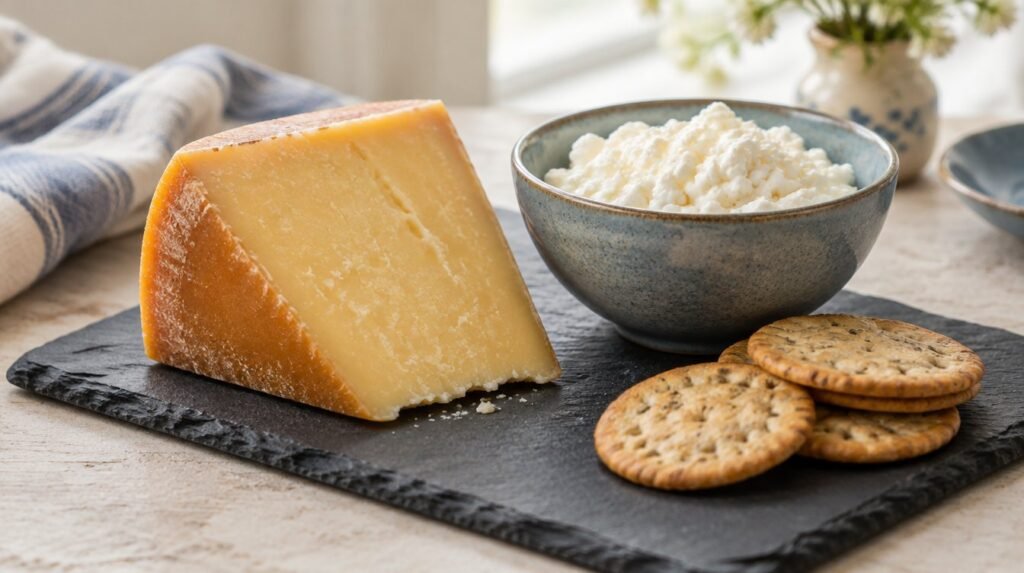
- Pick aged natural cheese such as cheddar, gouda or Swiss over processed slices.
- Eat some of it unheated. Melting and baking reduce live microbes.
- Check for “made with pasteurized milk” if you are pregnant or have a weakened immune system.
- Keep portions to about an ounce because of the saturated fat and, for some cheeses, sodium.
- Want a defined probiotic strain? Look to foods or supplements that name tested strains on the label; see probiotic foods for options.
Is cheese a probiotic?
Usually not in the strict sense. Many aged cheeses carry live bacteria, but probiotic status requires defined strains with a proven health benefit (ISAPP).
Which cheese has the most live cultures?
Aged, unheated natural cheeses such as cheddar, gouda and Swiss were estimated to carry the most live microbes, above 10 million CFU per gram (Marco, 2022).
Does processed cheese have live cultures?
Very few, if any. Pasteurized process cheese must be heated to at least 150°F for 30 seconds or more during manufacture (21 CFR 133.169).
Is aged cheese safe during pregnancy?
The CDC lists hard cheeses made with pasteurized milk, such as cheddar, Parmesan and Swiss, as safer choices and advises avoiding cheese made with raw milk (CDC).
Related topics
- Does Cottage Cheese Have Probiotics?: how to spot added cultures on the label.
- Probiotic Foods: foods with the strongest case for live cultures.
- Fermented Cheese: how cheese fermentation works.
- Probiotic vs Yogurt: when a food is enough and when a supplement fits.
Sources
- Hill C, et al. Expert consensus document: The International Scientific Association for Probiotics and Prebiotics consensus statement on the scope and appropriate use of the term probiotic (Nature Reviews Gastroenterology & Hepatology, 2014)
- Marco ML, et al. The International Scientific Association for Probiotics and Prebiotics (ISAPP) consensus statement on fermented foods (Nature Reviews Gastroenterology & Hepatology, 2021)
- Marco ML, et al. A classification system for defining and estimating dietary intake of live microbes in US adults and children (Journal of Nutrition, 2022)
- Ibrahim F, et al. Probiotics and immunosenescence: cheese as a carrier (FEMS Immunology and Medical Microbiology, 2010)
- Hatakka K, et al. Probiotics reduce the prevalence of oral candida in the elderly: a randomized controlled trial (Journal of Dental Research, 2007)
- Ahola AJ, et al. Short-term consumption of probiotic-containing cheese and its effect on dental caries risk factors (Archives of Oral Biology, 2002)
- Probiotics: Fact Sheet for Health Professionals (NIH Office of Dietary Supplements)
- 21 CFR 133.169 Pasteurized process cheese (Electronic Code of Federal Regulations)
- 21 CFR 133.113 Cheddar cheese (Electronic Code of Federal Regulations)
- Safer Food Choices for Pregnant Women (Centers for Disease Control and Prevention)
- Preventing Listeria Infection (Centers for Disease Control and Prevention)
- Symptoms of Listeria Infection (Centers for Disease Control and Prevention)
- Eating, Diet, & Nutrition for Lactose Intolerance (NIDDK)
- Daily Value on the Nutrition and Supplement Facts Labels (U.S. Food and Drug Administration)
- Cheese, cheddar (FDC ID 173414) (USDA FoodData Central)
- Cheese, gouda (FDC ID 171241) (USDA FoodData Central)
- Cheese, swiss (FDC ID 171251) (USDA FoodData Central)
- Cheese, parmesan, hard (FDC ID 170848) (USDA FoodData Central)
- Cheese, cottage, lowfat, 2% milkfat (FDC ID 172182) (USDA FoodData Central)
- Cheese, pasteurized process, American, fortified with vitamin D (FDC ID 170853) (USDA FoodData Central)
This article is for general information and is not medical advice. Talk to your doctor or a registered dietitian before changing your diet, supplements or medication, especially if you have a health condition.