Greek Yogurt and Peanut Butter Powder: What You Need to Know
What powdered peanut butter is
Powdered peanut butter is roasted peanuts with most of the oil pressed out, ground into a fine flour. PB2, one of the best-known brands, says on its product page that its roasted peanuts “are pressed to remove most of the oil,” then a little sugar and salt are added. Stirred into Greek yogurt, it gives you peanut flavor and extra protein with far less fat than a spoonful of regular peanut butter.
The unflavored base ingredient has its own USDA entry. FoodData Central lists defatted peanut flour at 327 calories, 52.2 grams of protein and 0.55 grams of fat per 100 grams. That works out to roughly 15 grams of protein per ounce, which is why the powder pairs so well with an already protein-rich food like Greek yogurt.
Ultimate Gut is published by Ultimate Health Solutions, which sells a yogurt maker, probiotic capsules and an inulin fiber supplement. None of the products reviewed here are ours, and these brands don’t pay us.
Powdered vs regular peanut butter, per 2 tablespoons
A tablespoon of powder weighs much less than a tablespoon of dense, oily peanut butter, so a 2-tablespoon scoop is not an even swap by weight. The table compares the serving sizes people actually use. PB2 figures come from the Nutrition Facts panels shown in the product images on the PB2 Original and PB2 with Cocoa pages (labels checked October 2026). The peanut butter column is USDA data for smooth peanut butter without salt, using its 2-tablespoon (32 g) portion.
| Per 2 tbsp | PB2 Original (13 g) | PB2 with Cocoa (13 g) | Smooth peanut butter, unsalted (32 g, USDA) |
|---|---|---|---|
| Calories | 60 | 50 | 191 |
| Protein | 6 g | 4 g | 7.1 g |
| Fat | 1.5 g | 1 g | 16.4 g |
| Fiber | 1 g | 1 g | 1.6 g |
| Total sugars | 2 g | 4 g | 3.4 g |
| Added sugars | 1 g | 3 g | Not listed |
| Sodium | 90 mg | 100 mg | 5 mg |
The trade is plain to see. The powder cuts about two-thirds of the calories, almost all of it fat, while keeping most of the protein. In return you get a little added sugar and more sodium than unsalted peanut butter, although salted jars of regular peanut butter carry far more sodium than the unsalted entry shown here. Other brands of powdered peanut butter exist, and their sugar, salt and protein differ, so read the panel on whichever jar you buy.
The protein math of a Greek yogurt and peanut butter powder bowl
USDA lists a 6-ounce (170 g) container of plain nonfat Greek yogurt at about 100 calories and 17.3 grams of protein. The same amount of plain whole-milk Greek yogurt comes to about 165 calories and 15.3 grams of protein. Here is what happens when you add 2 tablespoons of powder or regular peanut butter, using the figures above:
- Nonfat Greek yogurt + 2 tbsp PB2 Original: about 160 calories and 23 grams of protein.
- Whole-milk Greek yogurt + 2 tbsp PB2 Original: about 225 calories and 21 grams of protein.
- Nonfat Greek yogurt + 2 tbsp regular peanut butter: about 290 calories, 24 grams of protein and 17 grams of fat.
These numbers are our arithmetic from USDA FoodData Central and the PB2 label, not a lab analysis, and your yogurt brand may differ by a few grams. For a deeper look at how much protein different yogurts carry, see our guide to Greek yogurt protein. If you want to push the total higher still, Greek yogurt and protein powder covers that route.
Mixing ratios that work
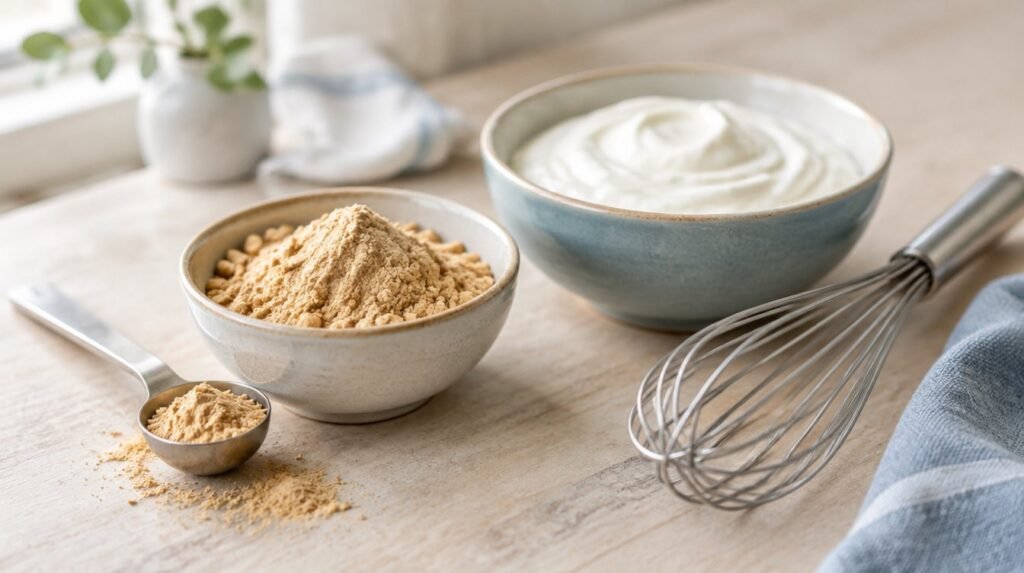
PB2’s label directions for making a spread are 2 tablespoons of powder to 1.5 tablespoons of water (shown on the product page label image). In yogurt, the yogurt’s own moisture does most of that job. For a 3/4-cup (6 oz) serving:
- Light peanut flavor: 1 tablespoon powder. No extra liquid needed.
- Standard: 2 tablespoons powder. Add 1 to 2 teaspoons of milk or water if your yogurt is very thick.
- Strong, frosting-like: 3 tablespoons powder plus 1 tablespoon milk or water.
Thick strained yogurt will tighten up as the powder absorbs liquid, so add any extra liquid a teaspoon at a time.
Five combinations to try
Each starts with 3/4 cup plain Greek yogurt. For more ideas built around the same base, see Greek yogurt bowl and Greek yogurt breakfast.
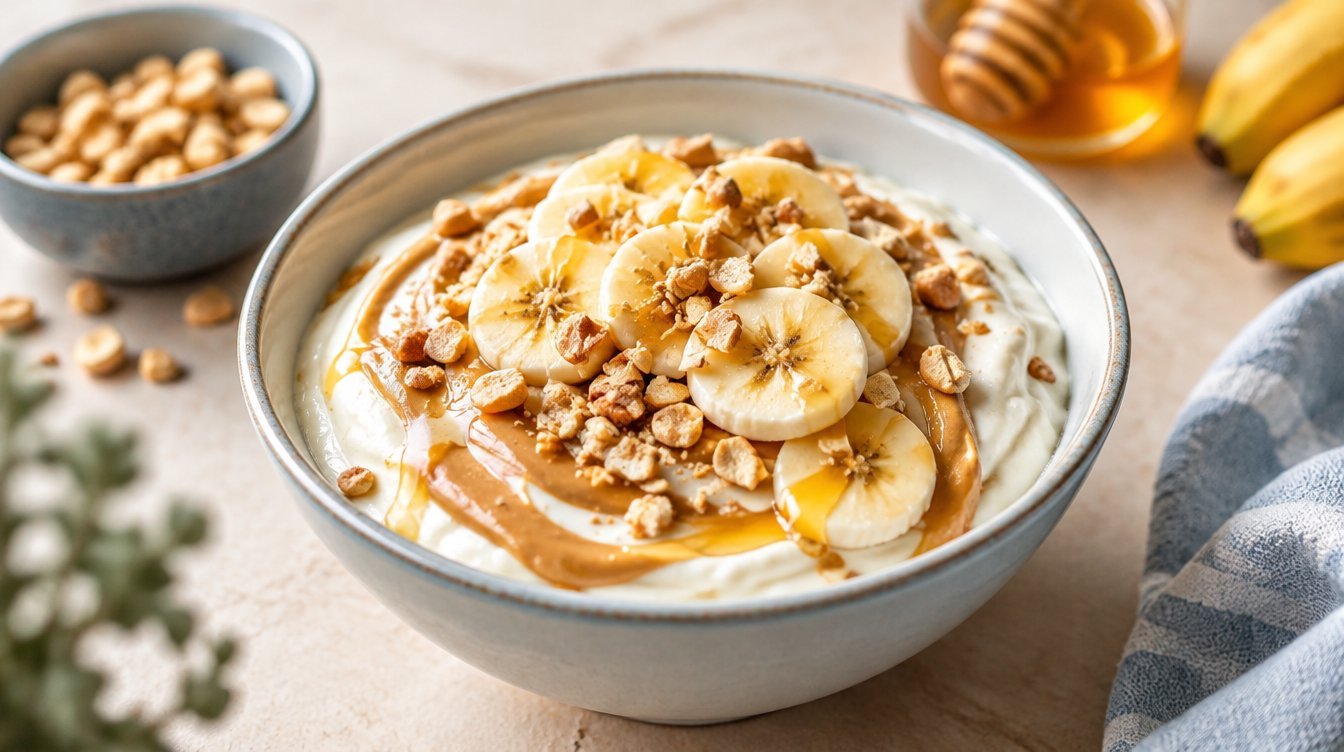
Peanut butter banana
- 2 tbsp peanut butter powder
- 1/2 banana, sliced
- Pinch of cinnamon
PB and jelly
- 2 tbsp peanut butter powder
- 1/2 cup raspberries or mashed strawberries
- 1 tsp chia seeds
Chocolate peanut
- 2 tbsp cocoa peanut butter powder, or 2 tbsp plain powder plus 1 tsp unsweetened cocoa
- 1 tbsp chopped roasted peanuts
Apple crunch
- 2 tbsp peanut butter powder
- 1/2 apple, diced
- 2 tbsp rolled oats or granola
Overnight peanut oats
- 2 tbsp peanut butter powder
- 1/4 cup rolled oats
- 1/4 cup milk
- Stir, cover and refrigerate overnight
How to keep it smooth
Powder dumped straight onto cold, thick yogurt tends to form dry pockets. PB2’s own label notes that “clumps may naturally occur” and advises shaking the jar before use. These steps help:
- Shake the jar, then break up any lumps in the scoop with a fork.
- Make a paste first: whisk the powder with the label ratio of water (about 1.5 tablespoons per 2 tablespoons of powder) until glossy.
- Fold the paste into the yogurt instead of stirring powder in dry.
- Let the bowl sit for 3 to 5 minutes so the powder hydrates, then stir once more.
Sugar and sodium in flavored powders
Flavor variants usually carry more sugar. On the PB2 labels, the cocoa version lists 4 grams of total sugars including 3 grams added, against 1 gram added in the original. Sodium runs 90 to 100 milligrams per serving for both.
For context, the Dietary Guidelines for Americans, 2025-2030 state that no amount of added sugars is recommended and that one meal should contain no more than 10 grams of them. A cocoa powder scoop on plain yogurt stays well under that. Pair a flavored powder with a sweetened or fruit-on-the-bottom yogurt and you can pass it in a single bowl, so plain yogurt plus fruit is the easier base.
Straining your own Greek yogurt
You can make the base yourself from any plain yogurt, homemade or store-bought. The University of Illinois Extension method is simple: line a strainer with a double layer of cheesecloth, set it over a container, add the yogurt, cover and refrigerate. Draining for 2 to 4 hours gives Greek-style yogurt, and 8 to 24 hours gives a thick yogurt cheese.
Strained yogurt holds powder well because it is thick enough to keep a swirl. Save the drained liquid for baking or smoothies; whey from yogurt explains what it is. For a full walkthrough from milk to finished yogurt, see homemade Greek yogurt.
A note on peanut allergy
Powdered peanut butter is still peanuts, and removing the oil does not remove the allergen. The FDA lists peanuts and milk among the nine major food allergens and warns that some reactions can progress to anaphylaxis, with signs such as hives, vomiting and difficulty breathing. The PB2 label carries a plain “Contains: peanuts” statement.
If anyone in your household has a peanut allergy, keep the powder sealed and away from shared scoops, since fine powder spreads easily. Anyone who shows signs of a severe reaction after eating needs emergency care right away. This is general information, not medical advice.
Related topics
- High Protein Greek Yogurt Recipes You Can Make at Home: more ways to build a high-protein bowl.
- Greek Yogurt and Pudding Mix: another powder stirred into yogurt, with its own sugar trade-offs.
- Yogurt Bowl Ideas: toppings and combinations for any yogurt.
- How to Make Greek Yogurt: make the base from scratch.
Sources
- Peanut flour, defatted (FDC ID 174267) (USDA FoodData Central, SR Legacy)
- Peanut butter, smooth style, without salt (FDC ID 172470) (USDA FoodData Central, SR Legacy)
- Yogurt, Greek, plain, nonfat (FDC ID 170894) (USDA FoodData Central, SR Legacy)
- Yogurt, Greek, plain, whole milk (FDC ID 171304) (USDA FoodData Central, SR Legacy)
- PB2 Powdered Peanut Butter, Original: product page and label (PB2 Foods, checked October 2026)
- PB2 Powdered Peanut Butter with Cocoa: product page and label (PB2 Foods, checked October 2026)
- Dietary Guidelines for Americans, 2025-2030 (U.S. Department of Agriculture and U.S. Department of Health and Human Services)
- Making Yogurt at Home (University of Illinois Extension)
- Food Allergies: What You Need to Know (U.S. Food and Drug Administration)