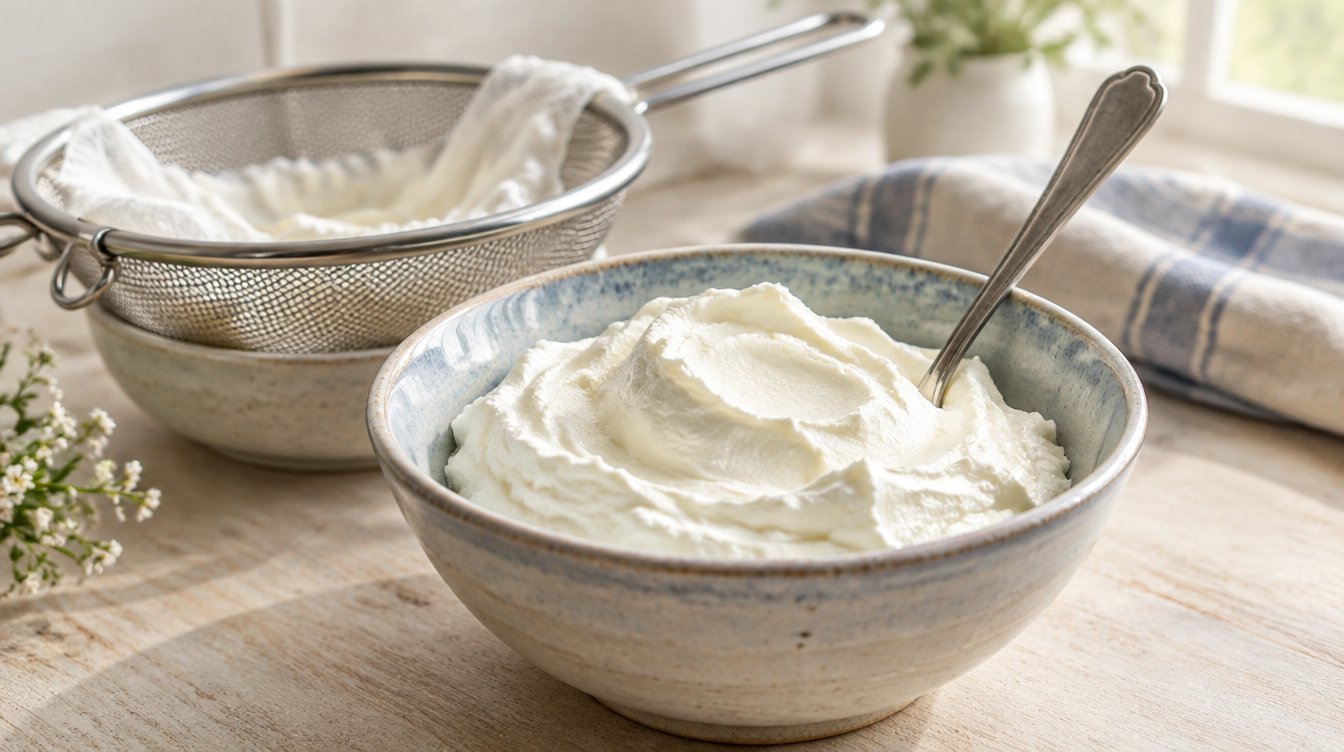
How to Make Greek Yogurt with a Yogurt Maker: A Step-by-Step Guide
What you will end up with
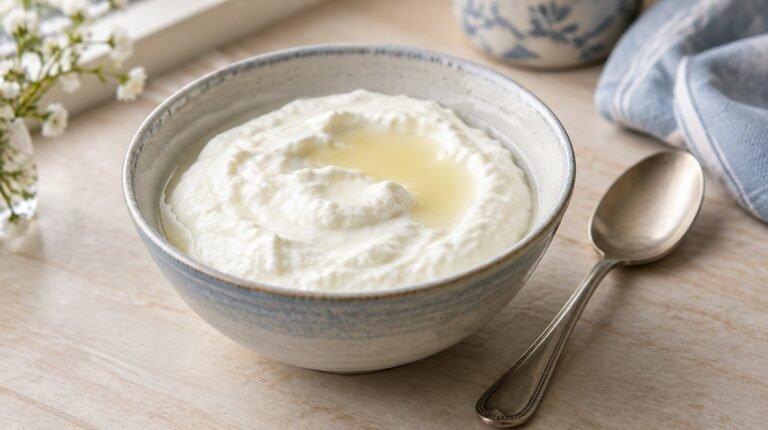
Starting with 1 quart of milk, this method makes about 1 1/2 to 2 cups of thick Greek yogurt plus roughly 2 cups of whey. That is about one-half to one-third of the starting volume, depending on how long you strain. Washington State University Extension says 1 quart of yogurt strained 8 to 24 hours gives 1 1/2 to 2 cups, and commercial Greek yogurt goes further: a 2022 study cites 2 to 3 kg of acid whey for every 1 kg of Greek strained yogurt.
Total time is about 15 to 22 hours, nearly all hands-off: 45 minutes to heat and cool the milk, 8 to 12 hours in the yogurt maker, at least 4 hours of chilling and 2 to 4 hours of straining. Scale everything up for a larger machine.
Ultimate Gut is published by Ultimate Health Solutions, which sells a yogurt maker and a yogurt strainer.
This guide is specific to electric yogurt makers, where the machine holds the incubation temperature for you. For the general method, including stovetop and oven options, see how to make Greek yogurt. For what makes the style different and how to use it, see homemade Greek yogurt.
Equipment
- Yogurt maker with its jars or inner container.
- Heavy-bottomed pot, 2 to 3 quarts.
- Instant-read thermometer. Check it first: a University of Georgia guide says it should read 32°F in a 50/50 slush of ice and water.
- Whisk and ladle.
- Strainer setup: a fine-mesh yogurt strainer, or a colander lined with several layers of cheesecloth or a clean cotton cloth, set over a bowl.
- Covered container for the finished yogurt and a jar for the whey.
Ingredients
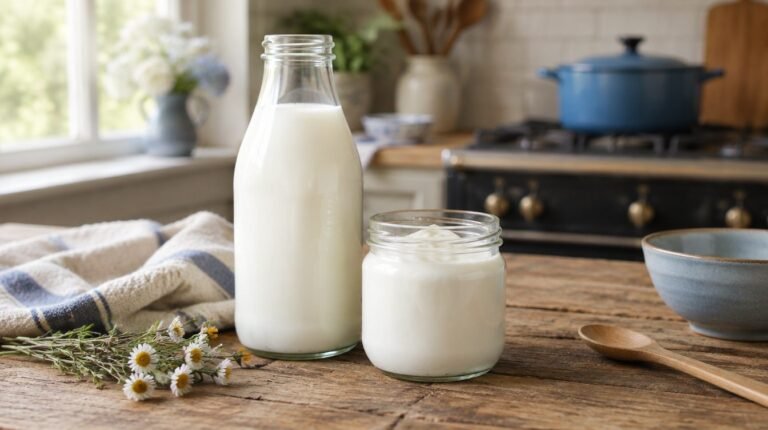
- 1 quart milk. Whole milk gives the creamiest result; 2% and skim also work but strain to a leaner, firmer yogurt.
- 2 tablespoons plain yogurt with live and active cultures, the amount per quart in the University of Illinois Extension recipe, or a freeze-dried starter dosed as its package directs. Pick a starter without added thickeners: WSU notes that stabilizers keep whey from separating, which is the opposite of what you want when straining.
- Optional: instant nonfat dry milk. The University of Kentucky guide recommends a 5% level to help prevent whey separating from the curd, and its recipe uses 1 1/2 cups per half gallon of milk (3/4 cup per quart). For Greek yogurt a smaller amount is fine, since you will drain whey anyway.
For bigger batches, how much yogurt starter for a gallon of milk covers the math.
Step by step
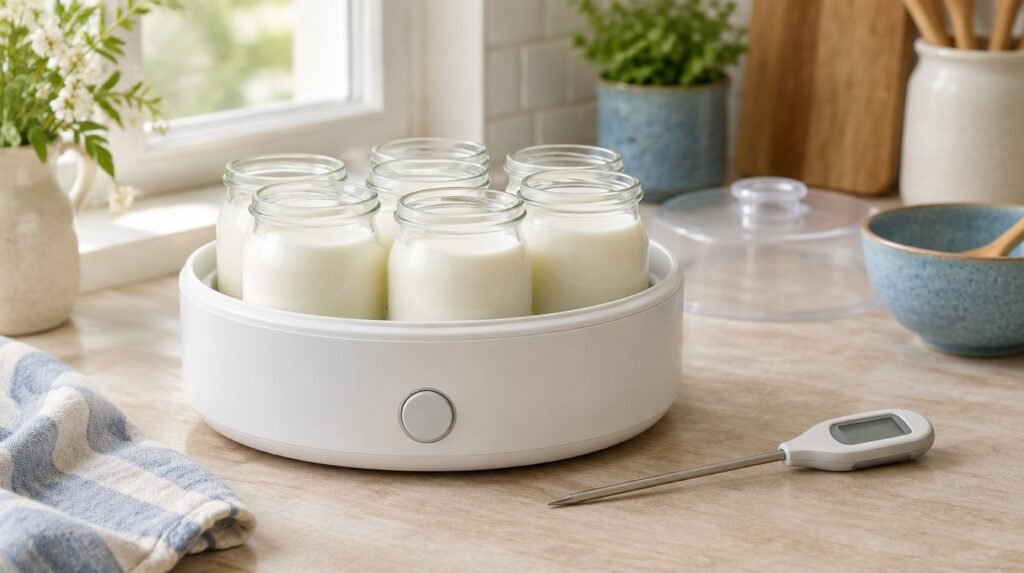
- Clean everything. Wash the pot, whisk, thermometer, machine jars and strainer in hot soapy water. Illinois Extension lists unclean equipment among the reasons yogurt fails to set.
- Heat the milk to 180°F (82°C). Warm it over medium-low heat, stirring often so it does not scorch, about 15 to 20 minutes. Whisk in dry milk, if using, before heating. Do not let it boil.
- Optional: hold at 180°F for 10 to 20 minutes. WSU Extension gives 10 minutes for thinner and 20 minutes for thicker yogurt, and a University of Alaska Fairbanks guide gives a similar 10 to 20 minute hold. In the 2022 Greek yogurt study, milk given a more intense heat treatment lost less whey on straining, which means more Greek yogurt from the same milk.
- Cool to 110-115°F (43-46°C). Set the pot in a sink of cold water and stir. This takes about 10 to 15 minutes. Starter added to milk that is too hot may not set.
- Add the starter. Whisk the 2 tablespoons of yogurt with about 1 cup of the warm milk until smooth, then stir it back into the pot.
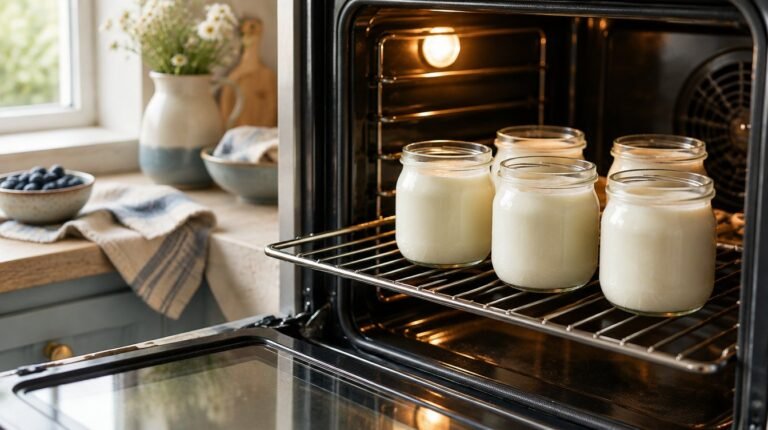
- Fill the machine. Pour the milk into the jars or container, cover loosely and place in the yogurt maker.
- Incubate at 108-112°F (42-44°C) for 8 to 12 hours. WSU says yogurt bacteria need 108 to 112°F to grow properly and gives 6 to 8 hours of incubation. Running 8 to 12 hours gives a tangier yogurt; the UAF guide notes that incubating after the yogurt sets produces more acidity. Any extra whey is not a problem here, since you will strain it off. Do not open, move or stir it; the UAF guide says agitating yogurt while it sets causes excess whey separation.
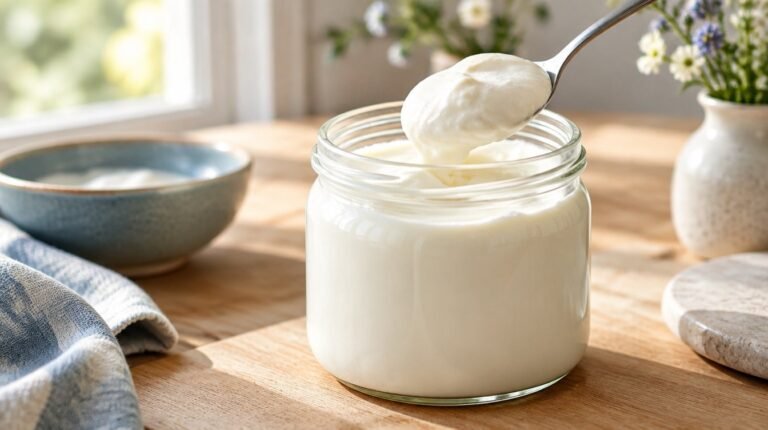
- Check the set. From about hour 8, tilt one jar. The yogurt should pull away from the side in one mass rather than flow. If it is still liquid, give it 1 to 2 more hours.
- Chill for at least 4 hours. Move the yogurt to a refrigerator at 40°F (4°C) or below as soon as it sets. Illinois Extension says to refrigerate once it gels, and lists yogurt not refrigerated soon after incubation as a cause of whey separation. In the 2022 lab study, yogurt strained 24 hours after incubation gave about 8% more strained yogurt than yogurt strained right away.
- Strain in the refrigerator for 2 to 8 hours. Spoon the cold yogurt into the lined strainer, cover and refrigerate. Illinois Extension gives 2 to 4 hours for Greek-style yogurt and 8 to 24 hours for yogurt cheese. Check at 2 hours and stop when it is as thick as you like.
- Finish and store. Whisk the strained yogurt smooth, transfer it to a covered container and refrigerate. Pour the whey into a jar and refrigerate it too.
For more on timing, see how long to incubate yogurt.
Fixed-temperature vs. adjustable yogurt makers
Yogurt makers fall into two groups. Fixed-temperature machines run at one factory setting that you cannot change. Adjustable machines let you set the temperature, and often a timer. Both can make good Greek yogurt; the difference is how much control you have.
Fixed-temperature machines
Find out what your machine actually holds. Fill a jar with water, run the machine for 2 hours and measure the water with your checked thermometer. If it holds 108 to 112°F, follow the steps above. If it runs hotter, expect a weaker gel and more whey: in the University of Wisconsin study, gels incubated at about 46°C (115°F) instead of 40°C (104°F) had more whey separation, and the Kentucky guide ties excessive incubation temperatures to grainy, weeping yogurt. Shorten the time and start checking at hour 5 or 6.
If your machine has no timer, set a phone alarm for the end of incubation so the yogurt does not keep fermenting.
Adjustable machines
Set 110°F (43°C) for standard yogurt cultures and a timer of 8 to 10 hours, then lengthen it on later batches if you want more tang. Long timer settings, sometimes 24 hours or more, are useful for some specialty cultures; standard Greek yogurt does not need them. Whichever you have, move the yogurt to the refrigerator promptly when the timer ends. Homemade yogurt machine compares the features in more detail.
Failure modes and fixes
| Problem | Likely cause | Fix |
|---|---|---|
| Yogurt did not set | Starter without live cultures, milk not heated enough, or unclean equipment (Illinois Extension) | Use fresh starter, heat to 180°F, clean everything, and check the machine temperature |
| Thin, runny yogurt | Milk too cold before incubating, or yogurt not covered while incubating (Illinois Extension) | Cool only to 110-115°F, cover the jars, and add 1 to 2 hours of incubation |
| Lots of whey before straining | Incubation too long or too hot, agitation, or slow chilling (UAF; Illinois Extension; Kentucky guide) | Hold 108-112°F, leave the machine alone, and chill as soon as it sets |
| Grainy texture | Excessive or uneven incubation temperature, or careless handling of the gel (Kentucky guide) | Check the machine temperature and do not stir before chilling |
| Little whey drains | Stabilizers in the starter (WSU) | Use a plain starter without thickeners, and strain longer |
| Too sour | Over-fermented | Shorten incubation by 1 to 2 hours |
| Off odor, mold or fuzzy spots | Contamination | Discard the whole batch (UAF) |
The UAF guide says to discard any yogurt with visible signs of microbial growth or any odor other than the acidic smell of fresh yogurt, and to discard batches that fail to set. Illinois Extension says to eat homemade yogurt within 14 days and, if you plan to use it as starter, to use it within 5 to 7 days. See how long homemade yogurt lasts for more.
Using the whey
Straining 1 quart leaves about 2 cups of tangy whey. Keep it covered in the refrigerator and use it on the same 14-day clock as the yogurt. It can stand in for water or buttermilk in pancakes and bread, thin a smoothie or cook rice. Recipes using whey from yogurt has six recipes, and whey from yogurt explains what it contains.
Frequently asked questions
What temperature should a yogurt maker be set to for Greek yogurt?
Set it to about 110°F. WSU Extension says yogurt bacteria need 108 to 112°F to grow properly (WSU Extension).
How long should I strain yogurt to make Greek yogurt?
Strain cold yogurt in the refrigerator for 2 to 4 hours for Greek-style yogurt, longer for thicker. Straining for 8 to 24 hours makes yogurt cheese (Illinois Extension).
How much Greek yogurt does 1 quart of milk make?
Expect about 1 1/2 to 2 cups after straining, which is roughly one-half to one-third of the starting volume. The rest drains off as whey.
Can I strain yogurt right after it comes out of the yogurt maker?
You can, but Illinois Extension says to refrigerate yogurt once it gels. In one lab study, yogurt strained a day after incubation gave about 8% more strained yogurt than yogurt strained right away.
Why did my Greek yogurt turn out grainy?
Graininess is usually linked to incubation temperatures that are too high or uneven, or to stirring the yogurt before it chills. Check what your machine actually holds with a thermometer.
Related topics
- How to Make Greek Yogurt: the general method without a machine.
- Homemade Greek Yogurt: the style, texture and uses.
- Yogurt Temperature: every temperature in the process explained.
- Greek Yogurt Protein: how straining changes protein content.
- Yogurt Starter: choosing and keeping a culture.
Sources
- Yogurt Made Simple (FS173E) (Washington State University Extension, 2015)
- Karastamatis S, et al. Effect of modified manufacturing conditions on the composition of Greek strained yogurt and the quantity and composition of generated acid whey (Foods, 2022)
- Calibrate food thermometer before Xmas cooking (University of Georgia CAES Field Report, 2002)
- Making Yogurt at Home (University of Illinois Extension, 2024)
- Making Yogurt at Home (IP-36) (University of Kentucky Cooperative Extension)
- Making Yogurt at Home (University of Alaska Fairbanks Cooperative Extension, via University of California Cooperative Extension)
- Lee WJ, Lucey JA. Structure and physical properties of yogurt gels: effect of inoculation rate and incubation temperature (Journal of Dairy Science, 2004)