Organic Gut Health Supplements: A Buyer’s Guide
What “organic” means on a gut health supplement
Organic gut health supplements are fiber, herbal, greens or probiotic products whose plant ingredients were grown and handled under USDA organic rules. The seal tells you how the ingredients were farmed and processed. It doesn’t tell you the product works, that the dose matches the label, or that it was tested for contaminants. Those are separate questions with separate answers.
Ultimate Gut is published by Ultimate Health Solutions, which sells a yogurt maker, probiotic capsules and an inulin fiber supplement. None of the products reviewed here are ours, and these brands don’t pay us.
What the USDA Organic seal covers
The USDA’s Agricultural Marketing Service runs the National Organic Program. It describes organic as a labeling term for products made with approved methods, and says synthetic fertilizers, sewage sludge, irradiation and genetic engineering may not be used. Those rules apply to the ingredients in a supplement the same way they apply to food.
The wording on the front of the bottle tells you how much of the product is organic. These are the USDA labeling categories, with added water and salt excluded from the math:
| Label wording | Organic content | USDA seal allowed? |
|---|---|---|
| “100 percent organic” | All ingredients | Yes |
| “Organic” | At least 95% | Yes |
| “Made with organic ___” | At least 70% | No |
| Organic ingredients named only in the ingredient list | Under 70% | No |
Certified products in the top three categories must also name their certifier on the label, in a line such as “Certified organic by” followed by the agency, according to the USDA’s packaged-product labeling guide. If you don’t see that line, ask the brand who certifies it.
Which ingredients can be organic
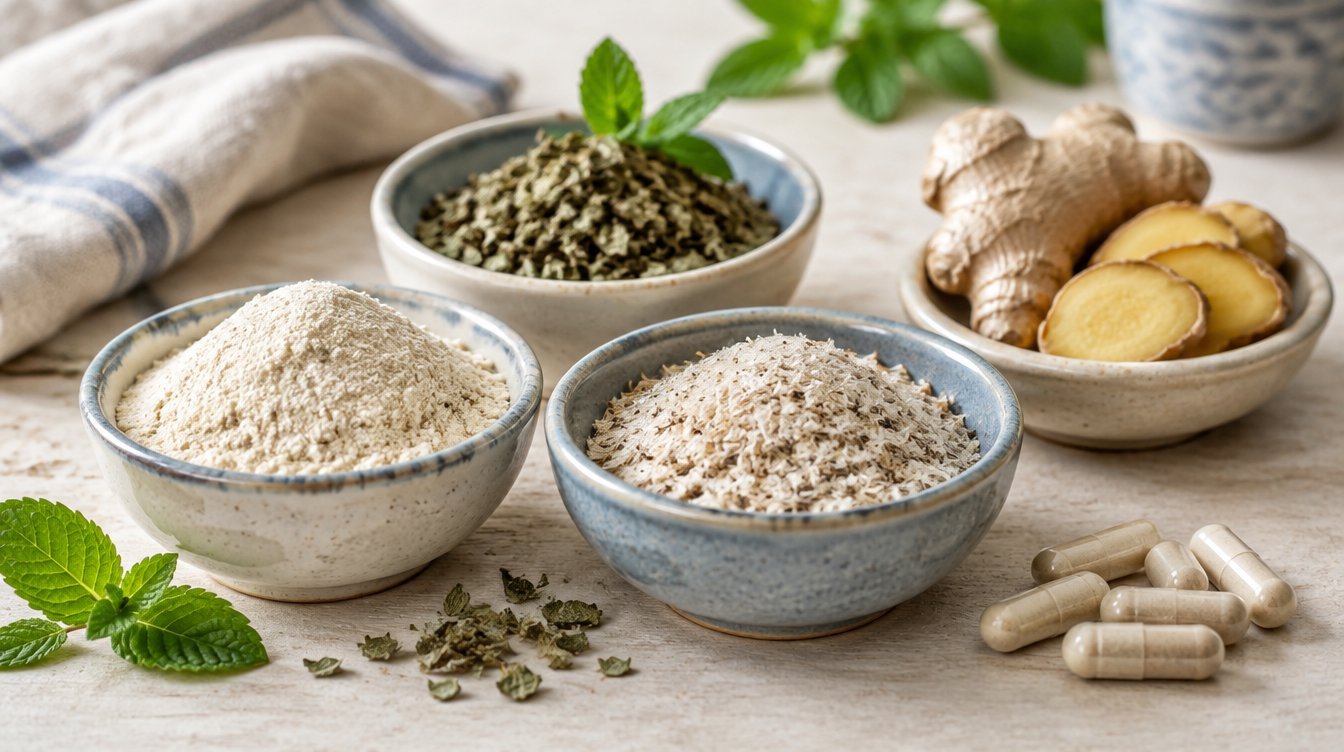
Anything farm-grown can be: fibers such as psyllium husk, acacia gum and chicory or agave inulin; herbs such as ginger, peppermint, fennel and turmeric; mushroom powders; and greens such as spinach, wheatgrass or spirulina. Even the capsule and filler can be organic, such as organic rice powder.
Some common capsule helpers are restricted. On the National List of allowed nonorganic substances, magnesium stearate may be used only in “made with organic” products, not in products labeled “organic,” and silicon dioxide is allowed for most uses only when organic rice hulls aren’t available.
Why probiotic microbes aren’t really “organic”
The same National List includes “microorganisms,” meaning “any food grade bacteria, fungi, and other microorganism,” as a nonagricultural substance allowed in organic products. In other words, the probiotic bacteria are treated like an approved additive, not an organic crop. When a probiotic carries an organic seal, the organic share comes from the other ingredients, such as the prebiotic fiber, plant powders or capsule. That isn’t misleading on its own, but organic status says nothing about the strains, the count, or whether they survive to the expiration date.
Organic vs third-party tested: different things
Organic certification looks at farming and handling. Third-party testing looks at what’s in the bottle. A product can have one, both or neither.
| Mark | What it checks | What it doesn’t |
|---|---|---|
| USDA Organic | Farming and processing methods; percent organic ingredients | Dose accuracy, contaminant testing, effectiveness |
| USP Verified | Voluntary audit against FDA good manufacturing practices and testing against USP standards for quality, purity and potency | Whether the product works |
| NSF/ANSI 173 | That label contents are accurate, harmful levels of contaminants, undeclared ingredients; annual audits and periodic retesting | Whether the product works |
The NIH Office of Dietary Supplements says these quality seals show a product was properly made and contains what’s listed, but “do not guarantee that a product is safe or effective.” If label accuracy matters most to you, look for a USP or NSF mark in addition to, or instead of, the organic seal.
Common organic gut ingredients and the evidence
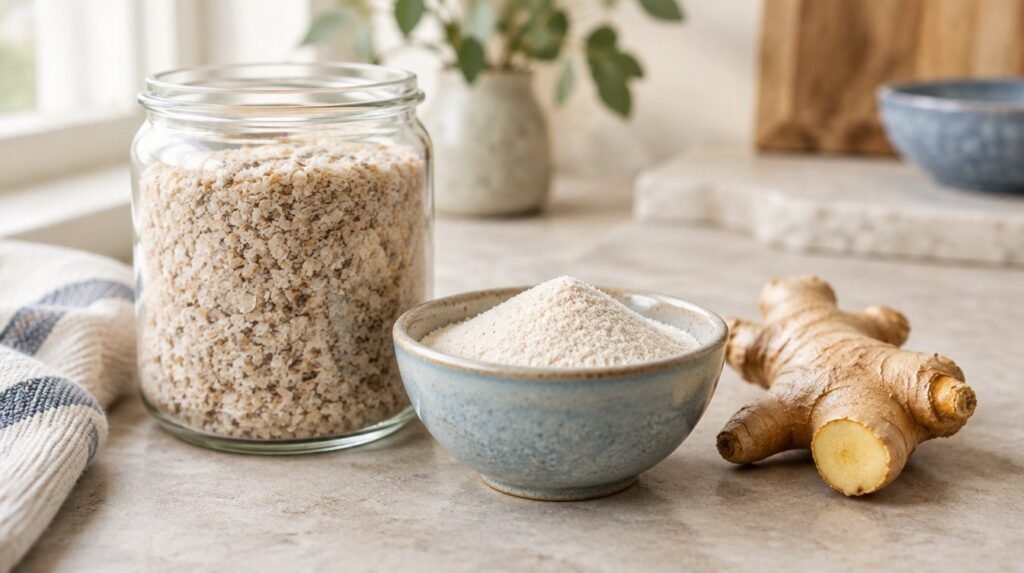
The FDA lists psyllium husk as an added fiber that meets its dietary fiber definition. Inulin-type fructans and acacia (gum arabic) are fibers the FDA intends to add, and in the meantime it allows them to be counted as dietary fiber on labels.
Psyllium
Psyllium has the strongest record of the fibers here. A 2022 meta-analysis of 16 randomized trials with 1,251 adults with chronic constipation found fiber supplements improved symptoms overall, with psyllium, doses above 10 grams a day and at least 4 weeks of use looking most effective. The authors noted large differences between studies, and fiber groups reported more gas.
Inulin
Inulin is a fermentable fiber, usually from chicory root or agave. A systematic review of 9 human studies found the most consistent change was a rise in Bifidobacterium, though those shifts weren’t linked with higher short-chain fatty acid levels. In the 2022 constipation meta-analysis, inulin-type fructans softened stool modestly but didn’t increase bowel movement frequency, and two studies found they made gas worse.
Acacia fiber
Acacia, or gum arabic, has less research. In a 4-week trial in healthy volunteers run by researchers at a food-ingredient company, about 10 grams a day raised counts of Bifidobacteria and Lactobacilli, at least as much as 10 grams of inulin, with no significant side effects reported. One small industry trial is a starting point, not settled evidence.
Herbs, greens and mushroom powders
Evidence depends on the herb, the form and the dose. According to NCCIH, a small amount of research suggests enteric-coated peppermint oil capsules may improve IBS symptoms in adults, and they can cause heartburn. Ginger may help with nausea in pregnancy, while NCCIH lists indigestion only among its traditional uses. Most blends add herbs as a pinch inside a proprietary blend rather than at the amounts studied.
For greens and mushroom powders, ask the brand for published human trials of that ingredient at that dose. If none exist, treat gut claims as unproven. The ODS also notes that supplements can’t take the place of a varied diet, and our best foods for gut health guide covers food sources of the same fibers.
How to read the label
- Check the organic wording. “Organic” means at least 95% organic; “made with organic” means at least 70%. Look for the certifier’s name.
- Find the amount per serving. Compare it with the amounts used in studies, such as more than 10 grams a day of psyllium in the constipation research.
- Watch for proprietary blends. Under FDA labeling rules, a blend must show its total weight and list ingredients from most to least, but not how much of each is inside.
- For probiotics, find the strain and the count. The ODS advises choosing products that list CFUs at the end of shelf life rather than at manufacture.
- Look for USP or NSF marks if you want independent checks on contents and contaminants.
- Read claims skeptically. “Detox,” “flat belly” and “reset” claims aren’t supported by human trials of these products.
How the FDA regulates supplements
The FDA is not authorized to approve dietary supplements for safety and effectiveness before they are sold, and in many cases companies can launch one without notifying the agency. Makers are responsible for safety and truthful labels, and the FDA acts after products reach the market. Organic certification doesn’t change any of this.
Talk to a doctor or pharmacist first if you take medicines, are pregnant or breastfeeding, or have a health condition. Supplements can interact with drugs, and the ODS advises caution beyond a standard prenatal during pregnancy. For probiotics, the ODS notes that most serious infections linked to them have been in people who were severely ill or immunocompromised, and many yeast-probiotic infections involved a central venous catheter, and NCCIH reports that some products have contained microbes not listed on the label. Fiber should be added slowly with plenty of water. This article is general information, not medical advice.
For broader comparisons, see our guides to gut health supplements and fiber supplements.
Related topics
- Gut Health Supplements: the main supplement types and their evidence.
- Fiber Supplement: psyllium, inulin, acacia and others side by side.
- Vegan Gut Health Supplements: plant-based options and what to check.
- Best Probiotic: picks by strain research.
- Probiotic Foods: food sources of live cultures.
Sources
- What is Organic? (USDA Agricultural Marketing Service)
- Labeling Organic Products (USDA Agricultural Marketing Service)
- Labeling Packaged Products under the National Organic Standards (USDA Agricultural Marketing Service, 2009)
- 7 CFR 205.605 Nonagricultural (nonorganic) substances allowed as ingredients in or on processed products labeled as “organic” or “made with organic” (Electronic Code of Federal Regulations)
- Dietary Supplement Verification Program (U.S. Pharmacopeia)
- Dietary Supplement and Vitamin Certification (NSF)
- Dietary Supplements: What You Need to Know (NIH Office of Dietary Supplements)
- Questions and Answers on Dietary Fiber (U.S. Food and Drug Administration)
- van der Schoot A, et al. The Effect of Fiber Supplementation on Chronic Constipation in Adults: An Updated Systematic Review and Meta-Analysis of Randomized Controlled Trials (American Journal of Clinical Nutrition, 2022)
- Le Bastard Q, et al. The effects of inulin on gut microbial composition: a systematic review of evidence from human studies (European Journal of Clinical Microbiology & Infectious Diseases, 2020)
- Calame W, et al. Gum arabic establishes prebiotic functionality in healthy human volunteers in a dose-dependent manner (British Journal of Nutrition, 2008)
- Peppermint Oil (National Center for Complementary and Integrative Health)
- Ginger (National Center for Complementary and Integrative Health)
- 21 CFR 101.36 Nutrition labeling of dietary supplements (Electronic Code of Federal Regulations, U.S. Food and Drug Administration)
- Probiotics: Fact Sheet for Health Professionals (NIH Office of Dietary Supplements)
- Probiotics: Usefulness and Safety (National Center for Complementary and Integrative Health)
- Information for Consumers on Using Dietary Supplements (U.S. Food and Drug Administration)
This article is for general information and is not medical advice. Talk to your doctor or a registered dietitian before changing your diet, supplements or medication, especially if you have a health condition.