Is Coffee a Probiotic? What the Evidence Says
The verdict: coffee is not a probiotic, but it may feed gut bacteria
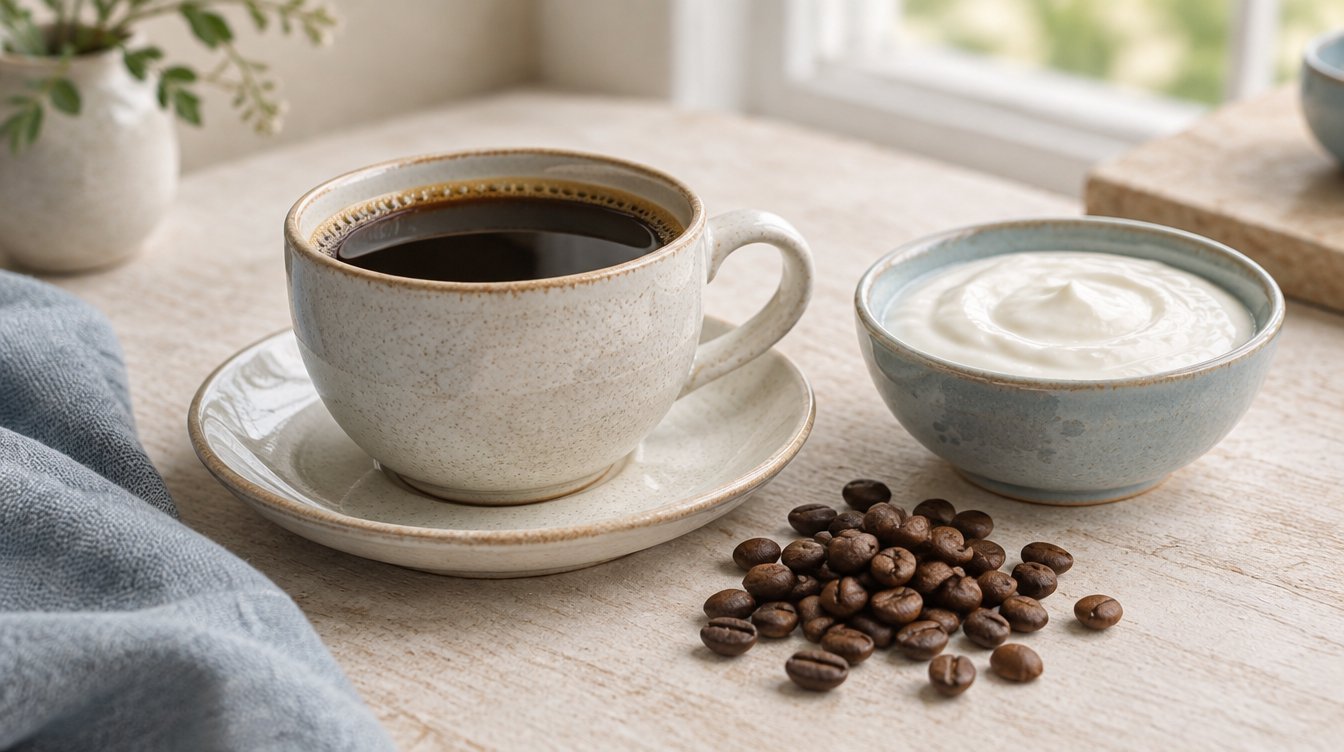
No. Brewed coffee contains no live bacteria, so it can’t be a probiotic. The beans are roasted at high heat, and the International Scientific Association for Probiotics and Prebiotics (ISAPP) lists roasted coffee among fermented products with no live microorganisms.
Coffee does carry polyphenols and some soluble fiber that gut microbes use. Early research suggests this may shift some bacterial groups, but no trial shows coffee is a true prebiotic.
What the research shows
Why there’s nothing alive in your cup
A probiotic is a live microorganism that, in adequate amounts, provides a health benefit, as a 2014 ISAPP expert consensus statement reaffirmed. Live is the key word.
Coffee cherries are often fermented after harvest, and a 2021 review of coffee processing notes that bacteria, yeasts and molds are abundant during that stage. The same review describes roasting at about 150 to 200°C (roughly 300 to 390°F) for 7 to 15 minutes.
That is why the ISAPP consensus on fermented foods places coffee and chocolate beans, after roasting, in the group with no live microbes. Cold brew skips the hot water, but it still starts with roasted beans.
Coffee has soluble fiber and polyphenols that reach the colon
Standard nutrient tables list brewed coffee at 0 grams of fiber and roughly 95 mg of caffeine per 8-ounce cup (USDA FoodData Central). A 2007 Spanish lab analysis using a beverage-specific method found 0.47 to 0.75 grams of soluble fiber per 100 mL of espresso, filter and instant coffee, or roughly 1.1 to 1.8 grams per 8-ounce cup.
That is one lab estimate, not a label value, and it is small next to the FDA Daily Value of 28 grams of fiber.
Coffee is also rich in chlorogenic acids, a family of polyphenols. In a 2015 University of Reading lab study, a colon model seeded with stool bacteria broke them down within about 4 hours, and the coffee highest in them increased Bifidobacterium growth compared with a control. That was a lab model, not people.
Human studies are small or observational
In a 2009 Nestlé study, 16 healthy adults drank 3 cups of instant coffee a day for 3 weeks. Their dominant gut bacteria barely changed, but Bifidobacterium numbers rose. There was no comparison group, and the coffee was made from green and roasted beans.
A 2024 analysis in Nature Microbiology covered 22,867 people in US and UK cohorts, plus public data on 54,198 more. Coffee drinking was consistently linked with higher levels of one bacterium, Lawsonibacter asaccharolyticus, and coffee stimulated its growth in lab tests. The study shows a link, not a health benefit, and several authors have ties to the nutrition company ZOE.
Under ISAPP’s 2017 definition, a prebiotic is selectively used by gut microbes and confers a health benefit. Coffee seems to meet the first part, not yet the second, so “prebiotic-like” is as far as the evidence goes.
Coffee and bowel movements
Coffee’s best-known gut effect is on colon muscles, not bacteria. In a 1990 study from Sheffield, England, 29% of 99 young volunteers said coffee gave them an urge to have a bowel movement. In 14 of them, pressure readings showed lower colon activity rose within 4 minutes of regular or decaf coffee, but only in the 8 people who reported the effect.
A 1998 study of 12 healthy adults found caffeinated coffee stimulated colon activity about as much as a 1,000-calorie meal, 60% more than water and 23% more than decaf. Both studies were small, but they suggest the effect is real for some people and not caused by caffeine alone.
Caveats to keep in mind
- Reflux. The NIDDK lists coffee and other caffeine sources among foods and drinks commonly linked to GERD symptoms, though triggers differ.
- IBS. The NHS advises people with irritable bowel syndrome not to drink more than 3 cups of tea, coffee or other caffeinated drinks a day.
- Caffeine limits. For most healthy adults, the FDA cites 400 mg a day as an amount not generally linked with negative effects, about two to three 12-ounce cups. Too much can cause a fast heart rate, jitters, anxiety, poor sleep, upset stomach, nausea and headaches.
- Pregnancy and medicines. The FDA advises people who are pregnant, trying to conceive or breastfeeding, or who have conditions or medicines that may affect caffeine use, to check with a health care provider.
How to fit coffee into a gut-friendly diet
- Don’t count coffee as your probiotic. For live microbes, look to fermented foods with live cultures. Our guide to probiotic foods covers which ones carry them.
- Get most of your fiber from food. Even the high lab estimate for coffee covers well under a tenth of the 28-gram Daily Value. See the best foods for gut health.
- Count all your caffeine. Tea, energy drinks and colas count toward 400 mg.
- Try smaller cups or decaf if coffee bothers you. Decaf has 2 to 15 mg of caffeine per 8 ounces (FDA), though it still stirred the colon in the small studies above.
- Read labels on “probiotic” coffee products. Any live bacteria were added after roasting. The NIH Office of Dietary Supplements says probiotics are named by genus, species and strain, with counts in CFUs. See also probiotic drinks and gut health drinks.
When to see a doctor
See a doctor if heartburn doesn’t improve with over-the-counter medicine or lifestyle changes. The NIDDK also lists chest pain, trouble or pain swallowing, persistent vomiting, vomit with blood or a coffee-ground look, black or bloody stools, and unexplained weight loss.
For diarrhea, the NIDDK says adults should see a doctor if it lasts more than 2 days or brings six or more loose stools a day, high fever, severe belly or rectal pain, or signs of dehydration. This article is general information, not medical advice.
Frequently asked questions
Does coffee have probiotics?
No. Roasting leaves no live bacteria, and ISAPP lists roasted coffee among fermented products without live microbes (ISAPP).
Is coffee a prebiotic?
Not officially. Gut bacteria use coffee’s fiber and polyphenols in early studies, but no trial has shown the health benefit that the prebiotic definition requires.
Does cold brew coffee have probiotics?
No. Cold brew skips hot water, but it is made from roasted beans, so there are no live bacteria to begin with.
Why does coffee make me need to poop?
In small studies, regular and decaf coffee raised lower colon activity within minutes in people who notice the effect (Gut, 1990).
Is decaf easier on the gut?
It has only 2 to 15 mg of caffeine per 8 ounces, which may help if caffeine bothers you, though it still stimulated the colon in small studies.
Related topics
- Probiotic Foods: foods with live cultures.
- Gut Health Drinks: other drinks and their evidence.
- Probiotic Drinks: kefir, kombucha and more compared.
- What to Drink after a Meal to Help Digestion?: options besides coffee.
- Is Honey a Probiotic?: the same question for honey.
- Fermented Foods for Gut Health: which ones keep live microbes.
Sources
- Hill C, et al. Expert consensus document: The International Scientific Association for Probiotics and Prebiotics consensus statement on the scope and appropriate use of the term probiotic (Nature Reviews Gastroenterology & Hepatology, 2014)
- Probiotics: Fact Sheet for Consumers (NIH Office of Dietary Supplements)
- Bastian F, et al. From Plantation to Cup: Changes in Bioactive Compounds during Coffee Processing (Foods, 2021)
- Marco ML, et al. The International Scientific Association for Probiotics and Prebiotics (ISAPP) consensus statement on fermented foods (Nature Reviews Gastroenterology & Hepatology, 2021)
- Beverages, coffee, brewed, prepared with tap water (FDC ID 171890) (USDA FoodData Central)
- Díaz-Rubio ME, Saura-Calixto F. Dietary fiber in brewed coffee (Journal of Agricultural and Food Chemistry, 2007)
- Mills CE, et al. In vitro colonic metabolism of coffee and chlorogenic acid results in selective changes in human faecal microbiota growth (British Journal of Nutrition, 2015)
- Jaquet M, et al. Impact of coffee consumption on the gut microbiota: a human volunteer study (International Journal of Food Microbiology, 2009)
- Manghi P, et al. Coffee consumption is associated with intestinal Lawsonibacter asaccharolyticus abundance and prevalence across multiple cohorts (Nature Microbiology, 2024)
- Gibson GR, et al. Expert consensus document: The International Scientific Association for Probiotics and Prebiotics (ISAPP) consensus statement on the definition and scope of prebiotics (Nature Reviews Gastroenterology & Hepatology, 2017)
- Brown SR, et al. Effect of coffee on distal colon function (Gut, 1990)
- Rao SS, et al. Is coffee a colonic stimulant? (European Journal of Gastroenterology & Hepatology, 1998)
- Eating, Diet, and Nutrition for GER and GERD (NIDDK)
- Symptoms and Causes of GER and GERD (NIDDK)
- Diet, lifestyle and medicines for IBS (NHS)
- Spilling the Beans: How Much Caffeine Is Too Much? (U.S. Food and Drug Administration)
- Daily Value on the Nutrition and Supplement Facts Labels (U.S. Food and Drug Administration)
- Symptoms and Causes of Diarrhea (NIDDK)
This article is for general information and is not medical advice. Talk to your doctor or a registered dietitian before changing your diet, supplements or medication, especially if you have a health condition.