Yogurt Tastes Too Sour: Causes and Fixes
When yogurt tastes too sour
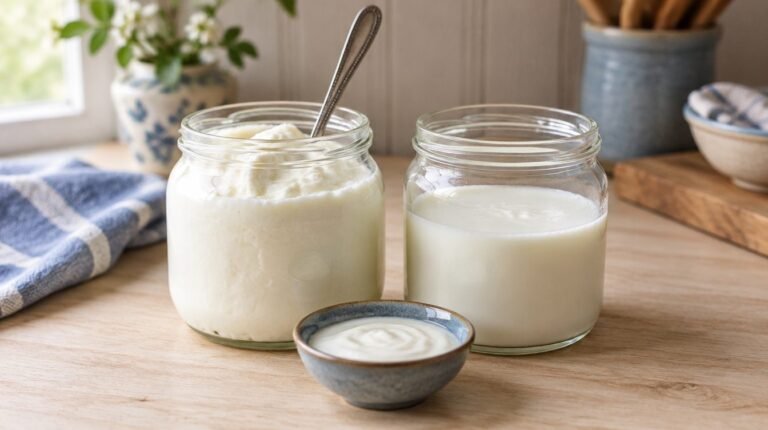
The batch set well and smells clean, but the first spoonful makes you wince. It tastes sharp, and it may get sharper over the next few days.
Sourness comes from lactic acid. Yogurt bacteria turn milk sugar into lactic acid, and Missouri Extension puts it simply: the more lactic acid produced, the tangier the yogurt (University of Missouri Extension). So a too-sour batch is a batch where the cultures made more acid than you wanted. That is a taste problem, not a safety problem.
The most likely cause: it incubated too long
The cultures do not stop when the milk sets. University of Alaska Fairbanks Extension warns that incubating yogurt for several hours after it has set produces more acidity, and recommends 4 to 7 hours at 110°F for a standard batch (UAF Cooperative Extension). If you left the batch running overnight, that is the first thing to change.
Small jars also set faster than one big container, according to Illinois Extension (University of Illinois Extension), so a time that suits a quart tub can overshoot a set of 6-ounce jars.
How to fix it
- Start checking early. Begin testing at about 4 hours. Tip a jar gently; when the yogurt pulls away from the side in one mass, or a spoon shows a soft gel, it is ready. Illinois Extension describes the target as lightly gelled, like thin pudding (University of Illinois Extension).
- Cut the next incubation by 1 to 2 hours. Note when the batch set and use that time, not the longest time in the recipe. Our guide on how long to incubate yogurt covers the usual ranges.
- Hold the temperature at 108 to 112°F. Check it with a thermometer. In a University of Wisconsin lab study, single-strain gels warmed to about 105 or 111°F once they first gelled reached pH 4.6 faster than gels kept at 99°F (Peng et al., 2010). A machine that runs hot acidifies faster. See our yogurt temperature guide.
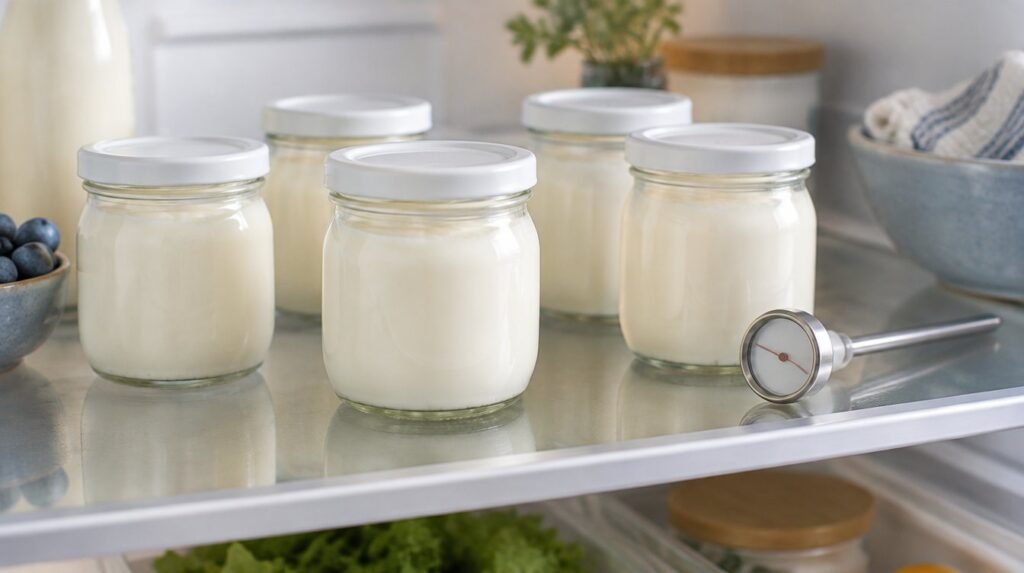
- Chill it right away. Move the jars to a refrigerator at 40°F or lower as soon as they set. Illinois Extension notes that cold storage stops bacteria making more lactic acid, which would otherwise make yogurt increasingly sour (University of Illinois Extension).
- Use less starter. More culture means faster acid. In another Wisconsin study, the time for milk to reach pH 4.6 at 104°F ranged from 250 to 500 minutes, depending only on how much culture was added (Peng et al., 2009). About 2 tablespoons of plain yogurt per quart of milk is the amount Illinois Extension uses (University of Illinois Extension); see how much starter for a gallon of milk for larger batches.
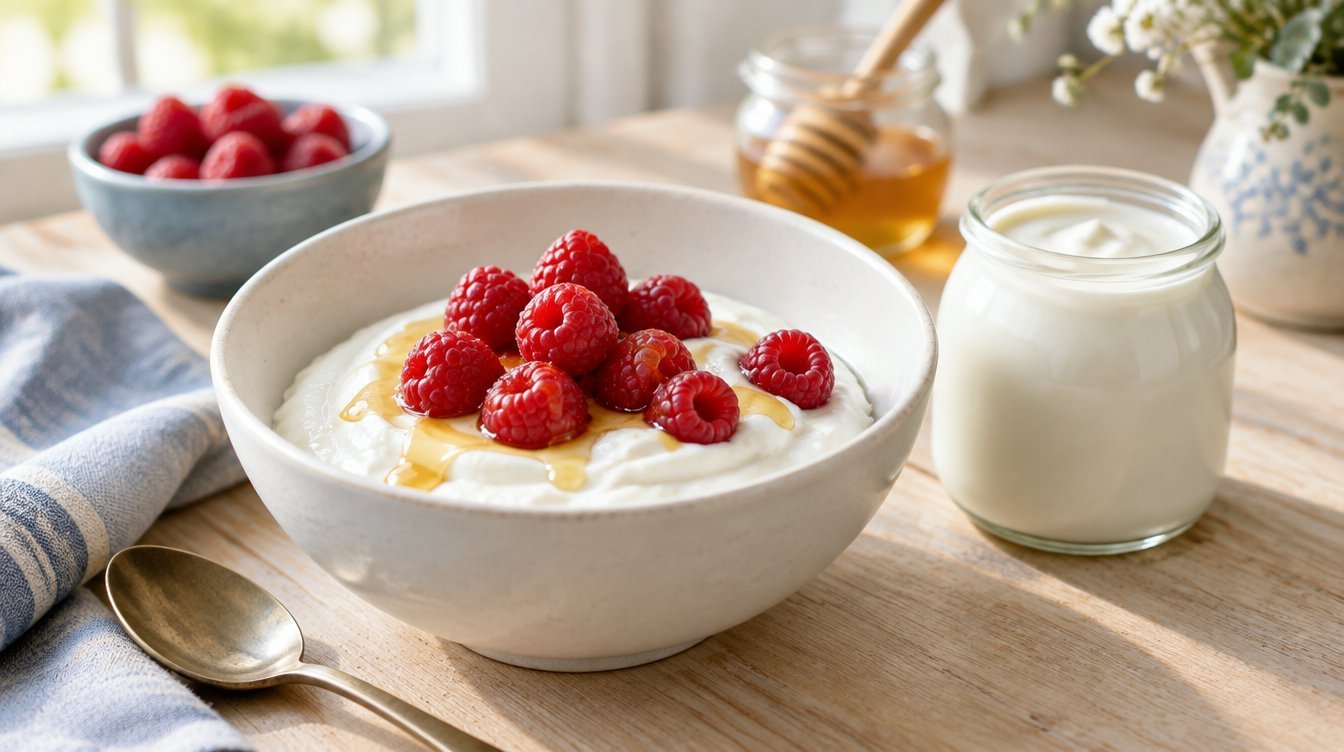
For the batch you already made, stir in fruit, honey or maple syrup just before eating. Kentucky Extension suggests adding fruit and sweeteners at serving time, because flavor changes can occur if they sit in the yogurt (University of Kentucky Cooperative Extension). Our tips on making yogurt taste good work for plain yogurt too.
Secondary causes
The starter has drifted
Yogurt starters usually combine two bacteria, Lactobacillus bulgaricus and Streptococcus thermophilus. Kentucky Extension explains that a too-sharp flavor results when L. bulgaricus becomes dominant, and advises using fresh starter rather than carrying the same culture from batch to batch (University of Kentucky Cooperative Extension). If each batch is sourer than the last, start over with fresh store yogurt or a packaged culture. Read more in heirloom starter weakened over time.
Acid keeps building in the fridge
Some acid can still form during cold storage. In a lab study of four L. bulgaricus strains, lactic acid in the fermented milk rose during storage, and the amount varied a lot by strain (Yue et al., 2022). Eat older jars first, and make smaller batches if yours get too sharp before you finish them.
You used a long-ferment culture
Cultures fermented for 24 hours or more, such as L. reuteri, are meant to use up more milk sugar, so they taste much more sour than an 8-hour batch. See fermentation time by culture and lactose remaining after long ferments.
Prevention
- Write down the time, temperature and starter amount for every batch, and change one thing at a time.
- Use fresh milk and a fresh starter. Illinois Extension lists milk or starter that was not fresh among the causes of off-flavors (University of Illinois Extension).
- Taste before you refrigerate. University of Guam Extension notes that homemade yogurt lets you control sourness, and that you judge the end of incubation by texture, taste and flavor (University of Guam Cooperative Extension).
- If you like it tart, go the other way: our guide to making sour yogurt covers that.
When to throw a batch out
Sour by itself is fine. A clean, sharp, acidic smell is what yogurt should smell like, even when it is stronger than you like.
Other smells and tastes are a different matter. University of Guam Extension advises discarding any yogurt with visible microbial growth or odors other than the acidity of fresh yogurt (University of Guam Cooperative Extension), and Kentucky Extension notes that a bitter off-flavor may come from unwanted bacteria (University of Kentucky Cooperative Extension). USDA says yogurt with mold should be thrown out (USDA FSIS). A yeasty or beer-like smell has its own guide: yogurt smells yeasty.
Related topics
- How Long to Incubate Yogurt: the times that keep a batch mild.
- Yogurt Temperature: why a few degrees change the flavor.
- Lactobacillus bulgaricus: the main acid maker in yogurt.
- How Long Does Homemade Yogurt Last: storage times for finished batches.
- Yogurt Is Runny or Thin: when the texture is the problem instead.
Sources
- Preserve It Fresh, Preserve It Safe: Making Yogurt at Home (University of Missouri Extension, 2019)
- Making Yogurt at Home (FNH-00062) (University of Alaska Fairbanks Cooperative Extension Service)
- Making Yogurt at Home (University of Illinois Extension, 2024)
- Peng Y, et al. Physical properties of acid milk gels prepared at 37 degrees C up to gelation but at different incubation temperatures for the remainder of fermentation (Journal of Dairy Science, 2010)
- Peng Y, et al. Impact of preacidification of milk and fermentation time on the properties of yogurt (Journal of Dairy Science, 2009)
- Making Yogurt at Home (IP-36) (University of Kentucky Cooperative Extension Service)
- Yue Y, et al. Analysis of the complete genome sequence of Lactobacillus delbrueckii ssp. bulgaricus with post-acidification capacity and its influence on yogurt in storage (Journal of Dairy Science, 2022)
- Making Yogurt at Home (FP-01) (University of Guam Cooperative Extension, 2016)
- Molds on Food: Are They Dangerous? (USDA Food Safety and Inspection Service)