Homemade Yogurt: What You Need to Know
What Is Homemade Yogurt?
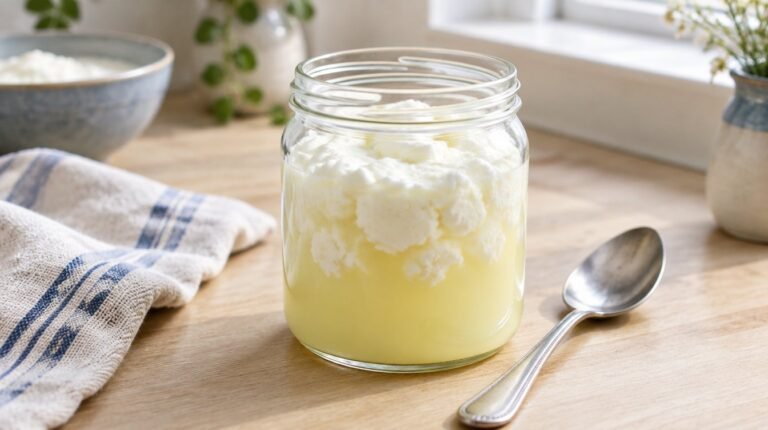
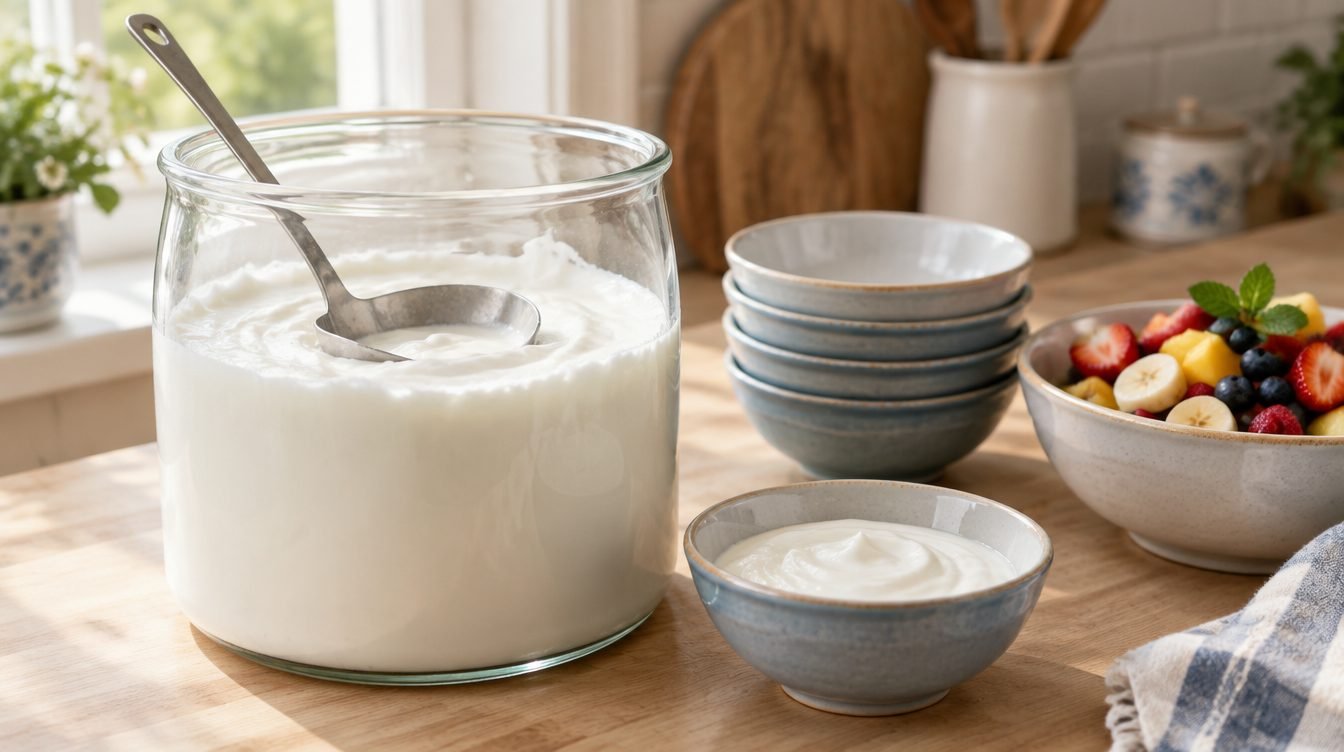
Homemade yogurt is milk you ferment at home by stirring in a little live yogurt or a packaged starter and keeping it warm, at about 110°F (43°C), for several hours until it sets. It relies on the same basic cultures as store-bought yogurt, but you choose the milk, the sweetness and the culture, and it usually costs less.
Lactic acid bacteria turn the milk’s sugar, lactose, into lactic acid, and as the milk sours, its casein proteins set into a soft gel (Allam et al., 2023). Commercial plants do the same at scale, as How Is Yogurt Made? explains.
How homemade differs from store-bought
The FDA’s standard of identity for yogurt requires two cultures, Lactobacillus delbrueckii subsp. bulgaricus and Streptococcus thermophilus, and permits sweeteners, flavorings, stabilizers and added milk solids. At home, the recipe can be just milk and starter.
| Feature | Homemade | Store-bought |
|---|---|---|
| Ingredients | Milk and starter; anything else is your choice | Milk and cultures, plus any permitted sweeteners, flavorings, stabilizers or milk solids |
| Live cultures | Not heat-treated after it sets; count unknown | May claim “live and active cultures”; heat-treated yogurt must say it has none |
| Sugar | Only the milk’s own sugar unless you add sweetener | None added in plain; flavored can carry far more |
| Cost per quart | About $1.06 in whole milk (August 2026 average) | About $3.64 for a 32-oz tub of regular yogurt (average advertised price, October 2026) |
Sugar and fat
The sugar in plain yogurt comes from the milk, which the FDA does not count as added sugar. Flavored yogurt differs: USDA lists 19.0 g of total sugars per 100 g of low-fat fruit yogurt, against 7.04 g for plain low-fat yogurt. At home, any sweetener is your call; the 2025–2030 Dietary Guidelines for Americans cap dairy snacks such as yogurt at 2.5 g of added sugar per ⅔-cup equivalent.
Fat depends on the dairy you start with. Ultimate Health Solutions, the company that publishes this site, recommends half-and-half for the thickest result without straining, with whole milk second. With lower-fat milk, stirring in nonfat dry milk gives a firmer set (University of Alaska Fairbanks).
Live cultures
Some store-bought yogurt is heat-treated after culturing, which inactivates the cultures, and the federal standard requires it to say “does not contain live and active cultures.” Yogurt that claims live cultures needs at least 10 million colony-forming units (CFU) per gram at manufacture. Homemade yogurt skips that step, so its cultures are alive when you chill it, but only lab testing could tell you how many.
Cost
A quart of milk makes about a quart of yogurt (Illinois Extension’s recipe yields eight ½-cup servings). At the Bureau of Labor Statistics average of $4.23 a gallon for whole milk in August 2026, that is about $1.06 a quart. USDA’s weekly survey of grocery dairy ads for October 2, 2026, averaged $3.64 for a 32-ounce tub of regular yogurt and $5.87 for Greek. Equipment, electricity, your choice of dairy and straining, which reduces yield, all change the math.
Cultures and starters
Plain store-bought yogurt works as a starter if the label says it contains live cultures (National Center for Home Food Preservation); a packaged starter is the other common choice. Some of your last batch works too, ideally within 5 to 7 days (Illinois Extension). Washington State University Extension suggests a fresh starter every 5 to 6 batches as activity declines, and reused cultures can turn sharply acidic as L. bulgaricus takes over (University of Kentucky). Yogurt Starter compares the options.
Is Homemade Yogurt Good for Your Gut?
Homemade yogurt is a fermented food with live cultures, but that does not automatically make it a probiotic. The International Scientific Association for Probiotics and Prebiotics (ISAPP) reserves “probiotic” for defined strains with evidence of a health benefit and suggests describing foods with undefined microbes as containing “live and active cultures,” which fits a home batch.
What the research supports
Yogurt is one of the few fermented foods with substantial human research, including more than 20 randomized controlled trials of yogurt and cultured milk, though much of the evidence is observational (ISAPP, 2021). In a small randomized trial at Stanford, 36 healthy adults followed a high-fiber or a high-fermented-food diet for 10 weeks. The fermented-food group, eating foods such as yogurt, kefir and kimchi, showed greater gut microbial diversity and lower levels of 19 inflammatory proteins (Stanford Medicine), but the design cannot isolate yogurt’s effect.
Lactose
Yogurt cultures can break down lactose, and the European Food Safety Authority has approved a claim that live yogurt cultures improve lactose digestion, as the ISAPP panel notes. Fermentation also uses up roughly 30% of the milk’s lactose, according to a 2014 review in Foods. Yogurt is lower in lactose than other milk products, though not lactose-free, and some people with lactose intolerance tolerate it more easily (NIDDK).
What the evidence doesn’t show
Most of this research looks at yogurt in general, not homemade yogurt. Little research has looked at homemade yogurt specifically, and because different microbes can have different effects, results from one product don’t automatically apply to another. Yogurt is a food, not a treatment for any digestive condition; persistent gut symptoms are a reason to see a clinician.
Making Homemade Yogurt Safely
What you need
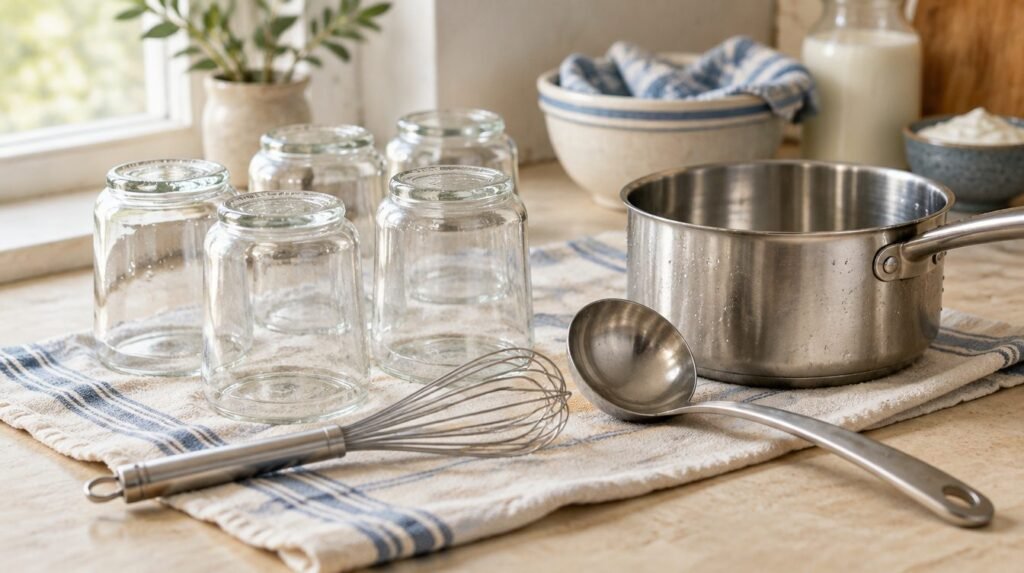
You need milk, an active starter and steady warmth. Extension guides incubate at about 108 to 115°F (42 to 46°C) for 4 to 10 hours (University of Alaska Fairbanks, University of Illinois). According to UAF, the cultures can be killed above 130°F (54°C) and grow poorly below 98°F (37°C), so holding the temperature is the main job. A yogurt maker, an oven, a heating pad or a warm spot in the kitchen can all work (NCHFP). For the full method, see How to Make Yogurt at Home.
Food-safety basics
- Start with pasteurized milk. Raw milk and products made from it can carry germs such as Listeria, Salmonella and E. coli, with the highest risk for children under 5, adults over 65, pregnant women and people with weakened immune systems (CDC). Heating milk for a yogurt recipe is not a substitute for pasteurization.
- Keep everything clean and the ferment on track. Wash jars and utensils in hot, soapy water and rinse well (UAF). Incubation sits inside the 40 to 140°F (4 to 60°C) range where bacteria grow fastest, doubling in as little as 20 minutes (USDA FSIS). So clean equipment and an active starter matter, and UAF says to discard batches that fail to set.
- Chill it promptly. Refrigerate at 40°F (4°C) or below once set, and eat within about 14 days (Illinois Extension). See How Long Does Homemade Yogurt Last?
- Know when to throw it out. Discard yogurt with visible growth or any smell other than fresh, acidic yogurt (UAF). USDA says to discard moldy yogurt, because mold can spread below the surface of soft, moist foods.
- Remember it’s still dairy. Milk is one of the nine major food allergens (FDA).
More on Homemade Yogurt
- How to Make Yogurt at Home: A Step-by-Step Guide: The full method, start to finish.
- How to Make Yogurt Starter: A Step-by-Step Guide: Saving and refreshing your culture.
- How Long to Incubate Yogurt? The Complete Answer: How time changes texture and tartness.
- Yogurt Temperature: What You Need to Know: Every temperature that matters, by culture type.
- How to Make Yogurt without Starter: A Step-by-Step Guide: Options when you have no packaged starter.
Sources
- Cascio J, Dinstel RR. Making Yogurt at Home (FNH-00062) (University of Alaska Fairbanks Cooperative Extension Service)
- Allam A, et al. Plain set and stirred yogurt with different additives: implementation of food safety system as quality checkpoints (PeerJ, 2023)
- 21 CFR 131.200 Yogurt (Electronic Code of Federal Regulations, National Archives)
- Added Sugars on the Nutrition Facts Label (U.S. Food and Drug Administration)
- Yogurt, fruit, low fat, 10 grams protein per 8 ounce (FDC ID 171285) (USDA FoodData Central)
- Yogurt, plain, low fat (FDC ID 170886) (USDA FoodData Central)
- Dietary Guidelines for Americans, 2025–2030 (U.S. Department of Agriculture and U.S. Department of Health and Human Services)
- Making Yogurt at Home (University of Illinois Extension)
- Average Price: Milk, Fresh, Whole, Fortified (Cost per Gallon) in U.S. City Average (APU0000709112) (U.S. Bureau of Labor Statistics, via FRED, Federal Reserve Bank of St. Louis)
- Weekly Grocery Store Dairy Feature Activity (National Retail Report), October 2, 2026 (USDA Agricultural Marketing Service, Dairy Market News)
- Nummer BA. Fermenting Yogurt at Home (National Center for Home Food Preservation, 2002; reprint hosted by UC Davis)
- Smith DK. Yogurt Made Simple (Washington State University Extension, distributed by the UC Master Food Preserver Program)
- Making Yogurt at Home (IP-36) (University of Kentucky Cooperative Extension Service)
- Hill C, et al. Expert consensus document: The International Scientific Association for Probiotics and Prebiotics consensus statement on the scope and appropriate use of the term probiotic (Nature Reviews Gastroenterology & Hepatology, 2014)
- Marco ML, et al. The International Scientific Association for Probiotics and Prebiotics (ISAPP) consensus statement on fermented foods (Nature Reviews Gastroenterology & Hepatology, 2021)
- Wastyk HC, et al. Gut-microbiota-targeted diets modulate human immune status (Cell, 2021, via PubMed)
- Fermented-food diet increases microbiome diversity, decreases inflammatory proteins, study finds (Stanford Medicine)
- Sfakianakis P, Tzia C. Conventional and Innovative Processing of Milk for Yogurt Manufacture; Development of Texture and Flavor: A Review (Foods, 2014)
- Eating, Diet, & Nutrition for Lactose Intolerance (National Institute of Diabetes and Digestive and Kidney Diseases)
- Probiotics: What You Need To Know (National Center for Complementary and Integrative Health)
- Raw Milk (Centers for Disease Control and Prevention)
- How Temperatures Affect Food (USDA Food Safety and Inspection Service)
- Molds on Food: Are They Dangerous? (USDA Food Safety and Inspection Service)
- Food Allergies: What You Need to Know (U.S. Food and Drug Administration)
- The Ultimate Yogurt Guide (eBook), Ultimate Health Solutions, publisher of this site