Gut Health and Inflammation: What You Need to Know
What gut inflammation means
Inflammation is the body’s defense response. Cleveland Clinic describes it as your body’s reaction to an illness, injury or something that does not belong there. A short burst of it, the redness and swelling around a cut, is useful. The trouble starts when it switches on without a clear threat and stays on for months or years.
When people talk about gut health and inflammation, they usually mean one of two different things. Keeping them apart makes the research much easier to read.
- Inflammation inside the gut wall. This is what happens in inflammatory bowel disease (Crohn’s disease and ulcerative colitis). It is a diagnosed medical condition, it can damage the intestine, and it needs a doctor’s care.
- Low-grade, body-wide inflammation. This is a quieter, ongoing immune activity that shows up as slightly raised markers in the blood. Researchers are studying whether the gut and its microbes help push this up or calm it down.
Cleveland Clinic lists an imbalance of gut microbes alongside low activity, ongoing stress, extra body fat, poor sleep, smoking and heavy drinking as factors behind most cases of chronic inflammation. In other words, the gut is one piece of the picture, not the whole of it.
How the gut and inflammation are connected
The gut lining is a barrier
Your intestine is lined with a single layer of cells, a coat of mucus and a large share of the immune system. A 2019 review in Gut by Mayo Clinic researchers explains that this barrier is made of surface mucus, the cell layer and immune defenses, and that endurance exercise, anti-inflammatory painkillers (NSAIDs), pregnancy and some food additives can make it more permeable for a time.
This is where the idea of “leaky gut” comes from. Cleveland Clinic notes that increased intestinal permeability is a real, measurable finding, but that leaky gut syndrome is not currently a recognized medical diagnosis. The same Gut review adds that it is still unproven that fixing barrier function improves disease, so be wary of tests or kits that promise to diagnose and heal it.
Gut microbes make anti-inflammatory compounds
When gut bacteria ferment fiber, they produce short-chain fatty acids such as butyrate, acetate and propionate. A 2016 review in Cell describes how these compounds act on immune and gut cells and serve as fuel for the cells lining the colon. Much of this work comes from lab and animal studies, but it explains why fiber keeps coming up in conversations about inflammation.
Diet can shift the gut and immune markers
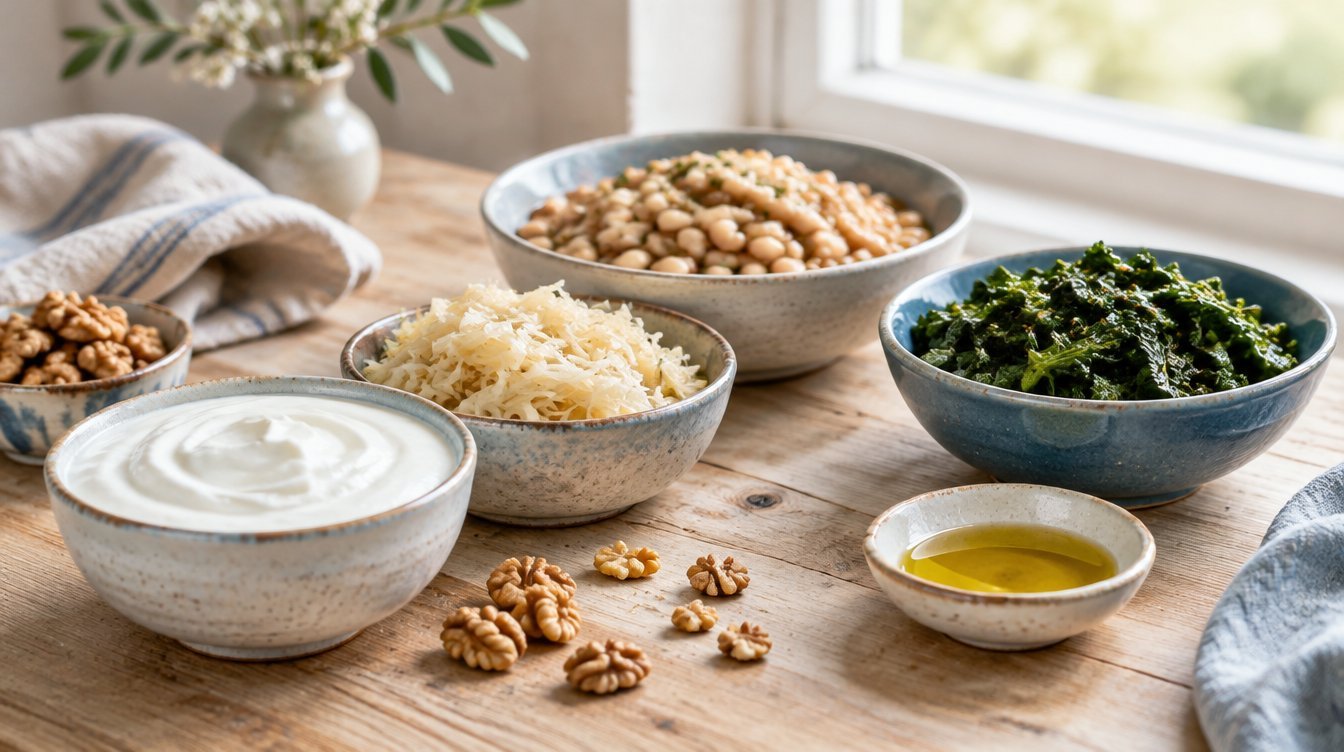
Some of the most useful human evidence comes from a 2021 Stanford trial in Cell. Healthy adults were randomly assigned to a high-fiber diet or a high-fermented-food diet for 17 weeks, with 18 people in each group. The fermented-food diet, built on foods such as yogurt, kefir and fermented vegetables, steadily increased gut microbiota diversity and decreased inflammatory markers. The high-fiber diet did not change the main immune score, and responses varied from person to person.
A larger study pointed the same way. In the NU-AGE project, 612 older adults in five European countries followed a Mediterranean-style diet for one year. Gut bacteria that rose with closer adherence were negatively associated with inflammatory markers including C-reactive protein. This shows an association, not proof that the bacteria caused the change.
Food additives are being studied too. In a small, tightly controlled feeding study, 16 healthy adults ate either an emulsifier-free diet or the same diet with the common thickener carboxymethylcellulose for 11 days. The additive group had modestly more abdominal discomfort and less diverse gut bacteria. The study was short and tiny, so it raises a question more than it answers one.
What the evidence does and does not show
| Claim | Evidence strength | Source |
|---|---|---|
| Chronic inflammation is linked with heart disease, type 2 diabetes and other long-term conditions | Strong (well established) | Cleveland Clinic |
| Eating more fermented foods can lower some inflammatory markers | Early (one small 17-week trial) | Wastyk, Cell 2021 |
| A Mediterranean-style diet shifts gut bacteria linked with lower inflammation markers | Moderate (large trial, associations) | Ghosh, Gut 2020 |
| Fiber-derived short-chain fatty acids calm immune responses | Mostly lab and animal research | Koh, Cell 2016 |
| Probiotics help ulcerative colitis | Mixed; possible help alongside standard treatment, no benefit shown for Crohn’s | NCCIH |
| Healing “leaky gut” fixes inflammation-related disease | Not proven | Camilleri, Gut 2019 |
On probiotics specifically, NCCIH summarizes a 2014 review of 21 studies (about 1,700 people): adding probiotics, prebiotics or synbiotics to usual care could be helpful in inducing or maintaining remission of ulcerative colitis, while 14 studies in Crohn’s disease showed no benefit. Our guide to supplements for gut health and inflammation goes through individual ingredients in more detail.
Everyday habits that support a calmer gut
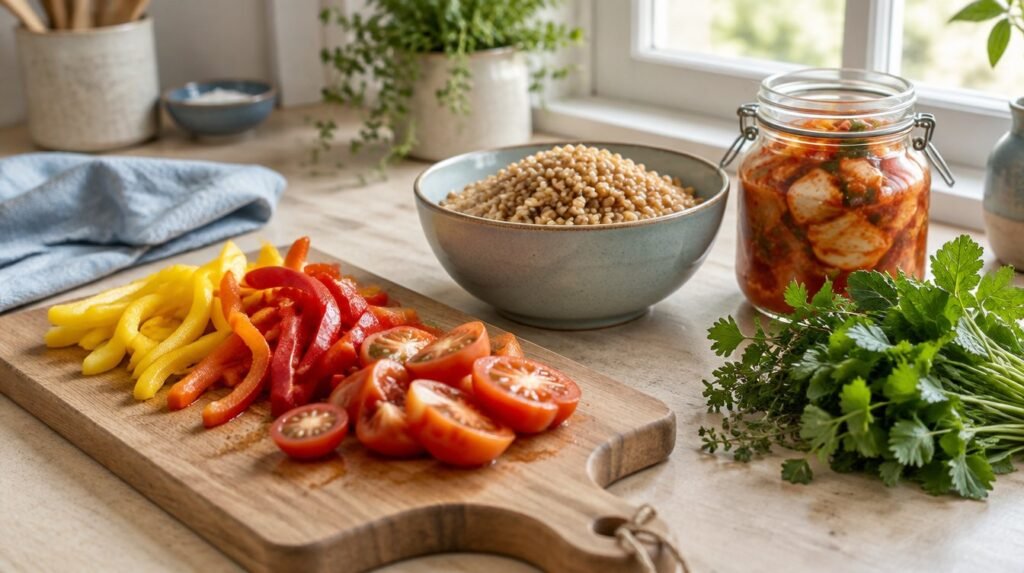
No single food switches inflammation off. The habits with the most support are broad eating patterns and lifestyle basics. Harvard Health lists tomatoes, olive oil, leafy greens, nuts, fatty fish and fruit as part of an anti-inflammatory diet, and suggests limiting refined carbohydrates, fried foods, sugary drinks, red and processed meat, and margarine.
- Eat a wide range of plants. Beans, whole grains, vegetables, fruit, nuts and seeds feed the bacteria that make short-chain fatty acids. Our list of the best foods for gut health is a good starting point.
- Add fermented foods regularly. Plain yogurt, kefir, sauerkraut and kimchi were the core of the Stanford fermented-food diet. See fermented foods for gut health for ideas.
- Cut back on heavily processed foods. The foods Harvard flags overlap closely with our list of the worst foods for gut health.
- Keep alcohol and NSAIDs in check. Cleveland Clinic names chronic overuse of alcohol or NSAIDs such as aspirin and ibuprofen as a direct cause of increased intestinal permeability. Do not stop a medicine your doctor prescribed without talking to them first.
- Move, sleep and manage stress. Cleveland Clinic recommends at least 150 minutes of moderate activity a week and also points to sleep and ongoing stress as drivers of chronic inflammation.
Single foods attract a lot of worry online. If you are wondering about specific items, we look at the evidence on whether tomatoes cause inflammation and on coffee and gut inflammation.
When to see a doctor
Ongoing gut symptoms are worth a proper checkup, because conditions such as Crohn’s disease cause diarrhea, cramping, belly pain and weight loss that diet changes alone will not fix. Mayo Clinic advises getting care soon if you have any of the following:
- Diarrhea that does not stop or signs of dehydration
- Severe belly pain
- Blood in the stool that does not go away
- Fever or signs of infection
- Weight loss without trying
This article is general information, not medical advice. If you have a diagnosed inflammatory condition, talk with your doctor or a registered dietitian before making big changes to your diet or adding supplements.
Related topics
- Gut Health and Autoimmune Disease: what research says about the gut and immune conditions.
- Best Supplements for Gut Health and Inflammation: ingredients compared by evidence.
- Fermented Foods for Gut Health: everyday options and how to use them.
- Juice for Inflammation: which juices have any research behind them.
- 10 Signs of an Unhealthy Gut: common signals and what they may mean.
Sources
- What Is Inflammation? Types, Causes and Treatment (Cleveland Clinic)
- Foods that fight inflammation (Harvard Health Publishing)
- Leaky Gut Syndrome: Symptoms, Diet, Tests and Treatment (Cleveland Clinic)
- Camilleri M. Leaky gut: mechanisms, measurement and clinical implications in humans (Gut, 2019)
- Koh A, et al. From Dietary Fiber to Host Physiology: Short-Chain Fatty Acids as Key Bacterial Metabolites (Cell, 2016)
- Wastyk HC, et al. Gut-microbiota-targeted diets modulate human immune status (Cell, 2021)
- Ghosh TS, et al. Mediterranean diet intervention alters the gut microbiome in older people reducing frailty and improving health status: the NU-AGE 1-year dietary intervention across five European countries (Gut, 2020)
- Chassaing B, et al. Randomized Controlled-Feeding Study of Dietary Emulsifier Carboxymethylcellulose Reveals Detrimental Impacts on the Gut Microbiota and Metabolome (Gastroenterology, 2022)
- Probiotics: Usefulness and Safety (National Center for Complementary and Integrative Health)
- Symptoms and Causes of Crohn’s Disease (National Institute of Diabetes and Digestive and Kidney Diseases)
- Inflammatory bowel disease (IBD): Symptoms and causes (Mayo Clinic)
This article is for general information and is not medical advice. Talk to your doctor or a registered dietitian before changing your diet, supplements or medication, especially if you have a health condition.