Greek Yogurt Marinated Chicken: What You Need to Know
What Greek yogurt marinated chicken is
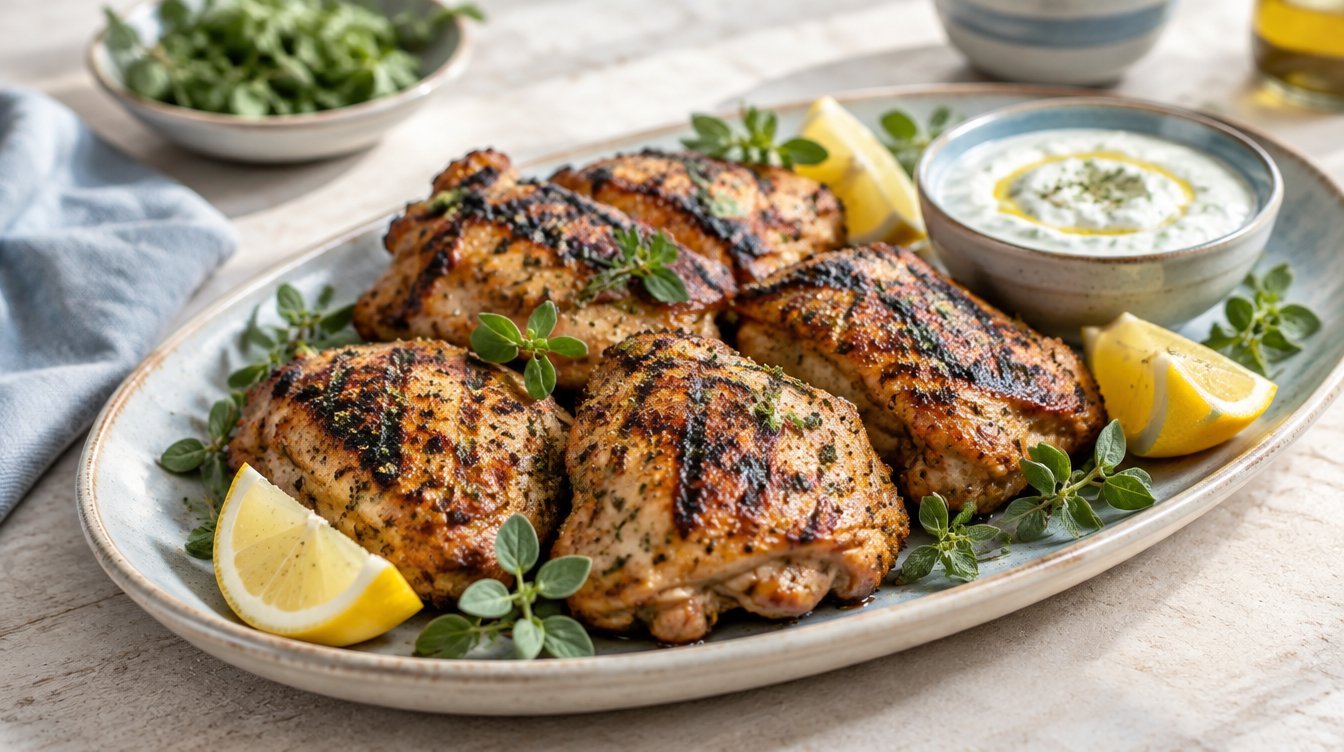
Greek yogurt marinated chicken is chicken coated in seasoned plain yogurt, left in the refrigerator for a few hours, then grilled, roasted or seared. The yogurt clings to the meat, carries garlic, citrus and spice into the surface and browns into a lightly charred crust.
It is the idea behind tandoori chicken and many Greek and Middle Eastern grilled dishes. A yogurt marinade for chicken works on breasts, thighs, wings and drumsticks, and it uses ingredients most kitchens already have.
Why yogurt makes chicken tender
Two parts of yogurt likely do the work. The first is acid. Extension food specialists at Ohio State University list yogurt and buttermilk alongside vinegar and citrus as acidic marinade ingredients that break down muscle tissue. Yogurt is milder than straight lemon juice or vinegar, which matters, because Utah State University Extension warns that soaking too long in acid can make meat tougher.
The second is calcium. Meat contains calpains, protein-cutting enzymes that are activated by calcium. A review of calpain research notes that calcium introduced into meat by injection, infusion or pickling can improve tenderness. Yogurt is rich in calcium, so this is a plausible reason yogurt marinades work, though no study we found has measured it in a home yogurt marinade.
The evidence on yogurt itself is thin. In one lab study, marinating in acid whey from Greek yogurt production for 10 to 15 hours lowered pork’s toughness but did not change chicken’s, although it slowed oxidation in the chicken. That was whey, not thick yogurt. And marinades don’t soak in far: Clemson Extension puts the depth at about a quarter inch. Much of what you taste is a coating that keeps the surface moist and seasoned.
Gut health: what survives the heat
Cooking kills the yogurt’s live cultures. The FDA yogurt standard describes heat treatment after culturing as a way to “inactivate viable microorganisms,” and chicken has to reach 165°F all the way through, so assume none of the cultures in the coating are still alive. Greek yogurt chicken still gives you the protein and flavor, but not live cultures.
To get cultures with the meal, serve a cold yogurt sauce on the side. Our Greek yogurt sauce guide has six options, and can you cook Greek yogurt explains what heat does to texture.
Base yogurt marinade for chicken
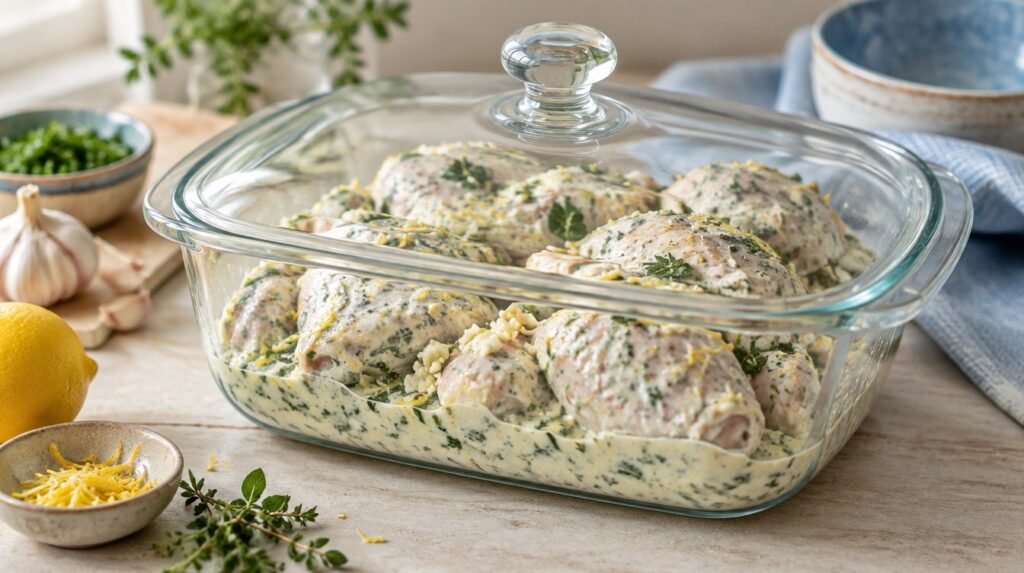
This covers 1 1/2 to 2 pounds of chicken, about 4 breasts or 6 to 8 thighs.
- Yogurt: 3/4 cup plain Greek yogurt, whole milk or 2%.
- Acid: 2 tablespoons lemon juice.
- Oil: 2 tablespoons olive oil.
- Garlic: 3 cloves, grated.
- Salt: 1 1/2 teaspoons kosher salt.
- Pepper: 1/2 teaspoon black pepper.
Mix in a glass, ceramic or stainless bowl or a zip-top bag, add the chicken, turn to coat and refrigerate. Clemson Extension advises against aluminum containers for acidic marinades. If you want sauce for the table, set some aside before the raw chicken goes in.
Five flavor variations
Add these to the base marinade.
Greek yogurt lemon chicken
The classic Greek chicken marinade: zest of 1 lemon plus the juice already in the base, 2 teaspoons dried oregano, 1 teaspoon dried thyme or 1 tablespoon fresh, and 1 tablespoon chopped fresh dill. Serve with tzatziki, cucumber and tomato.
Tandoori-style
2 teaspoons garam masala, 2 teaspoons paprika (smoked or Kashmiri chili), 1 teaspoon ground cumin, 1/2 teaspoon turmeric, 1/2 teaspoon cayenne and 1 tablespoon grated fresh ginger. Swap lime juice for the lemon if you like. Cook over high heat so the edges char.
Za’atar
2 tablespoons za’atar, 1 teaspoon ground sumac and 1/2 teaspoon ground cumin. Finish the cooked chicken with a drizzle of olive oil and a little more za’atar.
Garlic-parmesan
1/3 cup finely grated Parmesan, 2 more garlic cloves, 1 teaspoon dried Italian seasoning and 1 teaspoon Dijon mustard. Cut the salt to 1 teaspoon, since the cheese is salty. The cheese browns quickly, so watch the heat.
Chipotle
2 chipotle peppers in adobo, minced, plus 1 tablespoon adobo sauce, 1 teaspoon ground cumin and 1 teaspoon smoked paprika. Use lime juice instead of lemon and add chopped cilantro after cooking.
How long to marinate, by cut
Extension guidance varies. Utah State gives 2 to 24 hours for chicken, and the USDA Food Safety and Inspection Service says chicken can stay in a marinade in the refrigerator for up to 2 days. Within that, these ranges work for most recipes:
| Cut | Marinate | Notes |
|---|---|---|
| Cubes for skewers | 1 to 4 hours | Small pieces take on flavor fast. |
| Yogurt marinated chicken breast, boneless | 2 to 8 hours | Pound to an even thickness so it cooks evenly. |
| Thighs, boneless | 4 to 12 hours | More forgiving of longer times. |
| Wings | 2 to 12 hours | Pat off excess so the skin crisps. |
| Bone-in thighs, drumsticks, leg quarters | 4 to 24 hours | Slash the meat to the bone so the marinade reaches more surface. |
| Whole spatchcocked chicken | 8 to 24 hours | Loosen the skin and rub some marinade underneath. |
Cooking methods
Lift the chicken out and let the excess drip off; a thin coat browns, a thick one steams and scorches. Whatever the method, a thermometer is the only reliable test.
- Grill: Medium-high heat, oiled grates. Sear both sides, then move to a cooler zone to finish.
- Oven: 425°F on a rack over a lined sheet pan. Boneless pieces often need 18 to 25 minutes, bone-in pieces 35 to 45, but check with a thermometer.
- Broiler: For tandoori-style char, roast first, then broil 2 to 3 minutes per side.
- Skillet: Cast iron over medium heat with a little oil. Yogurt sugars burn fast, so lower the heat if the crust darkens before the center is done.
- Air fryer: Around 380°F in a single layer, turning once.
Food safety rules
- Marinate in the refrigerator, never on the counter. FoodSafety.gov calls the refrigerator the safest place to marinate meat and poultry.
- Keep raw chicken contained. Use a covered dish or sealed bag on the bottom shelf, and a separate cutting board for raw poultry.
- Don’t reuse raw marinade unless you boil it. FSIS says to bring marinade to a full boil before brushing it on cooked chicken and to discard any uncooked leftover marinade.
- Cook to 165°F (74°C). That is the safe minimum internal temperature for all poultry, measured in the thickest part.
- Chill leftovers within 2 hours. Cooked poultry keeps 3 to 4 days in the refrigerator, according to the FoodSafety.gov storage chart.
For more ways to use yogurt at dinner, see dinner recipes with Greek yogurt and savory Greek yogurt recipes. If you make your own yogurt, strain it first using how to make Greek yogurt, so the marinade stays thick enough to cling.
Related topics
- Dinner Recipes with Greek Yogurt: complete meals built around yogurt.
- Savory Greek Yogurt Recipes: sauces, sides and spreads.
- Greek Yogurt Sauce: cold sauces to serve with the chicken.
- Can You Cook Greek Yogurt?: heat, curdling and cultures.
- Greek Yogurt Protein: how much protein the yogurt adds.
Sources
- Chow Line: Use marinades for flavor, tenderizing (Ohio State University Extension, 2008)
- Try a Little Tenderness: Marinate (Utah State University Extension, 2012)
- Finding Flavor in Marinades (Clemson Cooperative Extension, 2022)
- Lian T, et al. A New Insight into the Role of Calpains in Post-mortem Meat Tenderization in Domestic Animals: A review (Asian-Australasian Journal of Animal Sciences, 2013)
- Karageorgou A, et al. The Effects of Yoghurt Acid Whey Marination on Quality Parameters of Pork and Chicken Meat (Foods, 2023)
- 21 CFR 131.200 Yogurt (Electronic Code of Federal Regulations, U.S. Food and Drug Administration)
- Chicken from Farm to Table (USDA Food Safety and Inspection Service)
- 4 Steps to Food Safety (FoodSafety.gov)
- Safe Minimum Internal Temperature Chart (FoodSafety.gov)
- Cold Food Storage Chart (FoodSafety.gov)